Anthropic Wrote Its Own Safety Bill: $1B or 50 Deaths Before the Government May Act
Anthropic quietly pitched Congress a draft AI safety bill: the government could block a model only above $1B in damages or 50 deaths. The safety-branded lab wrote the narrowest federal framework yet — here's the strategy behind it.
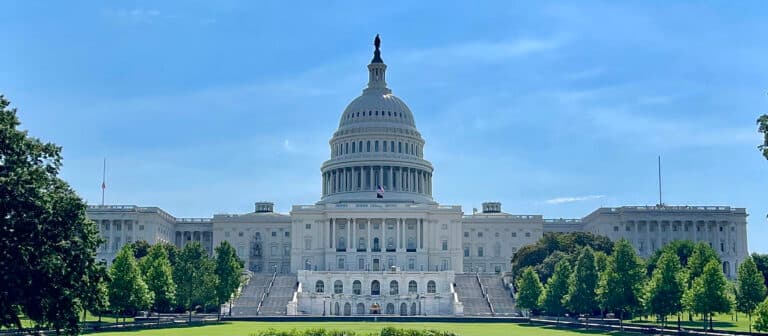
The lab that built its brand on safety just did something that surprised, even dismayed, many observers: Anthropic quietly handed US lawmakers a draft AI safety bill it wrote itself — and the threshold for government intervention in it is strikingly high. Only when a model poses a "foreseeable, imminent" risk of more than $1 billion in damages, or of killing or seriously injuring more than 50 people, could the government block its release or use.
Politico broke the story on October 16, citing three people with knowledge of the efforts; Reuters followed. An Anthropic spokesperson didn't deny it, saying only that the draft reflects ideas in the company's "Advanced AI Framework" released earlier this year.
A safety-branded lab has written the narrowest federal AI regulatory framework yet put before Congress. It deserves a close read.
What the draft actually says
Mechanics first, numbers second. Jurisdiction is highly concentrated: only the Commerce Department could act — every other federal agency, department, or officer would be explicitly barred from halting any model's development, deployment, or internal use. The trigger isn't "the model has capability X" but a forward-looking harm standard: foreseeable, imminent risk, and only via one of three paths — creation or release of a biological weapon, a model evading its developer's controls, or a cyberattack.
The enforcement chain is engineered like a precision instrument: independent evaluators register with Commerce and periodically assess labs and their frontier models; labs may pay the evaluators, but payment must not be tied to outcomes; once an evaluator finds an "imminent enumerated risk," it must report to Commerce within 72 hours of completing its assessment; Commerce can then petition a single federal judge in the District Court for the District of Columbia for an order suspending the model. No licensing, no mandatory audits, no routine disclosure — the only remedy is a court order.
Then the number: $1 billion, or 50 lives. Only above that line does federal blocking authority exist.

Why "narrowest"? Look at what it excludes
A threshold's meaning lies in what it excludes. Under this standard, every AI safety incident that has actually happened — fraud at scale, biosecurity near-misses, autonomous cyber operations, election-scale manipulation — would fall outside federal blocking authority. Mother Jones called the threshold "alarming," and the criticism writes itself: it defines catastrophic harm so high that nothing that has actually gone wrong with deployed AI systems would qualify.
More subtle is the preemption clause: federal rules would override some state laws on risk disclosure, outside evaluation, and incident reporting. In other words, the draft doesn't just cap federal power — it tries to close off states from legislating on their own. Democrats have resisted such proposals; state-level AI legislation has been moving faster than Washington for two years.
Put the two together and the draft's true shape is clear: less a "safety bill" than a "power-ceiling bill" — the industry sets the ceiling high enough itself, so Congress doesn't set it lower someday.
How narrow is it, exactly? A horizontal comparison
California's SB 53, signed last year, asks labs to disclose safety practices and publish safety frameworks — the bar is "explain yourself," not "how many deaths." The EU AI Act takes a risk-tiered approach: compliance duties for high-risk applications, transparency duties for general models — it governs the full spectrum. Anthropic's draft goes the other way: no spectrum, only world-ending events; no tiers, no disclosure, no audits, just injunctions, and those need a judge.
It's nearly unique on the regulatory spectrum: the EU is "broad scope, heavy duties," California is "disclosure first," and the Anthropic draft is "so narrow it's barely regulation." Cleverly, the draft's language leans toward California's — the trigger paths (bioweapons, loss of control, cyberattacks) reportedly track SB 53's phrasing. That's smart legislative rhetoric: wrap a federal ceiling far looser than any state's in language states have already accepted, then use preemption to knock out the stricter state versions. Two birds, one stone.
The timeline: from framework paper to Capitol Hill lobbying
This draft didn't appear from nowhere. Anthropic has been pitching lawmakers on its "Advanced AI Framework" since June; Politico exposed the draft's framework on October 16; the spokesperson promptly confirmed it "reflects the framework's ideas." For four months, Anthropic has been doing one thing: translating its internal safety-governance language, bit by bit, into legislative language Congress can use.
The pacing is worth noting: pitch the philosophy in June (no specific provisions, low resistance), deliver the draft in October (legislative season, seize the agenda). And October has another layer of context — export controls had just forced two of its advanced models off the market, and the lab needed to show investors "regulatory risk is under control" more than ever. A self-drafted ceiling bill is both a lobbying tool and reassurance for the IPO roadshow: see, the worst case is bounded — and we wrote the bounds.
Anthropic's calculus: preemption by authorship
To understand the draft, place it in Anthropic's 2026 situation. Export controls had just taken two advanced models offline (per Benzinga). The lab faces three-front pressure: commercial (an IPO push, with the FT reporting a $16.8 billion quarter), technical (racing OpenAI and Google on models), geopolitical (export controls). Proactively delivering a bill at such a moment is textbook regulatory preemption: rather than wait for Congress to assemble a bill you can't control, deliver your own "looks-responsible, leaves-room" framework first and anchor the debate where you want it.
The move isn't new in US tech-regulatory history. Whenever Congress gets serious about regulating, incumbents rush in with "self-restraint proposals" — the nicer the name, the more carefully you should read the substance. Anthropic's version is elegant in its use of the word "safety": the title and rhetoric are all safety, while the threshold's math guarantees it will almost never trigger. It's a deregulation bill written in safety language — or so critics will say.
To be fair, the draft has real substance: an independent-evaluator regime, 72-hour reporting, labs paying without compromising independence — genuine institutional innovation for frontier-model governance, if enacted. The problem: however elegant the evaluation machinery, if the trigger is set too high to reach, it evaluates only "will the world end," not "will something go wrong."
What it means for people who write code
Direct impact: near zero. Under this threshold, no coding agent or vibe-coding platform in daily use comes close to the "frontier model" blocking line; your workflows won't change. That's by design — the draft concentrates fire on the handful of strongest models and leaves the long tail of tools and applications untouched.
The indirect effects deserve watching on three fronts. First, who gets to define "frontier." Which models count determines which face independent evaluation. Today's Claude and GPT-6 are in; do tomorrow's open-weight models count? The fight over the definition is just beginning.
Second, compliance-cost pass-through. Independent evaluations, reporting pipelines, legal review — these costs end up in API pricing and platform subscriptions. Giants can pay; if the evaluation regime expands, smaller model vendors get squeezed. Regulation has always been the incumbents' friend.
Third, the state-versus-federal tug of war. If you build AI products in the US, the next few years may bring a split reality: "federal says yes, the state says no." Whether the preemption clause survives is the first weather vane for US AI regulation.
Bluntly: this draft probably won't pass as written. "50 deaths to qualify for a block" won't play well in Congress; states'-rights and consumer-protection camps will both take swings. But it has already accomplished its most important mission — moving the debate's starting point from "whether to regulate" to "how strictly," and nailing the "strict" marker to an extremely high position. Every negotiation from here will orbit that anchor. Which is, quite possibly, exactly what Anthropic wanted.
One more angle for readers outside the US: while America's top lab busily customizes its own ceiling, AI governance in other major economies is moving toward "broader and earlier." The room for regulatory arbitrage is shrinking, but the contest over who writes the standards is just beginning. People who write code don't care about bill sections — until a bill section decides how much your API calls cost and whether your product can ship. That's why even the "narrowest" bill is worth reading to the end.
Comments (0)
Sources
Related articles

On October 16, Anthropic published two internal research reports on its official research blog: by August 2026, employee-directed AI agent hours reached six times human hours, junior technical new hires fell from 27% to 9% of hires, and engineers' code output rose 5x after adopting coding agents — with agent-written code showing no difference in deletion or revert rates. The new bottleneck, the reports argue, is human attention.
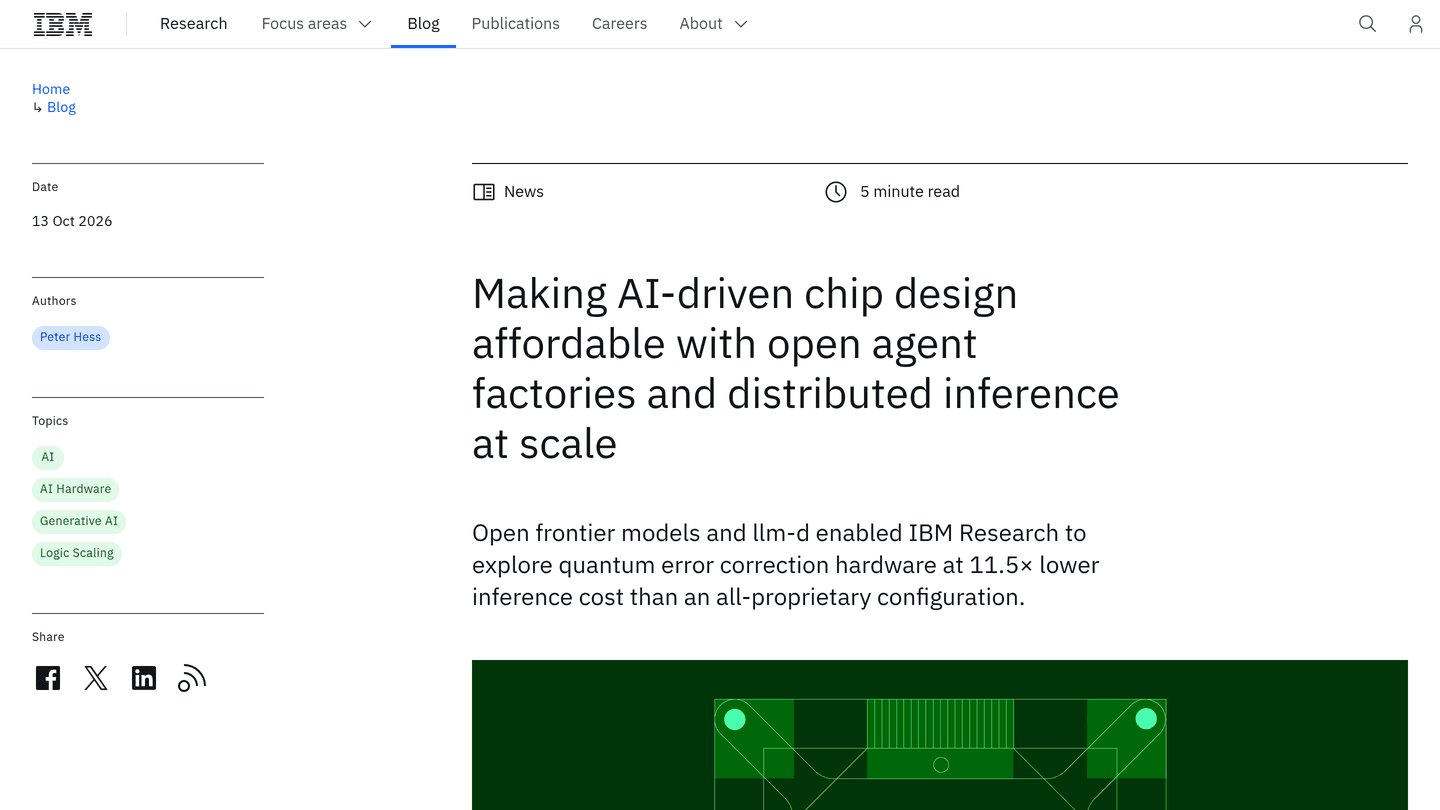
IBM Research's "agent factory" — one coordinator plus four parallel worker agents — explored chip design space with purely open models, speeding up a quantum error-correction decoder's hardware implementation 52x for about $26 of inference. A proprietary model hit 204x but cost $299. The bottleneck isn't model capability; it's inference economics.
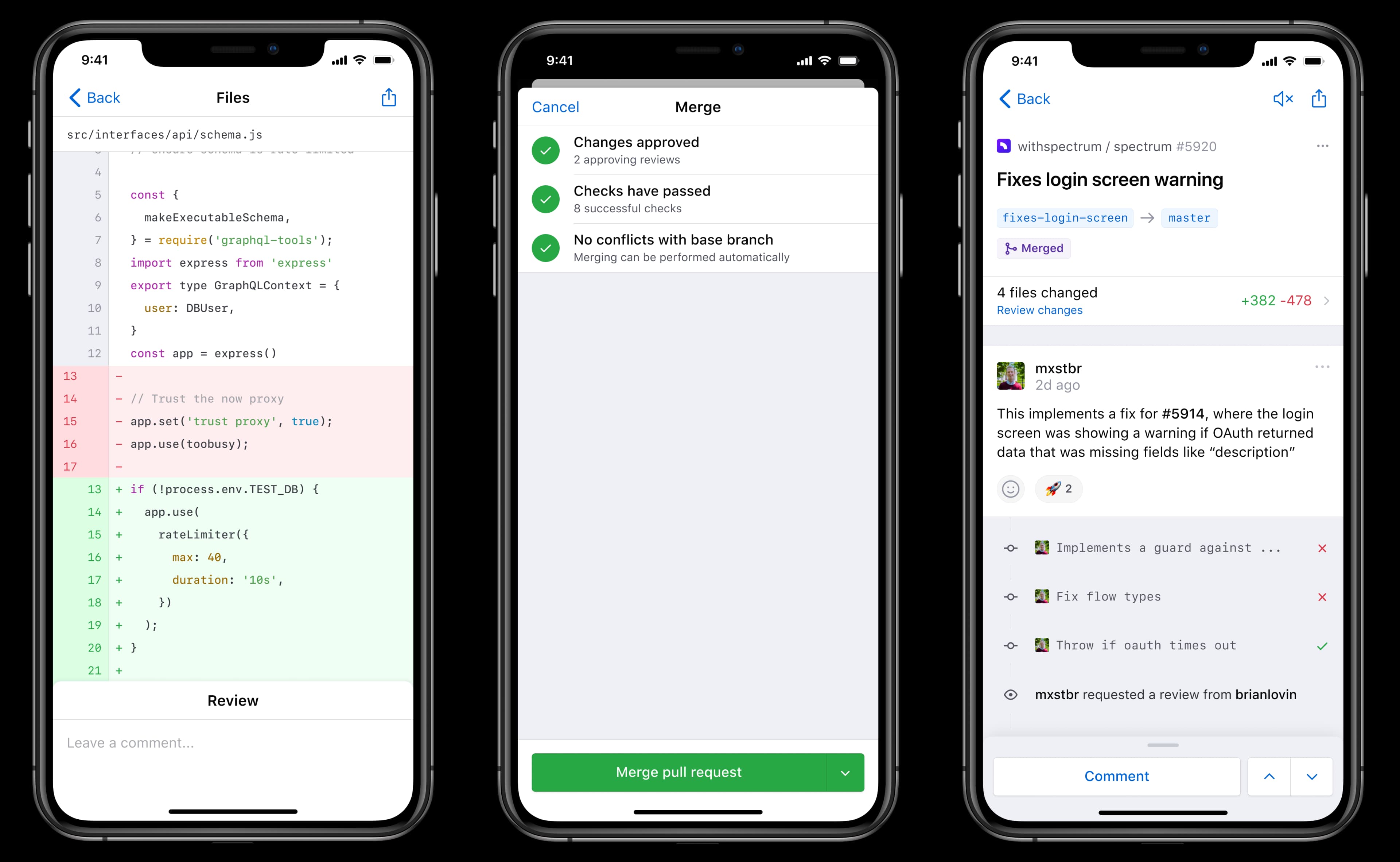
GitHub's license compliance checks are GA for Enterprise Cloud — with ruleset merge gates and a new API so coding agents check package licenses before recommending them. Compliance moves from after-the-fact review to before-the-fact policy.