One Person, Two Weeks, Seven Apps: ArtCraft Recreates the Adobe Suite, PhotoCraft Hits 23K Stars in Days
One person, two weeks, seven apps: Brandon Thomas used Claude Opus 5.5 and Rust to recreate Adobe's suite and open-sourced it, with PhotoCraft passing 23K stars in days. Free isn't the point — compatibility is: same panels, same shortcuts, byte-for-byte PSD round-trips, aimed squarely at professionals' muscle memory. Alpha bugs and legal risks remain, but 'software is being repriced' finally has a concrete shape.
On October 8, a project called ArtCraft exploded on GitHub. Its flagship app, PhotoCraft, picked up more than 23,000 stars in a matter of days — a number many established open-source projects never reach after years of work. What ArtCraft did, in one sentence: one person, with AI, recreated the entire Adobe suite in about two weeks — and open-sourced all of it, for free.
Seven apps, none missing
ArtCraft isn't one app, it's a full suite: PhotoCraft for Photoshop, VectorCraft for Illustrator, FilmCraft for Premiere Pro, LightCraft for Lightroom, PrintCraft for Acrobat, EffectCraft for After Effects, and DesignCraft for InDesign. All seven of Adobe's aces, covered.
The technical foundation is serious: everything written from scratch in Rust, no Electron, no embedded web views, rendering natively through Metal, Vulkan, DirectX 12, and WebGPU. That means small installers, fast launches, and all files processed locally with no cloud round-trip. On October 8, all seven repositories published installers on the same day — thirteen installers per app, covering macOS, Windows, Linux, plus WebAssembly builds that run in a browser tab. The license is Apache 2.0: read it, fork it, ship a modified version.
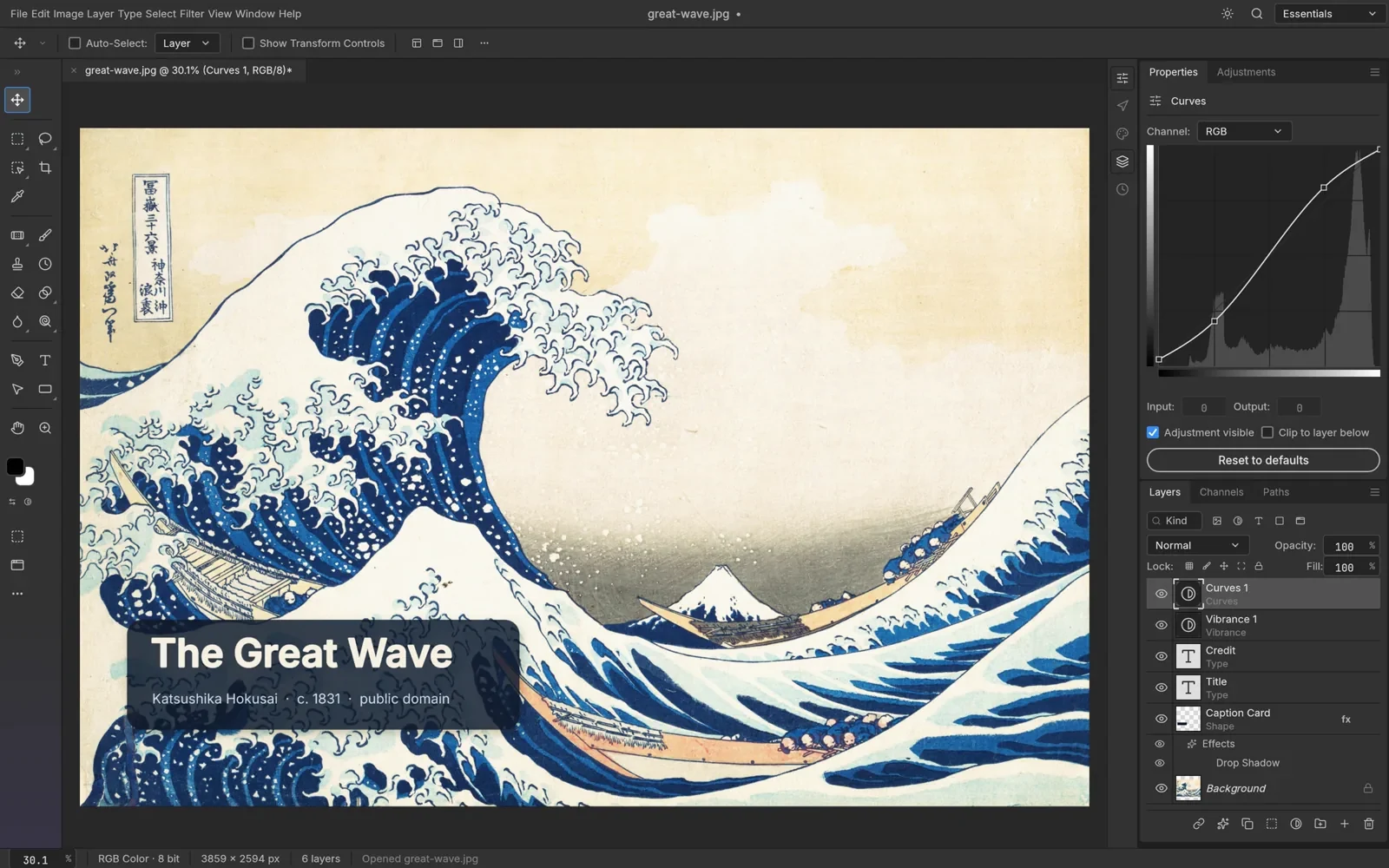
PhotoCraft's main interface: layers panel, Curves adjustment, text layers — a Photoshop veteran would think they never closed PS. Image: ArtCraft
Individually, the flagship PhotoCraft is the most complete: the project claims all 625 Photoshop menu items are wired to commands, it opens and saves layered PSD/PSB files, 134 out of 135 real-world test files round-trip byte-for-byte, and it supports 16 adjustment layers, 70+ live-preview filters, smart objects, 32-bit documents, and CMYK with ICC color management. FilmCraft copies Premiere's homework so closely it keeps the Lumetri Color panel name verbatim — its most charming trait, and, as we'll see, its biggest legal risk. DesignCraft targets InDesign territory, precisely the segment open source has covered worst: three-column magazine spreads, text wrap, paragraph styles — the fact that it runs at all is surprising.
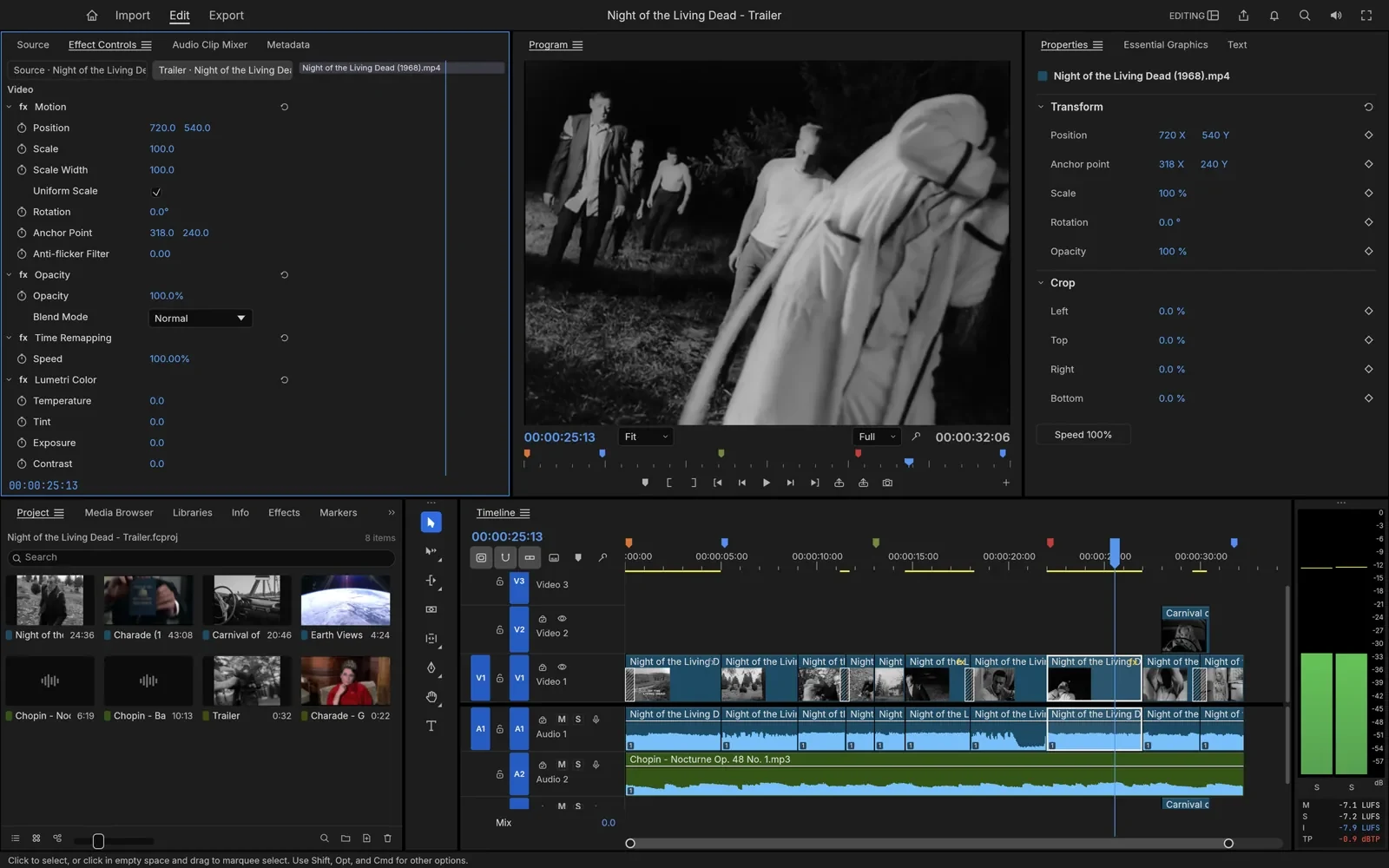
FilmCraft's editing interface: multi-track timeline, program monitor, effect controls — even the Lumetri Color name is borrowed. Image: ArtCraft
A telling detail: the GitHub organization holds more public repositories that haven't been announced — CAD, audio, decks, grids, word processing tools. Thomas's ambitions clearly go beyond these seven Adobe apps.
Who is this guy
The developer is Brandon Thomas from Atlanta. In his Reddit announcement he made a point of saying he's "not just some casual vibe coder": a 15-year industry veteran who wrote payment rails at Square moving billions in daily volume, former CEO of Storyteller.ai, about a decade of experience on large Rust projects, with a background spanning robotics and optics automation.
His weapon of choice was Anthropic's Claude Opus 5.5 — a model released on September 22. The repositories first appeared between September 30 and October 1. So from model release to seven shipped apps: a little over two weeks. TechnoLlama's comment cut to the bone: if that timeline is real, what it proves isn't that any single app is great, but how many software categories are being repriced right now.
As for "how much of the code was actually written by AI," there's no answer yet. Thomas says he hasn't written much code by hand since February, and that the work followed clean-room rules: no decompiling Adobe binaries, no copying proprietary code, only public documentation and observed behavior — PhotoCraft's PSD compatibility goes through Adobe's published file format specification. But nobody outside can verify the real ratio of AI generation to human direction, and whether the claimed clean-room process would survive scrutiny remains an open question.
Why now: Adobe handed over the ammunition
In March 2026, Adobe agreed to a $150 million settlement with the US Department of Justice — the government had sued in 2024, alleging Adobe was "trapping" people in subscriptions, hiding hefty termination fees and making cancellation deliberately hard. On pricing, the Photography plan rose from $9.99 to $14.99, Photoshop alone costs $22.99 a month, and cancellation fees on annual plans billed monthly run $30 to $330. Thomas wrote on Reddit that Adobe "charged me the cancellation fee on multiple occasions and I've hated them ever since." That's not one person's grievance — it's the creative industry's collective trauma.
But ArtCraft's genuinely clever move isn't that it's free. Free alternatives have existed for ages: GIMP, Krita, Inkscape, DaVinci Resolve — and after Canva acquired Serif, even the whole Affinity suite went free. Gadget Pilipinas's analysis nailed it: the previous generation of alternatives didn't lose on price, they lost on muscle memory — different interfaces, different shortcuts, and professional users who couldn't afford to learn a second system all drifted back to Creative Cloud.
ArtCraft's play is "compatibility first": panels, menus, and shortcuts all mirror Adobe's, so a Photoshop veteran opening PhotoCraft feels like coming home. For a decade, the "Adobe alternative" competition was fought on "which one is free." ArtCraft changed the axis to "which one requires no relearning." That's the most interesting strategic choice in the whole story.
AI-native: a door left open for agents
One layer that's easy to miss: every app exposes a command-line interface, a JSON control channel, and an MCP server. Meaning you don't have to learn retouching yourself — a local AI agent can drive PhotoCraft through MCP directly: selections, color grading, filters, executed by the agent.
That's symbolically significant: the product of vibe coding is natively built for agents to use. Traditional software is human-computer interaction; this batch of apps was "machine-machine interaction first" from day one. While reviewers argue about whether a button is clickable enough, Thomas already built the road to the agents. This may be the most underrated part of the entire story.
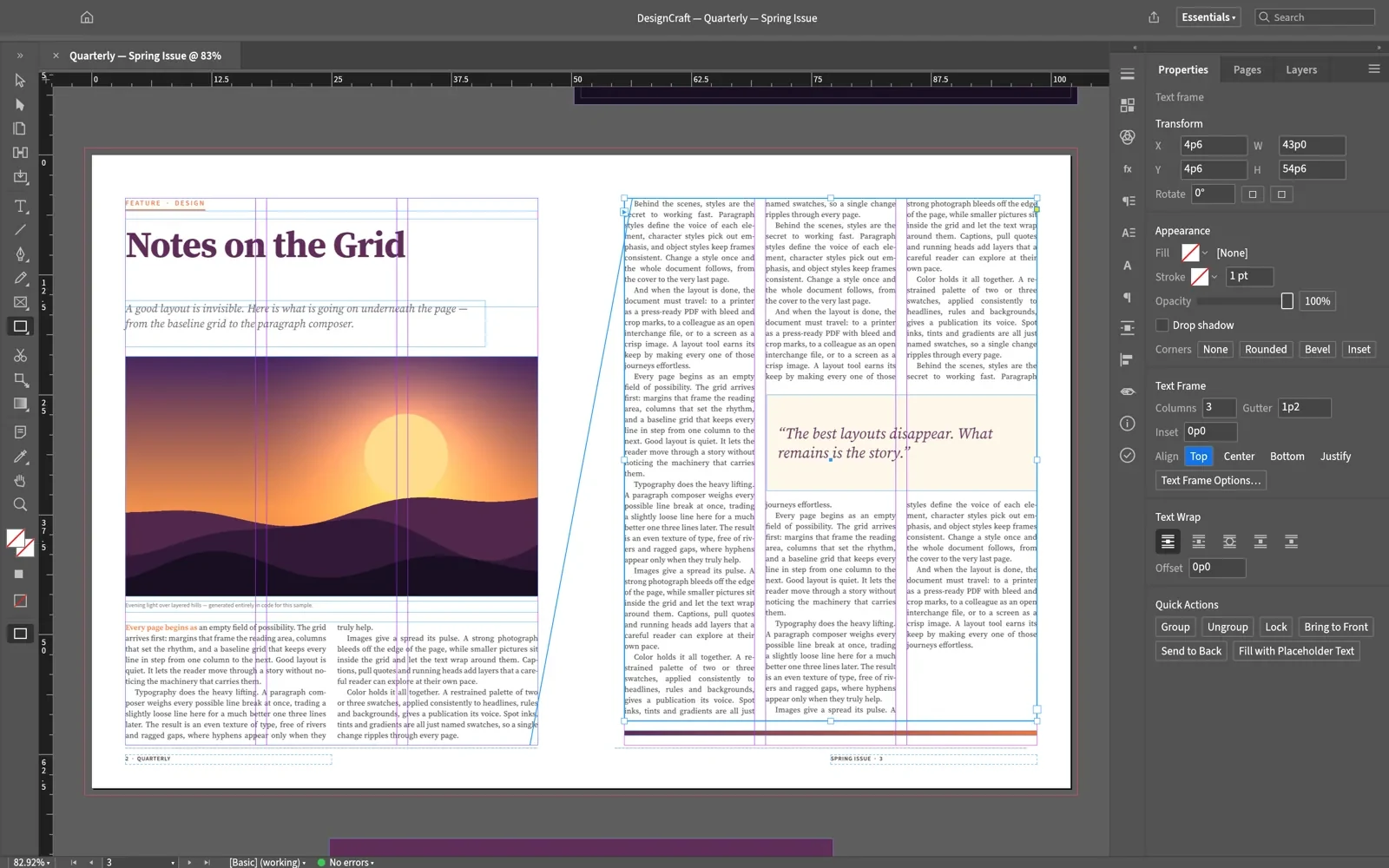
DesignCraft's layout interface: three-column magazine spread, text wrap, paragraph styles — the missing piece open source never had. Image: ArtCraft
A dose of cold water: alpha, bugs, and the walked-back "one month"
Cold water time. A Gizmodo writer tried PhotoCraft hands-on and described it as "like using glitchy, but real, Photoshop": Free Transform was an unpredictable mixed bag, Esc wouldn't exit the transform, undo fired on its own — "then after trying a few times it worked, but I don't know why." Commenters on Hacker News and Bluesky have been documenting the gaps in detail.
Thomas himself admitted on HN that the apps are early alpha, "not anywhere close to ready," and put up bug bounties asking the community for help. His original boast of "full feature parity within a month" was walked back within days to "99% parity in months, not years." A project roadmap dug up by WebProNews quantified the gap: EffectCraft scores around 94% on weighted measures, PrintCraft sits at 35% without a complete PDF renderer. Ars Technica's verdict: ambitious, free, and nowhere near finished.
The legal risk is the sword hanging overhead. Clean-room reimplementation is generally considered acceptable, but imitating the interface this closely raises trade dress concerns. FilmCraft lifts Adobe's "Lumetri Color" as its panel name — that's a brand name, not a generic description. In a courtroom, the line between "homage" and "confusion" won't be easy to draw.
Where the money comes from
The apps are free; Thomas's plan is to sell tokens for the "ArtCraft AI creation environment": a text-to-image/video engine supporting third-party models including Nano Banana, GPT Image, FLUX, Seedream, Seedance, Kling, Veo, and Sora, with model calls costing credits — embedded in the apps as one option among others. In other words, free apps are the acquisition funnel; AI generation is the business.
Whether that model can sustain a team is a more telling metric than code quality. He promises a dedicated team with filmmaking-software experience behind the project, "not some one-off flash in the pan." Believe it or not, the update cadence over the next few months will give the answer.
Verdict: the first concrete evidence of the SaaSpocalypse
My take: ArtCraft is not an Adobe killer — not yet. But it's the most concrete evidence so far for the 2026 thesis that "software is being repriced." The SaaSpocalypse idea Wall Street was hot about earlier this year — users stop paying subscriptions and just "build it themselves" — used to be a punchline. Now someone has turned it into 7 runnable apps, 23,000 stars, and a pile of real bugs.
Compare with Photopea to see what the "speed" variable means: the in-browser Photoshop alternative Photopea was built by solo developer Ivan Kutskir over more than a decade to reach its current completeness. ArtCraft shipped seven apps in two weeks — I'm not saying the quality is comparable, I'm saying the cost structure of "zero to runnable" has changed. What used to take a large team years can now produce a working first version with one person plus a strong model.
The real threat to Adobe isn't these seven half-finished apps either — it's that once "recreation" is proven feasible, there will be 700 ArtCrafts. Today it's one person recreating Adobe; tomorrow it could be ten people recreating Figma, Notion, Salesforce. The moat moves from "lines of code" to "compatibility plus community" — and those two happen to be exactly what AI can chase down fast.
Two signals worth watching over the next few months: first, whether the byte-for-byte PSD compatibility claim survives large-scale testing — that's the single hard requirement for professionals to switch; second, whether Adobe reaches for legal action — that would draw the boundary of the "AI recreation" path.
For the vibe coding community, ArtCraft's real lesson isn't about creative software, it's methodological: pick a mature category tortured by subscriptions and bad experiences, play "compatibility first plus AI-native interfaces," and one person with a model can ship a usable version one. Which category gets the next ArtCraft? My bet: any software whose "interface hasn't changed in twenty years, charges by the year, and gets cursed at daily" is on the list.
Comments (0)
Sources
Related articles
NVIDIA's Nemotron systems hit gold level at IOI 2026 (535.4/600, above the top human score of 498.27 in an unofficial run) and IMO 2026 (30/42, graded by official IMO graders) — and the team open-sourced the full recipe: SFT/RL checkpoints, both training datasets, a new 200-problem olympiad benchmark, inference pipelines, and prompts. The lesson is co-design of model, data, and inference loop: GenCorrect's generate-evaluate-refine cycle carried a 291-point model past the 438.3 gold bar.
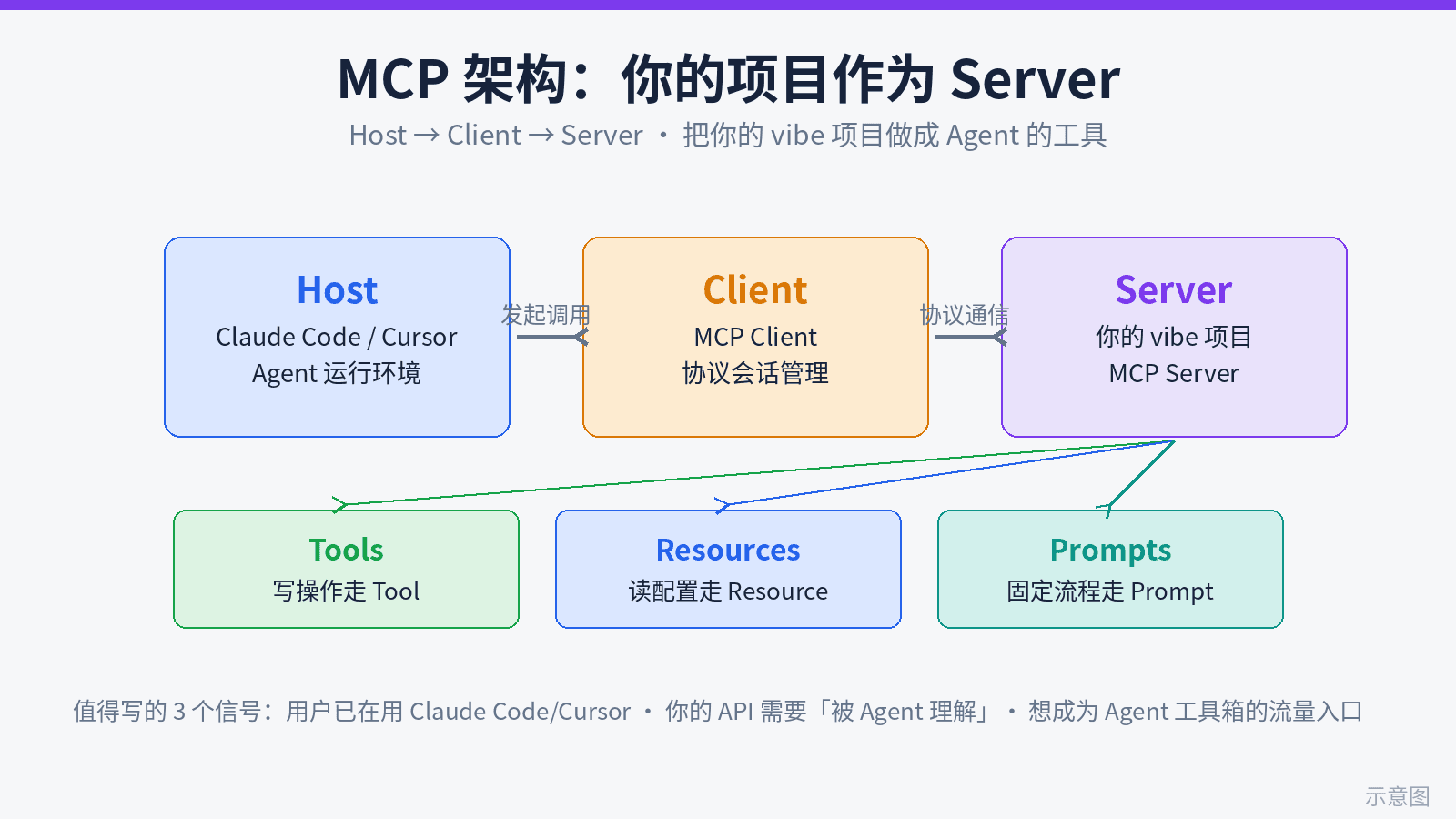
This is the supply-side MCP guide: turn your own project into an MCP server so agents come to call you. From 3 signals it's worth building and the Tools/Resources/Prompts decision table, to 150 lines of runnable TypeScript, 7 tool-schema design principles, stdio vs Streamable HTTP selection, a security red-line checklist, plus the registry submission list and a README install template — one afternoon to get your project into agents' toolboxes.
Vibe coding made building easy and getting noticed hard; community and open source are the few fair arenas where time trades for traffic. This tactical manual covers venue picks, 5 seed-user sources for the 0-20 cold start, a daily 15-minute ops SOP for 0-100, the README-as-landing-page formula, GitHub trending mechanics and launch timing, issue-driven marketing, build-in-public rhythms, crisis playbooks, 5 health metrics, and the path from community to revenue.