Google Bets $17 Billion on Wyoming: Its First Data Center There, and the Power Plan Behind It
On November 5, 2026, Google announced its first Wyoming data center, a $17 billion long-term investment built around a 702 MW fuel cell plant with carbon capture. A day later, Crusoe handed over the pre-developed site. This article breaks down where the power comes from, what the community was promised, and the questions the announcement leaves open.
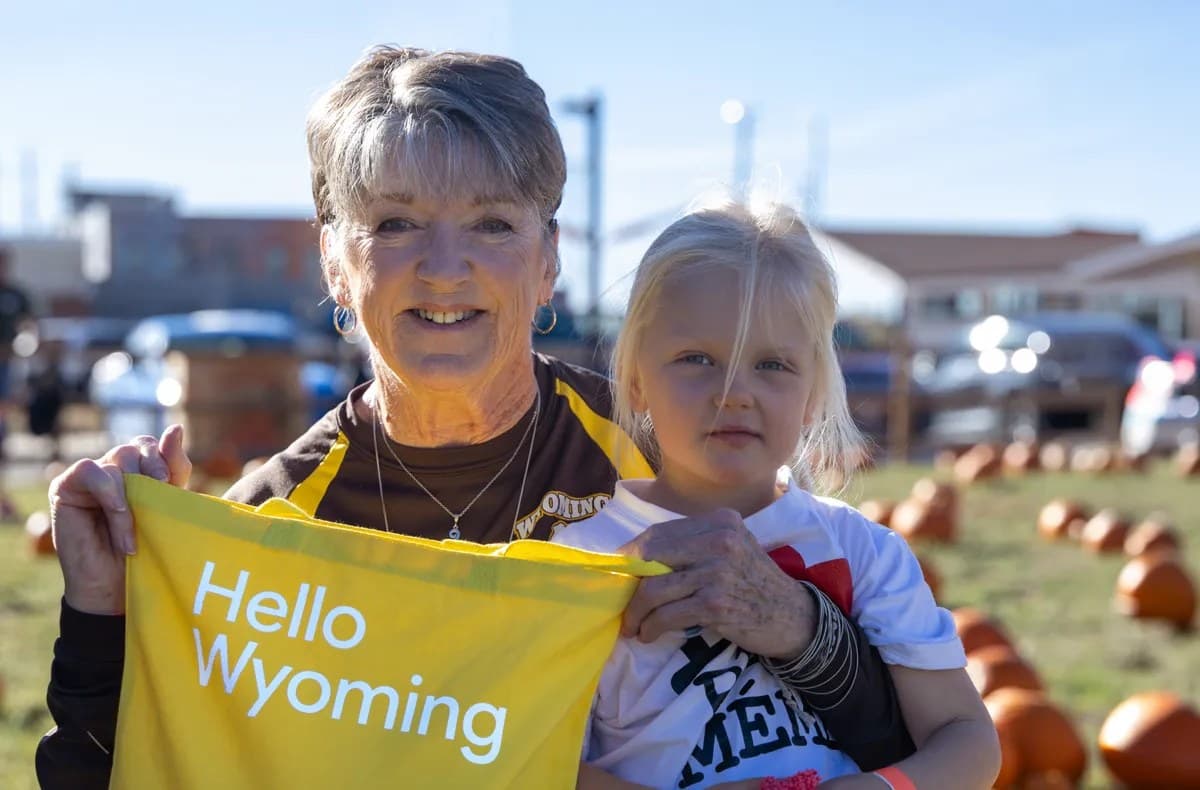

On November 5, 2026, Google announced it will build its first data center in Wyoming, a long-term investment of $17 billion. The site is in Laramie County, not Cheyenne proper. The next day, November 6, AI infrastructure company Crusoe announced that Google had acquired its data center site in southeast Wyoming — Crusoe had already completed the site selection, government approvals, and power strategy, and Google is taking over a project ready to build.
This story is worth writing not because $17 billion is a big number. AI companies have announced so many ten-billion-dollar investments this year that the figures have gone numb. It is worth writing because Google put two things on the table this time: first, where the power comes from — a 702-megawatt natural-gas fuel cell plant with carbon capture; and second, how the community signs on — Google promises to pay for 100% of the power, use less water, pay hundreds of millions of dollars in property taxes, and set up a Community Council with its partners. The race for computing power is turning into a race for energy and community consent.
1. What was announced: a first site, $17 billion, four partners
The announcement ran on Google's official blog, dated November 5, 2026, and signed by Steve Walter, VP of Global Infrastructure and Energy. The first sentence set the tone: "Today, we are announcing our first data center in the state of Wyoming," a "long-term, $17 billion investment in the Cowboy State."
There are four partners: Tallgrass Energy, Black Hills Energy, American Electric Power (AEP), and Related Digital. The announcement does not break down each partner's role line by line, but the public filings from the three sides sketch the picture: AEP is behind the fuel cell plant, Tallgrass handles natural gas and carbon sequestration, Black Hills supplies local gas-fired generation, and Related Digital is the data center developer. This is not Google buying land and building alone; it is an energy package bundled into a data center project.
One detail worth noting: Google did not find this land from scratch. In its November 6 release, Crusoe said it and Tallgrass were the joint originators of the campus, developing its power and data center infrastructure together. In other words, the groundwork for the project Google announced on November 5 — the site, the approvals, the power plan — had already been laid by someone else. Google bought a project that is ready to build, not a blank sheet of paper.
2. Where the power comes from: the 702 MW fuel cell plant is the heart of the deal
The hardest question for any AI data center is never "where do we build it" but "where does the power come from." Google's answer this time is a hybrid plan, centered on a 702-megawatt fuel cell plant.
According to Google's announcement, the project is contracted with AEP to feature "a first-of-its-kind, commercial-scale, 702 MW fuel cell development with carbon capture and storage (CCS) — the largest planned development of its kind to date." Fuel cells do not burn natural gas; they convert it into electricity through an electrochemical reaction. The cells will be made in America by Bloom Energy. Google says the approach will help minimize emissions and water use in energy production for its data infrastructure.
The carbon capture part works like this: the captured carbon will be permanently stored in geologic formations at Tallgrass's nearby Eastern Wyoming Sequestration Hub. Google's wording is "a large majority" of the plant's carbon emissions — but it gives no specific percentage, a point we will return to. The project builds on Google's first CCS project in the U.S., announced last fall, and brings its total contracted CCS capacity to nearly 1 gigawatt.
AEP's news release of October 14, 2026 puts finer numbers on the plant: AEP plans to invest approximately $4 billion in the 702 MW fuel cell project near Cheyenne, with Google buying the power under a long-term 20-year power purchase agreement (PPA). The power will come from Cheyenne Fuel Cell, LLC, which is approximately 92% owned and controlled by AEP and nearly 8% owned by funds advised by Basalt Infrastructure Partners. AEP and its partners plan to start construction in 2026, and the facility is expected to be fully operational by the end of 2028. The same release notes that the project follows agreements between Google and Black Hills Corp. that took effect on September 30 — in other words, pieces of the power puzzle were already falling into place before Google's public announcement.
Beyond the fuel cells, Google is also sourcing power from gas generators operated by Tallgrass Energy and Black Hills Energy, and conducting a technical front-end engineering and design (FEED) study to evaluate fitting Tallgrass's combined cycle turbines with CCS technology. Google calls this combination "a novel approach to powering data centers efficiently," one that accelerates the commercialization of CCS.
Looked at calmly, the plan has two faces. On one side, it is among the most concrete "bring your own power" plans any large tech company has published in the U.S. — not a vague promise to "use clean energy," but a stated number of megawatts, a named funder, a named supplier, and a target year. On the other side, the fuel cells still run on natural gas, and the "near-zero emissions" claim depends entirely on whether the carbon capture gets built as planned and what its capture rate actually is. The announcement gives no number for either.
Why fuel cells instead of another gas turbine plant? AEP's release gives its reasoning: Bloom's fuel cell technology can be deployed rapidly and provide reliable, on-demand power, and it generates electricity without combustion of natural gas. For a data center that cannot wait for grid expansion, "fast to deploy" is itself a form of value. AEP is no small player, either: its release notes plans to invest $78 billion from 2026 through 2030, operating the nation's largest electric transmission system and serving 5.6 million customers in 11 states, with about 33,000 megawatts of owned and contracted generating capacity. A utility of that scale building a 702 MW plant for a single customer says something in itself — AI data center power demand has grown large enough to change how grid companies plan their investments.
3. The next day, the land changed hands
On November 6, the day after Google's announcement, Crusoe issued a release announcing that its site in southeast Wyoming had been acquired by Google. The transaction marks the completion of Crusoe's engagement in pre-development work on the project — which included data center site selection, governmental approvals, and power strategy.
Chase Lochmiller, Crusoe's co-founder and CEO, said in the release that Crusoe's pre-construction efforts — "origination, entitlement, and de-risking" — had set up the project for construction and eventual operation. He also disclosed Crusoe's own scale: more than 6 GW contracted and over 40 GW in its pipeline. The release does not mention the transaction price.
Crusoe added one more line: it recently announced it is the developer of Google's data center campus under construction in Armstrong County outside of Amarillo, Texas. In other words, the Crusoe–Google relationship goes beyond Wyoming: one campus under construction, one just handed over. That also explains how Google could complete a land acquisition the day after its announcement — the two companies were already partners on the same track.
For readers, the significance of this episode is that today's large AI data centers are increasingly a relay race. One company does the early work — finding land, securing approvals, negotiating power; a giant steps in at the right moment to fund it and build it. Behind the $17 billion headline is a supply chain with a clear division of labor.
4. The community half: power bills, water, taxes, and a council
Half of Google's announcement is not about technology but about community. That is not politeness; it is because data center expansion in the U.S. is meeting growing local resistance. Residents' concerns are specific: will power bills go up, is there enough water, and what does the town actually get besides a few big buildings?
Google's commitment is written bluntly: "We will pay for 100% of the power we use, and when we build data centers, we'll cover the infrastructure needs directly driven by our growth." That is the hardest sentence in the whole announcement. Its subtext: residents should not pay for a data center's electricity. On the same day, OpenAI published a similar set of community commitments — two giants speaking on the same day shows this is no longer one company's PR choice, but a question the whole industry is being pushed to answer.
On water, Google's answer is air cooling. The announcement says the Wyoming data center will be air-cooled to minimize strain on local water resources. Google also says it remains committed to investing in local water replenishment efforts.
On money, Google expects the project to generate hundreds of millions of dollars in local property taxes for Laramie County and School District 1. Community investment plans will focus on K-12 education, workforce development, and pathways to accelerate Wyoming's economy. Google says it has already hosted its first Community Day at the Cheyenne Children's Museum, and is partnering with local institutions through targeted grants to champion STEM education, support local entrepreneurs, and expand skilled trades training across the state.
Before making these commitments, Google says it hosted a community meeting in downtown Cheyenne, speaking with more than 200 residents in Laramie County and gathering their priorities. Residents raised three main points: a holistic picture of the project's economic benefits, more information on career and job skilling opportunities, and how data center growth is affecting Cheyenne as a community. On the last point, Google, Tallgrass Energy, Black Hills Energy, Related Digital, AEP, and Bloom Energy are standing up a Community Council "designed to develop common-sense solutions to support Cheyenne through this phase of growth."
There is a simple test for how much these commitments are worth: whether they can be verified. Paying for 100% of the power, air cooling, and the property tax figures can all be checked against local books in the coming years. A mechanism like a Community Council, though, is only worth as much as its meetings and its real problem-solving — the announcement says nothing about its rules or public reporting, and that is worth watching.
Google closes the announcement by reminding readers what data centers actually support: online banking, digital maps and wayfinding, hospitals and 911 systems. It cites a 20-year track record of data center development and promises "to show up today and tomorrow for Cowboy State residents." That reads like a slogan, but in the context of the whole announcement it answers a more practical question: when a small town takes in a power-hungry AI factory, why should it trust the company to behave responsibly for decades? Google's answer is: look at our last 20 years, and look at what we have now written down about power, water, and taxes. The record and the promises are both on the table; what remains is delivery.
5. The questions still unanswered
There is a gap between a good announcement and a good data center, and it is filled with unanswered questions. What Google did not say matters as much as what it did.
First, there is no timetable for the data center itself. The fuel cell plant has clear milestones — construction in 2026, fully operational by the end of 2028. But Google has published no start date, no opening date, and no computing capacity for the data center. $17 billion is a "long-term investment," with no breakdown of how it is phased over the years.
Second, the carbon capture numbers are vague. What exactly is "a large majority" — 80% or 95%? The project's whole climate ledger changes with that number. Google says its total contracted CCS capacity will reach nearly 1 gigawatt, but that is contracted capacity, not capture capacity already built. The capture facilities themselves are still in planning and construction, and their performance can only be verified after they start running.
Third, the fuel cells still run on natural gas. Bloom's technology does not burn natural gas — true; but upstream gas extraction, transport, and methane leakage are outside the scope of this announcement. Whether "near-zero emissions" is measured at the plant alone or across the whole fuel chain, the announcement does not say.
Fourth, the enforcement mechanism for the community commitments is unclear. Is paying for 100% of the power written into the power purchase agreement, or is it a public commitment to the community? If the project is delayed, scaled back, or canceled, what financial assurances protect other electricity customers? The announcement does not go into it. OpenAI's community compact, published the same day, explicitly mentions providing financial assurances before major spending; Google's announcement has no corresponding clause.
None of this is nitpicking. A $17 billion project means years of construction and decades of operation, and any single number carries that weight. What can be judged now is the quality of the announcement: more specific than its peers on the power plan, more direct than its peers on community commitments, but still blank on the timetable and the capture numbers. Readers should remember those blanks and check them against progress in 2027 and 2028.
6. Why people building with AI should care about a data center in Wyoming
If you are an independent developer or a vibe coding enthusiast, a data center in Wyoming may look far away. It is actually close, because it decides what you will pay when you call a model, what computing power you can get, and where that power comes from.
First, the cost structure of AI is shifting from "models" to "power." For the past two years, model makers competed on parameters and benchmark scores; now they compete on who can secure power, land, and community approval. Google's announcement is essentially a proof that "we can get the power sorted": 702 MW of self-supplied power, a 20-year purchase agreement, carbon capture and storage — terms that will become the cost base for Gemini, Gemma, and every AI service on Google Cloud. The harder power is to get, the harder inference prices are to bring down.
Second, community consent is becoming a hard constraint on deployment. A data center is no longer a business where you find cheap land and build. Residents want to see power bills stay flat, water left alone, and real benefits for the town. Google and OpenAI publishing community commitments on the same day shows the giants already know: without the community's consent, even permitted land cannot break ground. For small teams, that means choosing a cloud vendor and a region is no longer just about price and latency — it is also about that vendor's local reputation and compliance record, because a campus halted by its community halts your service too.
Finally, this is a practical reminder for vibe developers: infrastructure news is worth reading. Model launches are exciting, but what decides whether your project keeps running is often these dry-looking announcements — when a power plant comes online, which region's capacity opens first, which vendor's promises were kept. Google says the fuel cells will be fully operational by the end of 2028; that date is worth writing down, because only after that does the Wyoming campus's computing supply truly start to ramp.
Three dates are worth keeping. The first is sometime in 2026: AEP says the fuel cell plant starts construction this year, and whether it breaks ground on schedule is the first test of the project's execution. The second is the end of 2028: the fuel cells are due to be fully operational, and by then there will be real numbers for the 702 MW of power and the actual performance of carbon capture. The third has no fixed date: the Community Council's first batch of "common-sense solutions," and the first property tax receipts in Laramie County — those are the returns local residents will actually feel. The announcement is published; the verification has just begun, and its yardstick is hidden in those three dates.
In one sentence: with $17 billion, Google has bought more than a plot of land in Wyoming — it has bought a package of "power + carbon capture + community consent." The package is written in unusual detail, but the most important numbers — the opening date, the capture rate, the phasing of the $17 billion — are still blank. The announcement is out. The verification starts now.
Comments (0)
Sources
Related articles
On November 5, Google took Gemini Omni 1.2 Flash to general availability: 15-second clips, 720p at $0.07 a second, and multi-turn editing without regenerating. The real news is not longer and cheaper — it is AI video you can run as a production process.
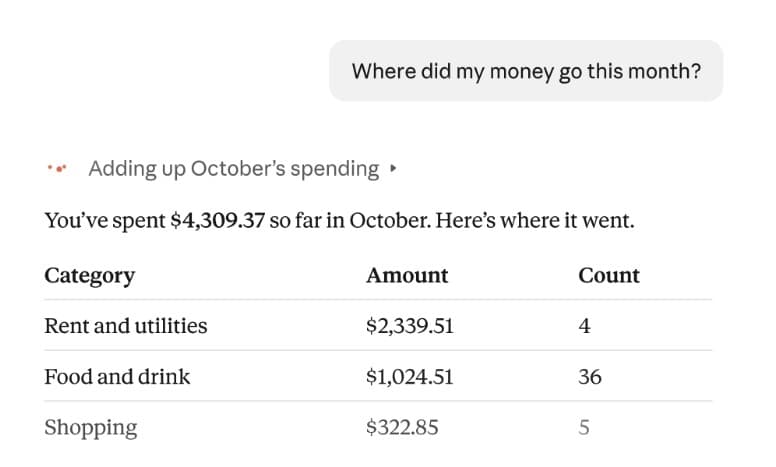
On November 5, 2026, Anthropic added Personal Finance to Claude: link US bank and card accounts through Plaid and ask about your spending, read-only. ChatGPT did the same in May; Claude is six months late, betting the word “read-only” buys trust — but read-only stops theft, not wrong totals.
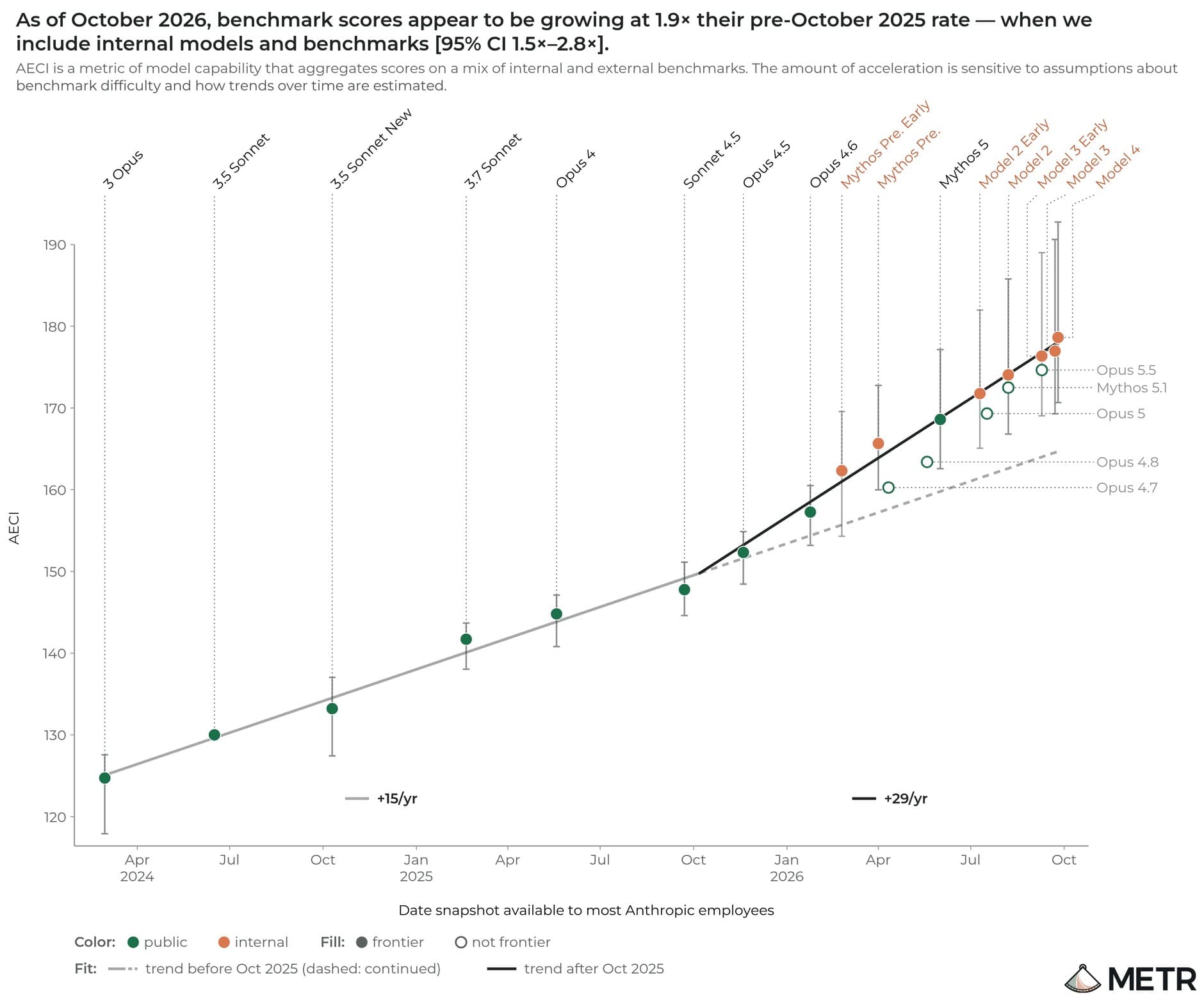
METR spent 11 weeks inside Anthropic and estimates the lab is now improving its models about twice as fast as before, with most of the acceleration coming from AI itself. But most of the key evidence was redacted.