When AI Starts Interviewing You: HackerRank Turns "Directing AI" Into Hiring Currency
HackerRank's AI interviewer Chakra is now generally available: it grades not just what you build, but how you direct AI to build it. Allowing AI use cut cheating flags by 70-80%, and CEO Vivek Ravisankar nails the shift: now that anyone can produce an artifact, what is scarce is the decision-making process. Vibe coders, stop showing only finished products — start showing the process.

Chakra Goes GA: After 500,000+ Interviews, HackerRank Shows Its Hand
On Monday, October 5, HackerRank announced that its AI interviewer Chakra is now generally available. This is not a rushed launch: it has been in beta for roughly six months and completed over 500,000 interviews. Beta customers include Snowflake, Snorkel, and Capgemini — and HackerRank's own recruiting team has been using it to screen candidates. Dogfooding before selling is a point in its favor.
Some background on the company. HackerRank launched at TechCrunch Disrupt in 2012, a Y Combinator alumnus, and today serves 3,000+ enterprise customers (Amazon, Nvidia, Clay, Replit) with a developer community of 30 million+. Its traditional business is the coding-challenge question bank — the infrastructure behind programming interviews. With Chakra, it is disrupting its own business: the question bank evaluated "what you can write," while Chakra evaluates "how you get AI to build it."
What does a Chakra interview look like? Candidates work on problems inside a live canvas connected to a real code repository, with an AI assistant embedded directly in it. Chakra doesn't just proctor — it watches your working process in real time and asks follow-ups: why did you choose this approach? How would you change it if a new constraint were added? What made you accept that piece of AI-generated code? The trick is simple: you are allowed to use AI, but you are watched on how you use it.
"AI Fluency": Defining the New Hard Currency
The core concept Chakra introduces is AI fluency. HackerRank's definition is not "can you write code with AI" but three things: how you describe a problem to AI (decomposition and context-feeding), how you judge AI output (review and skepticism), and how you steer it toward a solution (iteration and correction). In other words: the more capable AI becomes, the more employers want to see the part that is still you — judgment, trade-offs, direction.
There is also a bold process consolidation: the traditional recruiter screen, take-home assignment, and engineer interview are compressed into a single session. Chakra does the scoring, but the final hiring decision stays with humans. That boundary is worth remembering — more on why later.
And there is a counterintuitive finding worth singling out: allowing AI use actually reduced cheating flags by 70-80% compared to traditional proctoring (varying by region and candidate seniority). CEO Vivek Ravisankar's explanation is blunt: once AI use is openly permitted, nobody needs to cheat with hidden tools. The platform still flags unauthorized tools like Cluely and second devices — "AI is allowed" is not the same as "anything goes."
Why This Was Inevitable: Finished Artifacts Are No Longer Scarce
Ravisankar said something in the interview worth chewing on:
The previous modality of evaluation was evaluating the output. Now, because of AI, anybody can produce an artifact.
In plain terms: evaluation used to measure output; but with AI, anyone can produce a finished artifact. That sentence captures the paradigm shift sweeping the hiring market. The LeetCode question-bank model worked on one premise — that "being able to write correct code" is a scarce skill. Today, a non-CS student with Cursor can ship a full-stack app in a day. When finished products are no longer scarce, the only thing that distinguishes candidates is the decision-making process: how you define problems, make trade-offs, catch AI hallucinations, and pivot when constraints change.
This logic is a win for both sides. Candidates no longer compete on "how many problems you memorized"; employers see a person's real problem-solving stream instead of a polished take-home. The biggest problem with take-homes was always "did you write this yourself" — Chakra sidesteps it entirely: so what if AI wrote it? What matters is how well you directed it.
Ravisankar compared this transition to Apple's leap from the iPod to the iPhone, adding that "Chakra is going to be the headline." There is marketing in that analogy, but one thing he got right: the unit of evaluation in the question-bank era was the "problem"; in the Chakra era it is the "working process." When the unit of evaluation changes, the whole hiring chain — resumes, portfolios, interview prep — has to change with it.
What It Means for Vibe Coders: Stop Showing Only Finished Products
For vibe coding practitioners, this news is actually good — you are the first generation of people who "direct AI for a living." But good news needs a new playbook. Listing "proficient in Cursor / Copilot" on a resume used to be enough; in the Chakra era, employers (or rather, AI interviewers) want to see not what tools you use but how you use them. Three concrete moves:
First, keep your agent collaboration records in your portfolio. Most portfolios only show screenshots and links of finished products — that is a half-finished artifact in the Chakra era. A better approach is to preserve "process evidence": where AI's first proposal went wrong, how you spotted the problem, what context you gave to fix it, and why you ultimately accepted a solution. One real record of you correcting AI beats ten finished-product screenshots.
Second, write your decision process into the README. A common vibe-coder weakness is a README that only lists features and deployment steps. Add a "design decisions" section: why this architecture, which alternatives you tried, what absurd suggestions AI made and why you rejected them. These are written proof of AI fluency — when an interviewer asks, you have something to tell.
Third, prepare "a time you corrected AI". This will likely become the most common follow-up question of the Chakra era: "Tell me about a time you found AI output wrong and intervened." Start collecting material now: hallucinations, performance pitfalls, security holes, derailed architecture advice — every moment you overruled AI with engineering judgment is story material. Tell it with the STAR method: the background, what AI suggested, the problem you spotted, how you corrected it, and the outcome.
The Sober Side: Bias, Compliance, and the "Scores but Doesn't Decide" Boundary
Of course, AI interviewers are far more complicated than the words "efficiency gains." Start with bias. Ravisankar was confident: "AI is way less biased than humans, if you tune it properly." But hiring is one of the most heavily regulated domains on earth, and confidence alone doesn't clear the bar.
Take New York City: the law requires automated employment decision tools to pass independent bias audits and notify candidates in advance that they are being evaluated by an algorithm. HackerRank says Chakra complies. But compliance is the floor, not the ceiling. The real question: could an AI that "watches your working process in real time" mistake style differences for competence differences? Non-native speakers' expression habits, introverts' fewer follow-up interactions, candidates from cultures where "questioning the tool" feels unnatural — these are personality diversity in front of a human interviewer, but potential deductions in an AI scoring system. Five hundred thousand beta interviews is a solid sample, but it mainly proves "it runs at scale." Proving fairness takes more time and more transparent auditing.
Then the "scores but doesn't decide" boundary. Chakra only scores; the final call stays human. It is a clever design — efficiency kept, legal and moral responsibility kept with humans. But will that boundary blur in practice? When a candidate gets a low AI score, how much psychological energy does a human interviewer still have to "overrule" it? Automation research has long warned about anchoring: humans lean ever harder on machine judgment. "Humans make the final decision" is a real commitment today; in two years it may read as a disclaimer. Whether the line holds depends on how each company using Chakra designs its process — not on one promise from HackerRank.
There is also a more practical problem: candidates' "exam prep" will catch up fast. The LeetCode era spawned an entire grinding industry; the Chakra era will spawn "AI fluency training." Once the follow-up playbook is decoded and templates for "correcting AI" are compiled, this evaluation will return to an arms race — on a track shifted from "memorizing problems" to "memorizing process." Every scalable assessment is eventually caught by scalable prep; that is the iron law of hiring history. Chakra's advantage window may be two to three years. After that, HackerRank will need to find the next unit of evaluation.
The Verdict: The Market Is Pricing the Ability to Direct AI
Strip away the marketing, and the signal that matters in Chakra's GA is this: the hiring market has started formally pricing the ability to direct AI. This is not an "AI replaces interviewers" story; it is the fundamental question of "what to evaluate" being rewritten — from evaluating output to evaluating your judgment while collaborating with AI.
For vibe coders, this is the best news and the worst news at once. The good: you are the earliest practitioners of this skill; what those 500,000 interviews measured is what you do every day. The bad: "knowing how to use AI" is fast becoming a baseline requirement rather than a differentiator — like "knowing how to use Office" back in the day. When everyone can ship finished products, employers will only pay for your judgment, taste, and trade-offs.
So stop showing only finished products and start showing the process. Your correction records, your decision documents, those moments you overruled AI — those are the real resume of the Chakra era. And HackerRank disrupting its own question-bank business is itself a reminder: in the AI era, the only constant is that the "unit of evaluation" keeps moving up. The next round of disruption may take down the very AI-fluency standard being built today.
Sources
Related articles
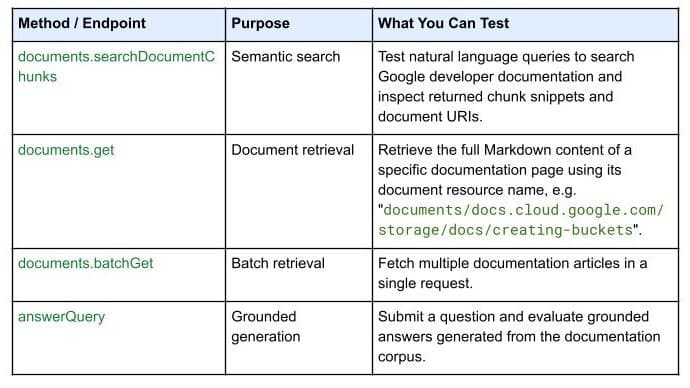
On October 7, 2026, Google Developers launched the Developer Knowledge API ecosystem: official Google Cloud, Firebase, and Android docs as a programmatic source of truth, with a gcloud CLI surface, an official Agent Skill (one-line install), an MCP server, and multi-language client libraries. Why 'docs as APIs' uproots vibe coding's classic failure of models misremembering APIs.
On October 8, 2026, Google Cloud launched the Gemini agent at Gemini at Work 2026: a universal agent for work that takes objectives, plans by itself, auto-selects between Gemini and Claude models per task, and introduces 'coworker agents' with their own email, calendar, and directory seat. Four judgments on why the second half of the agent race is about 'agents that feel like colleagues.'

Reported by InfoQ on October 3: a GPT-4 coding agent given CVE descriptions successfully exploited 87% of 15 test vulnerabilities, versus 7% without descriptions. rclone's author received 40+ security disclosures in a single month — more than the project's previous decade combined; QEMU has shortened its embargo period. The vulnerability disclosure timeline is collapsing under agent speed.