On November 17, 2026, Google made Tasks in Gemini free in six countries on Gemini 4 Hydrogen. Flip the toggle from Chat to Task and Gemini calls businesses, checks bills, compares products and pays with Google Pay under a spending cap — in its own sandboxed VM. Google admits tasks can still fail.
VIBEFIX NEWS
AI Coding News
Original perspectives on tools, frameworks, open source, and the creator ecosystem.
Microsoft Ignite 2026 opened on 17 November with governance as the headline: Agent 365 gained dynamic risk scoring and cost management, while Entra Agent ID can discover 60 local agent types — including Claude Code, Codex, and Copilot CLI — and give each an identity that is disabled after 60 idle days. Agents have moved from answering questions to changing the cloud, and Microsoft's answer is about who issues the ID, who keeps the books, and who can stop them.
On 22 November 2026, OpenAI chief scientist Jakub Pachocki published an internal curve: GPT-3.5 at about 0.99 log-perplexity, GPT-4 at about 0.91, the maths-breakthrough model at about 0.76 — and nobody knows what capabilities sit in the next window, 0.68 to 0.70. His proposal is that the industry agree on speed limits measured by one shared ruler. The ruler has four known flaws, and no other lab has followed yet.
On 19 November 2026, Google put Genie 4 in developers' hands via the Gemini API: continuous 720p, 24fps worlds with 48kHz stereo audio, explorable with WASD and changeable mid-session with text prompts. About $0.10 per second (approximate), 120 seconds per session, no published rate limits. Not the 28 October announcement — this is the developer release.
On 19 November 2026, Docker launched its new 'Run on Trust' brand: containers isolate workloads, but agents are actors that decide for themselves. Three trust pillars — supply chain, runtime, ecosystem — backed by Sandboxes microVMs, AI Governance policies, and Hardened Images. Within 48 hours, Java4Shell fixed images put the story to a live test — all figures vendor-reported.
On 20 November 2026, Tencent released the full weights of flagship model Hy4: 770B total parameters, 49B active per token, and a 1,048,576-token context. Beyond the parameter count, the licence is the real story: the model card names the custom Tencent Hy License, whose Section 10 draws two lines for model-as-a-service operators — not Apache 2.0, as same-day coverage claimed.
On 20 November 2026, Runway disclosed its 'software factory': cloud agents drove 38% of October merges (0.1% in June), median first-approval wait fell from over two hours to about five minutes, and weekly merges more than doubled. This is not a productivity slogan but a construction log with acceptance criteria, risk tiers, and caveats — guardrails included.
Together AI disclosed on 21 November 2026 that an AI coding agent committed a credential to the public repo xorl, letting an unauthorized party download prompt samples from June and July requests to MiniMax M3, GLM-5.2 and Kimi K2.6. Five of the credentials tested were Dragos canaries. The next day OpenRouter off-boarded three providers and stripped 125 endpoints of Zero Data Retention eligibility.
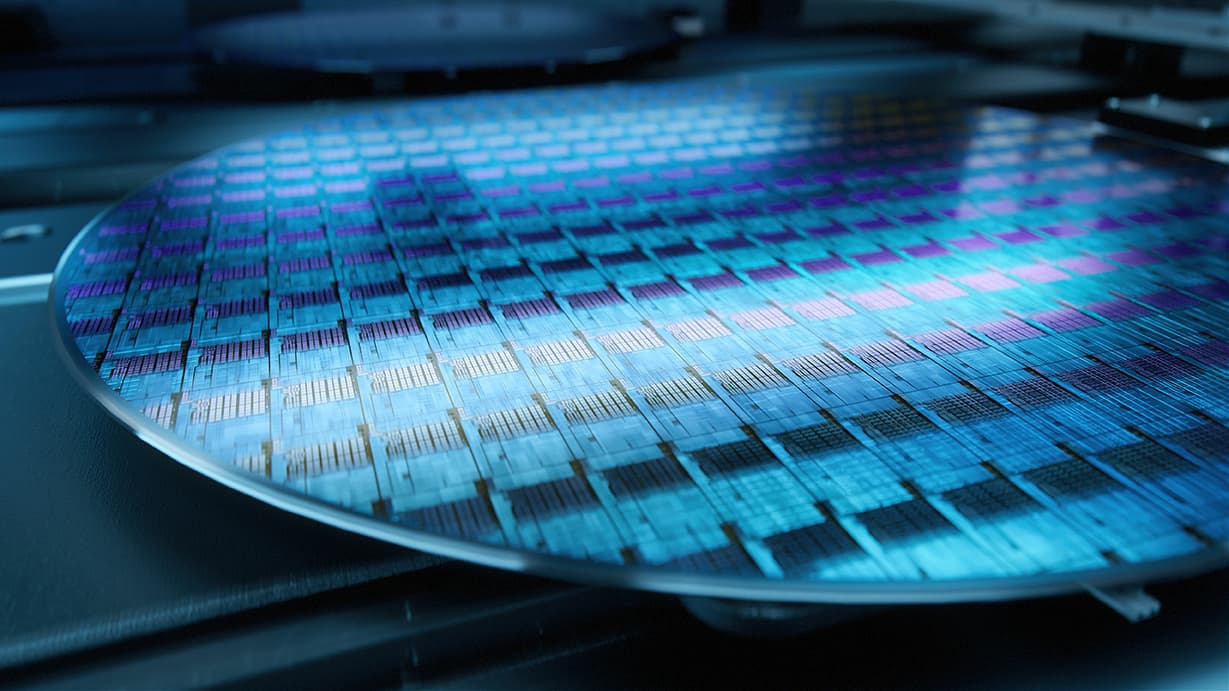
Around 18 November 2026, OpenAI disclosed that its models helped design chips: Jalapeño's vector unit saved about 13% of standard-cell area and its matrix unit about 10%, silicon-proven after tape-out, while AMD's flagship GPU IP gained up to 14% in PPA. The numbers are vendor-reported, and the blog's own caveats matter as much as the gains.
On 19 November 2026 the Eclipse Foundation launched Enclave 1.0, an open-source sandbox that lets six coding agents — Claude Code, Codex, OpenCode, Copilot CLI, Pi and Theia — work autonomously in isolated containers, with only the files, network hosts and secrets each task needs. Vendor-neutral and MIT-licensed, but 1.0 has limits: the experimental QEMU backend has no gateway enforcement yet.