Zenzap Raises $44M: Putting AI Agents in Frontline Workers' Group Chats, Taking On WhatsApp at Work
Zenzap came out of stealth Oct 14 with $44M (Bessemer + Lightspeed leading), betting on Multiplayer AI: agents living in work group chats instead of private DMs. 40K+ workflows, 400+ connectors, targeting the 99% of frontline staff Slack never reached.
When the AI assistant moves from DMs into the group chat
For the past two years, the default shape of AI tools has been one-on-one: you open a dialog box and chat privately with an assistant. It writes your emails, looks things up, runs your code — highly efficient, but always just your efficiency. On October 14, 2026, an Israeli company called Zenzap came out of stealth with $44 million in funding, betting on a different shape: AI shouldn't live only in private chats; it should move into the group chat — sitting in the same work channel as employees, getting @-mentioned, sharing context, getting work done together. They call it "Multiplayer AI." The round was jointly led by Bessemer Venture Partners and Lightspeed Venture Partners, with The Garage participating and individual backers including Wix president Nir Zohar.
First, the hard numbers. Zenzap was founded in 2022 by CEO Guy Weiss with Jonatan Bien and Noam Neumann; of the $44 million total, an $11 million seed round closed in 2022 and a $33 million Series A closed in August 2025. The company has 45–50 people across Tel Aviv, the US, and Europe. Named customers include FedEx, Dollar General, Taco Bell, Starbucks, Casey's, and Regal, plus branches of IHOP and McDonald's — note: branch-level, not chain-wide, a qualification the CEO made himself. Customers have built more than 40,000 automated workflows on the platform, with 400+ connectors. Paid plans start at $51/month (20 users), with AI agents and transcription billed on credits. Compliance credentials are all checked at once: SOC 2, HIPAA, ISO 27001, GDPR.
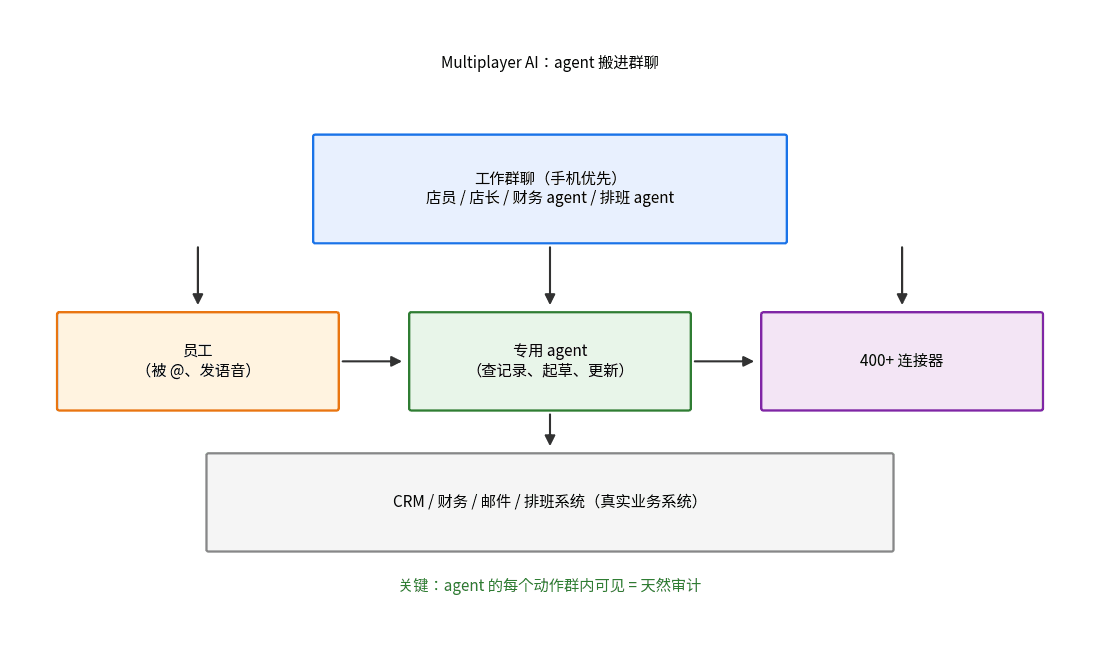
The product is a mobile-first workplace messenger: group chats, DMs, task management, calendar, plus AI voice chat, search, and workflow agents. The canonical scenario: someone writes in the group "an invoice is overdue," and the finance agent finds the record, drafts the follow-up, and updates the accounting system — all inside the channel where the problem was raised, not in someone's private chat.
 Zenzap Multiplayer AI diagram: employees and AI agents sharing a work group chat, connected to business systems
Figure 1: The Multiplayer AI collaboration pattern. Employees and specialized agents share one work group chat; agents reach CRM, finance, email and other business systems through 400+ connectors, with every action visible to the group.
Whose problem is it actually solving
Zenzap's wedge is shrewd: billions of frontline workers worldwide (retail staff, restaurant crews, construction workers, care staff) coordinate in WhatsApp, iMessage, and Telegram — consumer chat apps. CEO Guy Weiss's logic: you can't layer a compliant AI agent on WhatsApp (IT compliance kills it), and you can't install Slack or Teams for these people (those were designed for desk workers, not mobile-first frontline staff). So there's a vacuum: the people who could benefit most from AI are exactly where AI tools don't reach.
That judgment deserves a closer look. The last two years of AI tooling narratives have been almost entirely about "knowledge-worker productivity": programmers, analysts, writers. But frontline coordination pain has a different shape: shift scheduling, stock counts, repair tickets, complaints — high-frequency, fragmented, context-heavy, and natively happening in groups. Stuffing an agent into a private chat means nothing to a store manager; putting it in the "store #12 today" group, where one @ checks stock, schedules shifts, and files repairs, speaks their language. Zenzap's bet: the next billion agent users aren't in the IDE — they're in the store group chat.
More interesting is "visibility as governance." Putting agent work in a shared channel instead of a private window looks like collaboration design, but it's actually governance design: everything the agent does is witnessed by colleagues. Contrast the TV4 agent-erasure incident (covered on this site on October 15) — that agent deleted a season's worth of footage where nobody could see it. Zenzap's pattern comes with built-in audit: every agent action has the group chat as its witness. Solo developers can steal this: giving your agent "visibility" doesn't always require a complex approval flow — sometimes "let actions happen where everyone can see them" is the cheapest risk control there is.
 Zenzap Multiplayer AI diagram: employees and AI agents sharing a work group chat, connected to business systems
Figure 2: Zenzap by the numbers — $44M total funding ($11M seed + $33M Series A), 40K+ automated workflows, 400+ connectors, from $51/month for 20 users.
Three sober judgments
First, discount the customer list. Names like FedEx and Starbucks impress, but the official wording is "customers," and IHOP/McDonald's are explicitly branch-level adoption. That's standard early-B2B playbook: trade logos for trust. The real test is renewal and expansion — if one store loves it, does it spread to ten? The announcement doesn't include that number; supply your own question mark when reading.
Second, the pricing hides a cost structure. $51/month for 20 users is just the ticket in; agents and transcription bill on credits. That means Zenzap's real ARPU depends on agent usage — the more it's used, the more they earn, but also the less predictable the customer's bill. This is the double-edged sword of usage-based pricing this site's October 15 serverless-cost guide dissected. The lesson for vibe coders: if agents burn money per use inside your product, pricing design must choose between "simple" and "predictable." Zenzap chose "cheap entry, metered usage," betting usage growth outruns price sensitivity.
Third, the competition isn't Slack — it's WhatsApp. Bessemer partner Adam Fisher put it bluntly: the only work platform with any user allegiance is Slack, and that's almost entirely the developer community; Zenzap targets the other 99% of employees who work out of personal messaging apps. That positioning dodges a head-on fight with Microsoft and Salesforce, but at a price: it has to win store by store, district by district, with brutal field-sales costs. A 50-person team and $44 million — how fast it can chew through that is the company's only exam for the next 18 months.
The route debate: group-chat agents vs. private assistants — which is the endgame
To be fair, Multiplayer AI has rivals. The mainstream route of the past year has been "deeper private assistants": Copilot, Claude Code, ChatGPT, each knowing you personally better than the last. Zenzap bets on "wider group-chat collaboration." Both routes answer the same question: where does the agent's context come from?
The private assistant's answer is "your personal context": your email, calendar, codebase — the more personal, the more accurate. The group-chat agent's answer is "shared collective context": what happened in the channel, who said what, where the task is stuck. The former suits deep work (coding, reports); the latter suits coordination work (scheduling, reconciliation, repairs). Zenzap's shrewdness is picking a battlefield private assistants can't reach: frontline work has almost no "deep personal work" — it's all coordination.
But the group-chat route has a natural hard problem: permissions. A store group has managers, staff, finance — how much can the agent see, how much can it touch? Zenzap's answer is "roles + visibility": agent actions are visible in the group (built-in audit), while sensitive moves (pay changes, viewing payslips) go through role permissions. Solo developers can copy this directly: grade your agent's actions into three tiers — public actions (visible in-group, just do them), approval actions (do after the @-mentioned manager confirms), forbidden actions (never touch). A three-tier permission table in the system prompt is far cheaper than after-the-fact auditing.
Another number worth chewing on is "90-second agent setup." The claim is a team can stand up an agent in 90 seconds. Don't be dazzled — 90 seconds stands up "a connected template," not "a tuned business agent." The real cost comes after: mapping your CRM fields, tuning prompts until it stops hallucinating, setting permission boundaries. Zenzap's 400+ prebuilt connectors save wiring time, not tuning time. Separate those two clocks when evaluating, or week one will disappoint.
Three copyable lessons for vibe coders
First, the three-tier permission table. Copy Zenzap's "roles + visibility" directly: public actions (check stock, schedule shifts) visible in-group, just do them; approval actions (refunds, price changes) after the @-mentioned owner confirms; forbidden actions (delete data, touch permissions) — the AI never goes near. Write it into the system prompt; publish it and it's a good article on its own.
Second, put the agent where the users already are. Don't teach users to "come use AI in my app" — stuff the AI into the groups, channels, and threads they already live in. For programmers it's the PR comment thread; for store managers the store group; for e-commerce the support-ticket thread. The cheapest agent to acquire users for is the one that asks nobody to change habits.
Third, price in a buffer against "usage shock." Zenzap's "cheap entry + metered agents" model means "cheap to enter, expensive in usage" for customers. If you build something similar, give customers a usage dashboard plus a monthly cap option — this site's early-October piece on Simon Willison's hard-budget-caps argument already made the case: default hard caps are the best customer-retention feature. An agent product with no budget ceiling hands users the fear of "waking up to an exploded bill."
The takeaway for vibe projects
Zenzap teaches solo developers three lessons. One: the agent's shape isn't only "private-chat assistant" — figure out where your users natively collaborate and put the agent there. For programmers it's the IDE; for store managers it's the group chat. Two: visibility is the cheapest agent governance — put agent actions in shared context and half your audit-and-trust problems disappear. Three: compliance credentials (SOC 2/HIPAA/GDPR) are the ticket into B2B, not a bonus — a 50-person company holds all four, so solo teams selling to business should put compliance on the roadmap now, not "when we have customers."
One sentence: the first half of the AI assistant era was "helping one person work"; the second half may be "helping a group work together." Zenzap is betting the second half starts in the store group chat.
Comments (0)
Sources
Related articles
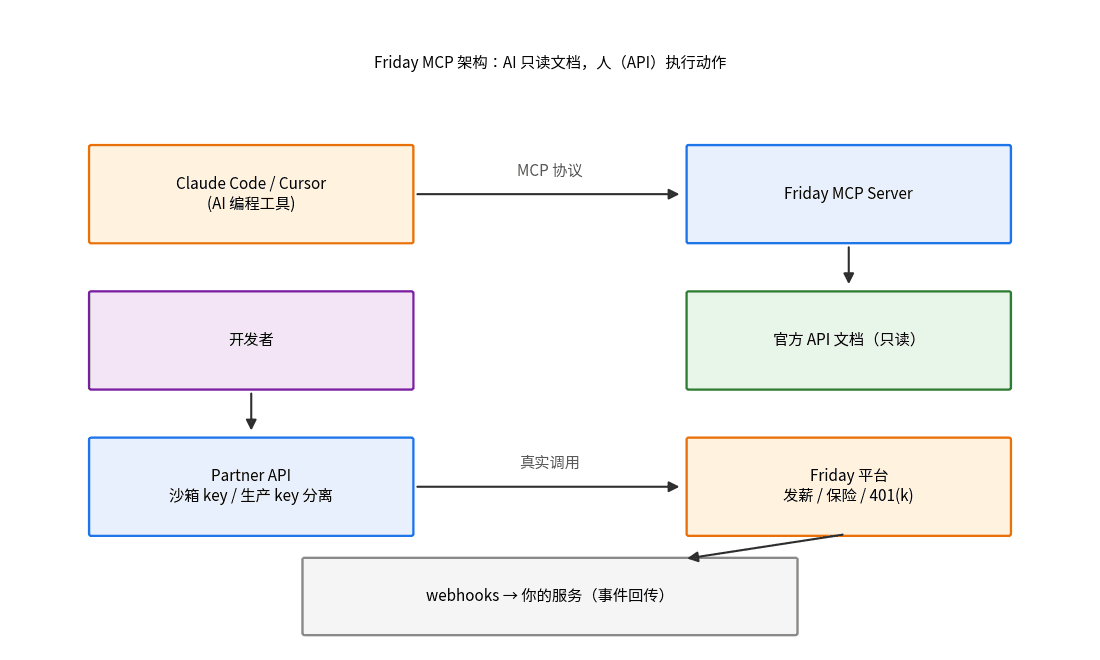
On Oct 14 Friday opened its integrations program: a self-serve Partner API, webhooks, and an MCP server letting AI coding tools read official API docs instead of hallucinating endpoints. Even payroll software now treats AI as a first-class citizen — MCP is becoming SaaS's new API.
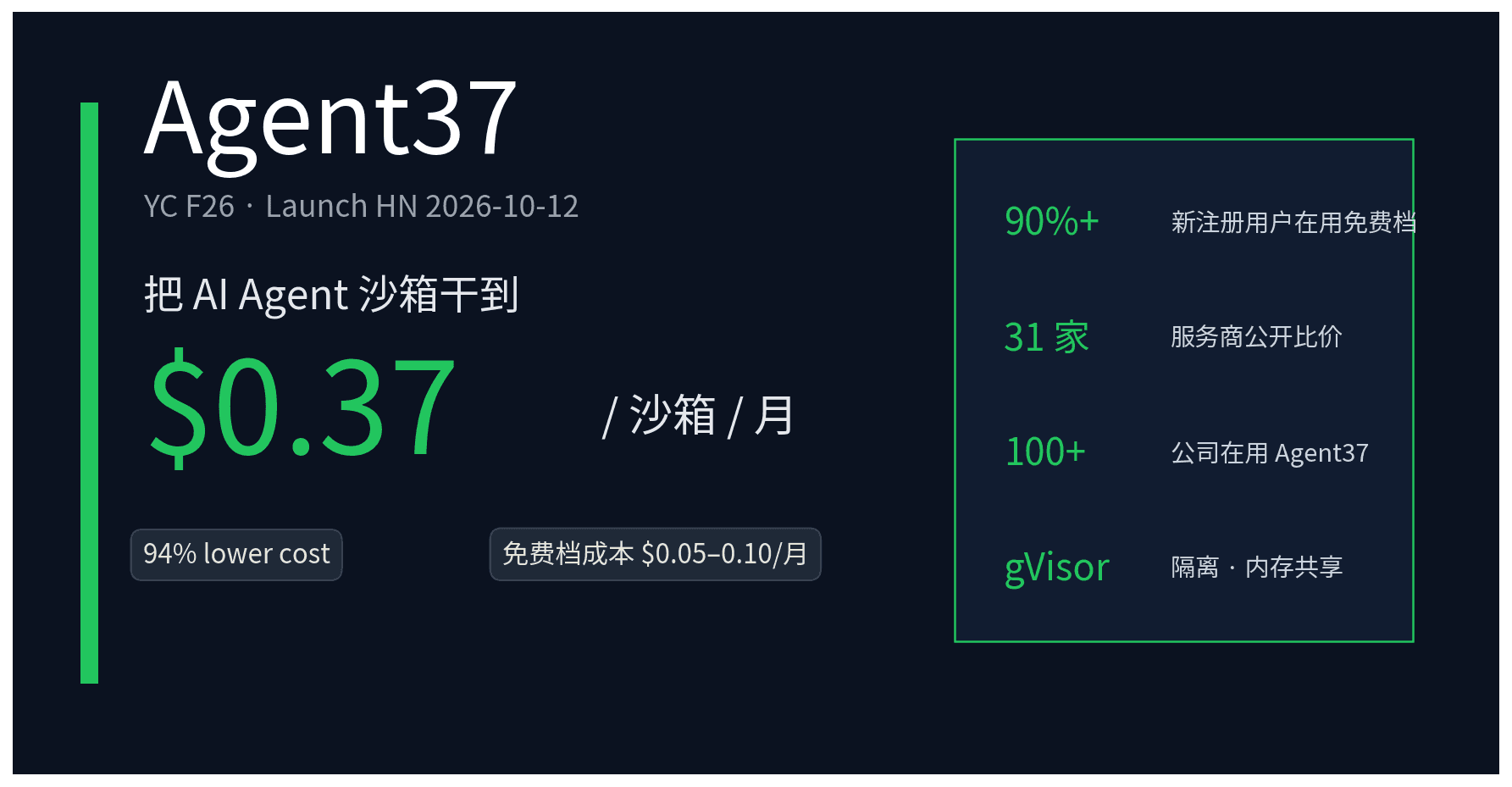
YC F26 startup Agent37 disclosed on Launch HN (Oct 12) that its customers spend an average of $0.37/month per agent sandbox — under 10% of mainstream providers — while free-tier users cost it just $0.05–0.10/month in infra. Founder Vishnu (ex-Amazon) opened up the four-part cost playbook: pulse-based CPU/RAM scheduling, Hetzner/OVH bare metal, gVisor with shared memory, and memory-dense hosts. The agent runtime layer is becoming infrastructure — and this race is about cost structure.

TV4's fully edited The Challenge Sverige season was wiped: hundreds of days of work gone, the Nov 22 premiere pushed to next spring. Aftonbladet blames an AI agent; TV4 denies an independent AI agent did it, citing backup failure. HN erupted the same day, both camps really arguing about permissions and missing backups.