Project Directory

Browse all indie developer projects and co-creation requests

Active: ShowcaseMusic & Audio
Showcase
Online
Music & Audio

Folia

以全屏沉浸式歌词动画为核心的音乐播放器,支持网易云、Navidrome 与本地音乐库

Folia(辞曲新境)是一个把"看歌词"做成主角的音乐播放器。它的核心不是歌单管理,而是全屏沉浸式的歌词舞台——内置多种歌词动画主题(浮名、流光、心象、云阶、群唱、倾诉),每种主题有不同的排版氛围和可调参数,播歌时歌词像文字 PV 一样动起来,同时兼顾响应式布局,窗口大小随便拖都不乱。 音源方面覆盖得挺全:网易云、酷狗、Navidrome 私服,外加本地音乐库。本地歌曲会自动匹配在线歌词与封面,匹配不准可以在右侧面板手动修正;也支持同目录同名歌词文件(.lrc/.vtt/.ttml/.qrc/.yrc/.krc)和音频内嵌歌词。还有个有意思的功能是 AI 主题生成——根据歌曲情绪和歌词内容自动生成沉浸式背景和视觉参数,每首歌的"舞台"都不一样。另外支持通过系统 Now Playing 服务接入外部播放器的歌曲、时间轴和歌词信息,反过来驱动 Folia 的舞台视图。 多端都齐了:Electron 桌面端(Windows/macOS/Linux,开箱即用),Web 版可以一键部署到 Vercel。另有可选的官方同步服务端 sync-server,自托管后能在多设备间同步外观设置和 AI 主题库。 作者在 README 中明确写道"本项目在 AI 的广泛协助下开发",是一个 vibe-coded 项目。开源协议 AGPL-3.0,仓库地址 https://github.com/Jirankun/folia-major。

Showcase
Online
Music & Audiocodex

XY Music Notation

Sheet music reimagined in base-12: full scores rendered with pitch-class note heads, built with Codex.

XY Music Notation is a working answer to a niche musician's itch: what if sheet music were written for a base-12 world? The site renders full scores — Satie's Gymnopedie No. 1, Clair de Lune, Fur Elise, the Moonlight Sonata, Chopin nocturnes — in a custom notation where every note in 12-tone equal temperament is a number, N in (0,1,2,3,4,5,6,7,8,9,X,Y), with the pitch class printed right on the note head. The idea is to make the notation isomorphic to a new kind of music keyboard the author has been tinkering with, so you can sight-read a part by interval shape without decoding every note the traditional way. The rendering engine is the clever bit: a music-score backend built on MuseScore with custom note heads that display each note's pitch class. The author built it with Codex — his own words on Hacker News: "I used codex to build a music score rendering backend based on MuseScore with custom note heads that display the pitch class of each note." He had been playing with the isomorphic keyboard himself and wanted real sheet music to practice on; the site is the tool he wished existed. It is genuinely usable, not just a demo. Each score gets a playback bar with measure scrubbing, speed and volume controls, optional external MIDI output, PDF download, and a link to the original score — sources are marked cc-zero. Press play and follow along as the custom notation plays; click any note to preview that moment, click a rest to seek. The Hacker News thread (83 points, 79 comments) turned into a lively debate about whether alternate notations help or hurt sight-reading, with guitarists and isomorphic-keyboard owners weighing in. Even the skeptics conceded the rendering itself is impressive. For musicians curious about notation beyond the staff, XY Music is a rare thing: a vibe-coded tool with real craft behind it.

Showcase
Online
Music & Audio

Stemyla

Split any song into 6 instrument stems in your browser — Rust + WebGPU, vibe-coded, nothing leaves your computer.

Stemyla does one thing that used to require a studio: it splits a song into its individual instruments — bass, drums, other, vocals, guitar and piano — entirely in your browser, on your own GPU. Drop an MP3 or WAV onto the page, press "Separate 6 stems", and you get six lanes you can mute, solo, slow down without changing pitch, loop a section of, and save as WAV or MP3. Nothing ever leaves your computer: the page, the model and your songs all stay local. The engineering is the interesting part. The app is written in Rust and compiled to WebAssembly — including the GPU code. The separation model is BS-RoFormer SW, running on WebGPU through hand-written WGSL kernels, which is how it manages serious neural audio separation with no server involved. On a laptop GPU, separating a 3.5-minute song takes about seven minutes. The page needs a one-time 350 MB model download (kept in the browser's own storage), and it runs in Chrome or Edge on macOS, Windows and ChromeOS, Safari 26, or Firefox 141 and later on Windows. The backstory is pure vibe coding. The author's own repository description tags it "Vibe-coded!", and the README explains it plainly: "It started as a winter-holiday project for learning to build software with AI, and to hear the guitar part of a song on its own." The repo went up on October 13, 2026, and the published page is live with a demo song you can separate in one click. One honest caveat the author flags himself: the trained model weights come from an unknown trainer on Hugging Face with no stated license, so the repo ships the app without them and leaves it to you to judge whether you may use the weights. For learners, remixers and the merely curious, that transparency is part of the charm — an AI-built tool for pulling music apart, with its rough edges documented in the open.

Showcase
Online
Music & Audioclaude

Scale Designer

A playable music-theory instrument in one HTML file: design scales on a color wheel, play them from your keyboard or MIDI

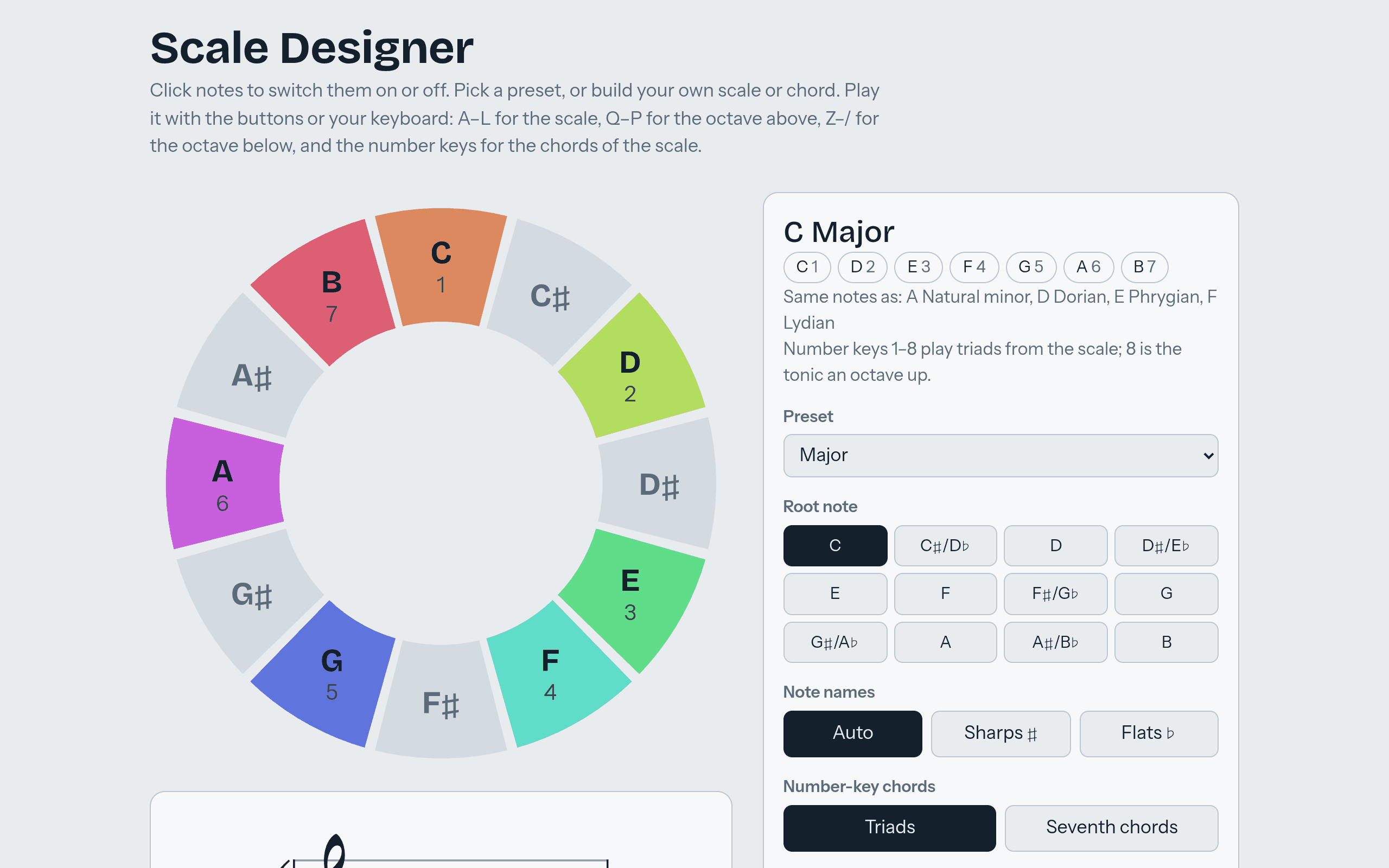
Scale Designer is a music-theory instrument that lives in a single HTML file: click notes on a color wheel to switch them on or off, pick a scale preset or build your own, then play it with your computer keyboard (A–L for the scale, Q–P for the octave above) or over Web MIDI, with a built-in synthesizer. It shows enharmonic equivalents (A Natural minor = D Dorian = E Phrygian = F Lydian), and number keys trigger triads or seventh chords from the scale. The maker is Dr. Ethan Hein, an NYU music-theory scholar who describes himself as "not much of a programmer". In his 2026-10-08 post "I vibe coded a music theory app" he wrote: "maybe this is my excuse to try vibe coding. So I told Claude to replicate the aQWERTYon. It made an HTML file that I uploaded to my web host, and there it was, a fully functioning knockoff of the app" — built, he says, in about half an hour with the free version of Claude. A music academic's half-hour instrument: the page is live and playable right now.

Showcase
Online
Music & Audioclaude-code

Vocafy

A music player for listening to Vocaloid originals by producer, singer, or year — songs, not videos.

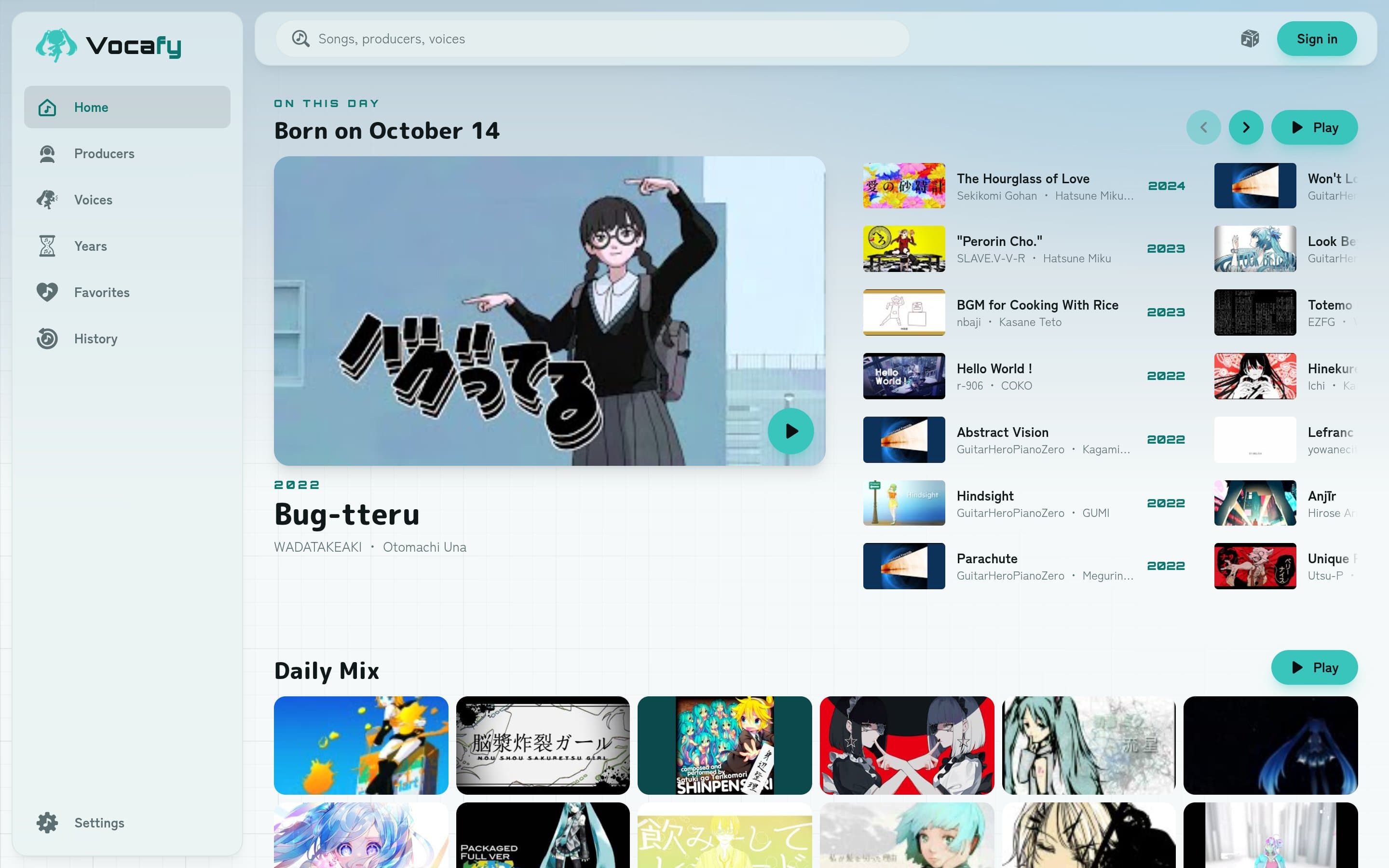
Vocafy is a music player built around one idea: listen to Vocaloid songs instead of watching videos. Pick tracks by producer (P主), voicebank singer or release year, and it plays the original YouTube / Niconico uploads — from Hatsune Miku classics to 2024 releases. The home page even has an "On this day" shelf and a Daily Mix. Author piro0919 writes on Show HN: "I built it together with Claude Code." A focused, listen-first player for the Vocaloid catalog, live and browsable right in the browser.

Showcase
Online
Music & Audioclaude-code

VoiceStudio

开源本地版 ElevenLabs:桌面端声音克隆、视频配音、听写转录全家桶,646 种语言、16 个 TTS 引擎,纯本机运行无账号无 API Key,GitHub 近 6 万 star。

VoiceStudio 是一个开源、完全本地运行的 ElevenLabs 平替:桌面应用,一次装好就能做声音克隆、声音设计、视频配音、实时听写、转录和有声书制作,覆盖 646 种语言。它最大的标签是“你的声音,你的机器”——所有推理都在本机完成(CUDA / Apple Silicon MPS / ROCm / CPU 自动检测),不需要 API Key、不需要注册账号、没有云端依赖,隐私敏感的音频工作流可以放心跑在本地。 这个项目是 AI 构建的典型代表:官方仓库 debpalash/VoiceStudio 的大量 PR 自带 “🤖 Generated with Claude Code” 标记,仓库内配有完整的 CLAUDE.md / AGENTS.md agent 协作规范,是 AI 深度参与开发的开源项目。项目 2026 年 4 月创建,已发布 42 个版本,目前在 GitHub 上收获近 6 万 star,社区相当活跃。 能做什么 声音克隆:给一段干净的参考录音,就能克隆出可用于配音的声音,内置演示声音开箱即用。 声音设计:用文字描述想要的音色,生成全新的声音。 视频配音:上传视频或粘贴 YouTube 链接,转录 → 翻译 → 按时间轴生成配音,一键把英文视频翻成西班牙语、中文、日语等多语言版本。 实时听写与转录:悬浮窗听写,会议、采访、灵感记录直接转文字。 有声书与批量任务:长文本分章节生成、批量配音,播客和自媒体的生产利器。 引擎与语言 内置 16 个 TTS 引擎、11 个 ASR 引擎,可在模型目录中一键切换(Ctrl/Cmd+E),646 种语言的实际覆盖取决于所选引擎。模型、声音、工程和输出默认全部保存在本机。 安装与平台 支持 macOS(Apple Silicon)、Windows 10/11、Linux,一行命令安装:curl -fsSL https://voicestudio.sh/install | sh,也有 dmg / exe / AppImage / deb 安装包和 Docker 部署方式。Intel Mac 只能跑 UI 界面,需要连接远程后端。 给开发者和 Agent 除了桌面应用,还提供本地 REST / SSE / WebSocket API、OpenAI 兼容的音频 API,以及 MCP Server——可以直接让 AI Agent 驱动它做配音和转录。官方还提供了 agent 安装指南,一句 prompt 就能让 Claude Code、Codex、Cursor 帮你装好并验证。 许可证 应用本体为 AGPL-3.0 开源(含商业使用的合规条件);下载的模型权重保留各自上游许可。注意:克隆他人声音请务必获得授权,负责任地使用。

Showcase
Online
Music & Audio

Virtual Home Studio

A browser-based vinyl turntable simulator: drop in an MP3 or WAV and play it like a record — 33⅓/45/78 RPM, scratching, pitch control, all decoded locally.

Meet the VHS-42069, a fictional direct-drive turntable living in your browser. Virtual Home Studio is a full vinyl turntable simulator: drag an MP3 or WAV file onto the page and it becomes a record you can play, scratch, pitch-bend, and listen to — with the kind of analog ritual that usually costs four hundred dollars and a shelf full of shelving. The origin story is the best part, and it comes straight from the author: "This is 100% vibe coded and I did this because I didn't want to buy a turntable for my home lab lol." The site's hero line says it louder: "Why spend $449 on a turntable when you can vibe code one for $10?" It's the purest kind of indie project — a real itch, scratched with a prompt, shipped to GitHub Pages in about a day of commits. How it works Open the page, pick Local File from the source chooser (or drag a file anywhere onto the deck), and your audio is decoded and played entirely in your browser. The README is explicit: your music stays on your device — nothing is uploaded to any server. A bright blue glow in the empty state points you at where to begin, and the transport bar under the deck gives you Play, a seekable timeline, volume, and record management (Customize / Replace / Eject). What makes it sing Real turntable controls. 33⅓, 45, and 78 RPM — yes, 78, via the classic trick of pressing both speed buttons at once. Pitch fader with tempo range selector, Quartz lock to hold the nominal speed, and seven speed/pitch presets (plus Original to reset) where the physical fader visibly glides into place. Scratch and scrub. Drag the vinyl with the stylus down to scratch, drag the timeline to scrub, drag the tonearm to another groove or lift/lower the stylus with CUE. Play and Pause even reproduce the motor spin-up and slowdown of real hardware. A loving simulation of imperfection. This is where it gets nerdy in the best way: record condition from Mint to Poor adds clicks and crackle, wow/flutter sliders, off-center pressing simulation, surface texture, and cartridge character. You can tune exactly how worn your virtual record sounds. Make it yours. Eight turntable finishes (including Black, Red, and the default Silver), plus vinyl and label colors that persist through record changes in the session. Keyboard-first. A built-in "How to Play" visual cheat sheet documents every shortcut. Under the hood The author describes the stack simply: FastAPI serves plain HTML, CSS and JavaScript — there is no frontend build step. The hosted version on GitHub Pages is a static site (Python is only needed if you run the local dev server), and the repository ships with acceptance tests, DSP tests, and a reference document on hardware geometry and simulation assumptions. It was built in 19 commits over two days and released under MIT. Virtual Home Studio is a reminder of what vibe coding is genuinely good at: a small, joyful, physically-grounded toy that turns an ordinary evening of music listening into something you touch. If you've ever wondered what your MP3s would sound like with the needle dropped and the quartz locked, drop one in.

Showcase
Online
Music & Audioclaude

Mac Harmonium

Your MacBook lid is the bellows: a native macOS harmonium played by moving the laptop lid and pressing A–J — or play free in the browser.

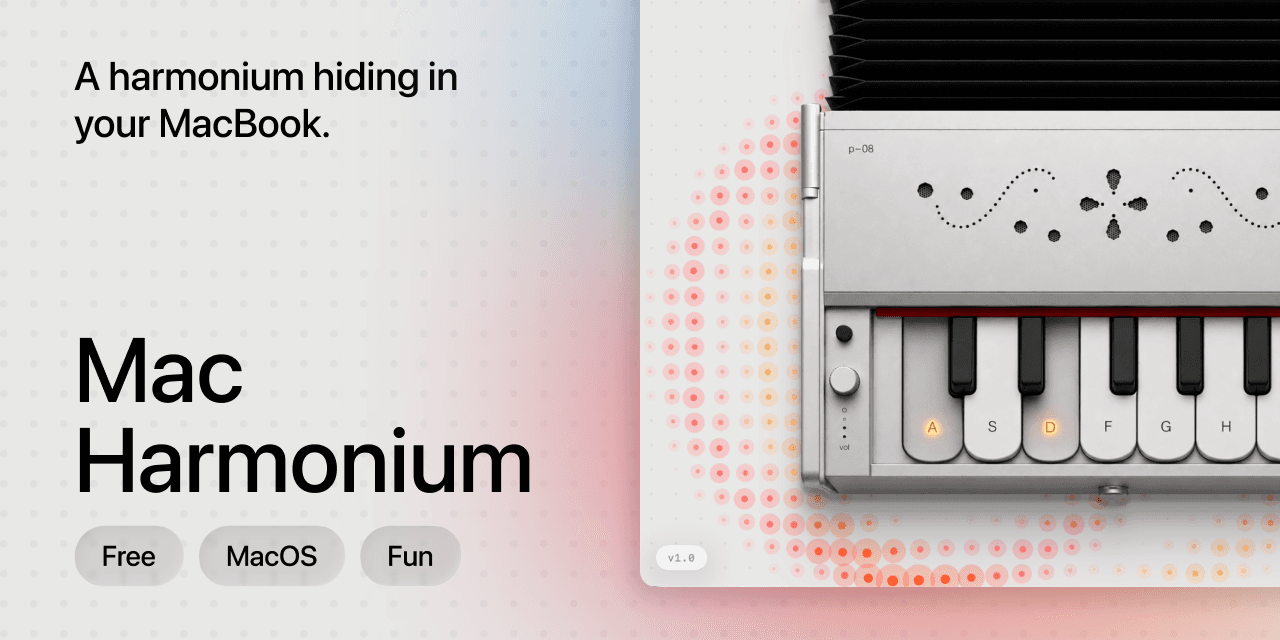
Mac Harmonium hides a harmonium inside your MacBook: the laptop lid is the bellows, the keyboard is the keys. Pump air by gently moving the lid — the app reads the lid-angle sensor — then press A S D F G H J to play the sargam notes Sa through Ni. It's polyphonic, so chords stack; notes swell while you pump and fade when you stop, just like the real instrument. No sensor? Drag the bellows on screen with your mouse instead. There's also a free web version at harmonium.lol that reads the same sensor through WebHID in Chrome or Edge, no install needed. The build story is a love letter to learning by doing. The author is a design engineer for whom real-time audio and hardware sensors were all new, and writes: with Claude, the idea that "lived in my head for years finally had a way out" — "What changed is that now, with Claude, the 'someday' became a weekend." The repo carries a "Vibecoded with Claude" badge and the site footer reads: "Thanks for playing! I built this to learn vibecoding. It's open source." The sound is genuinely engineered, not a sample: an additive wavetable for the reed timbre, two detuned oscillators per note for the chorused "beat," a tremulant LFO, per-note ADSR envelopes, and a lowpass plus compressor to keep stacked chords warm. It's MIT licensed with five releases, a Homebrew cask, a clean VirusTotal scan, and an honest note about why it isn't notarized yet. Swift and SwiftUI, per the repo badges.

Showcase
Online
Music & Audioclaude-code

AURORA 極光

浏览器里的混合式合成器:VA、Wavetable、4-op FM、物理建模四种引擎,100 个出厂音色

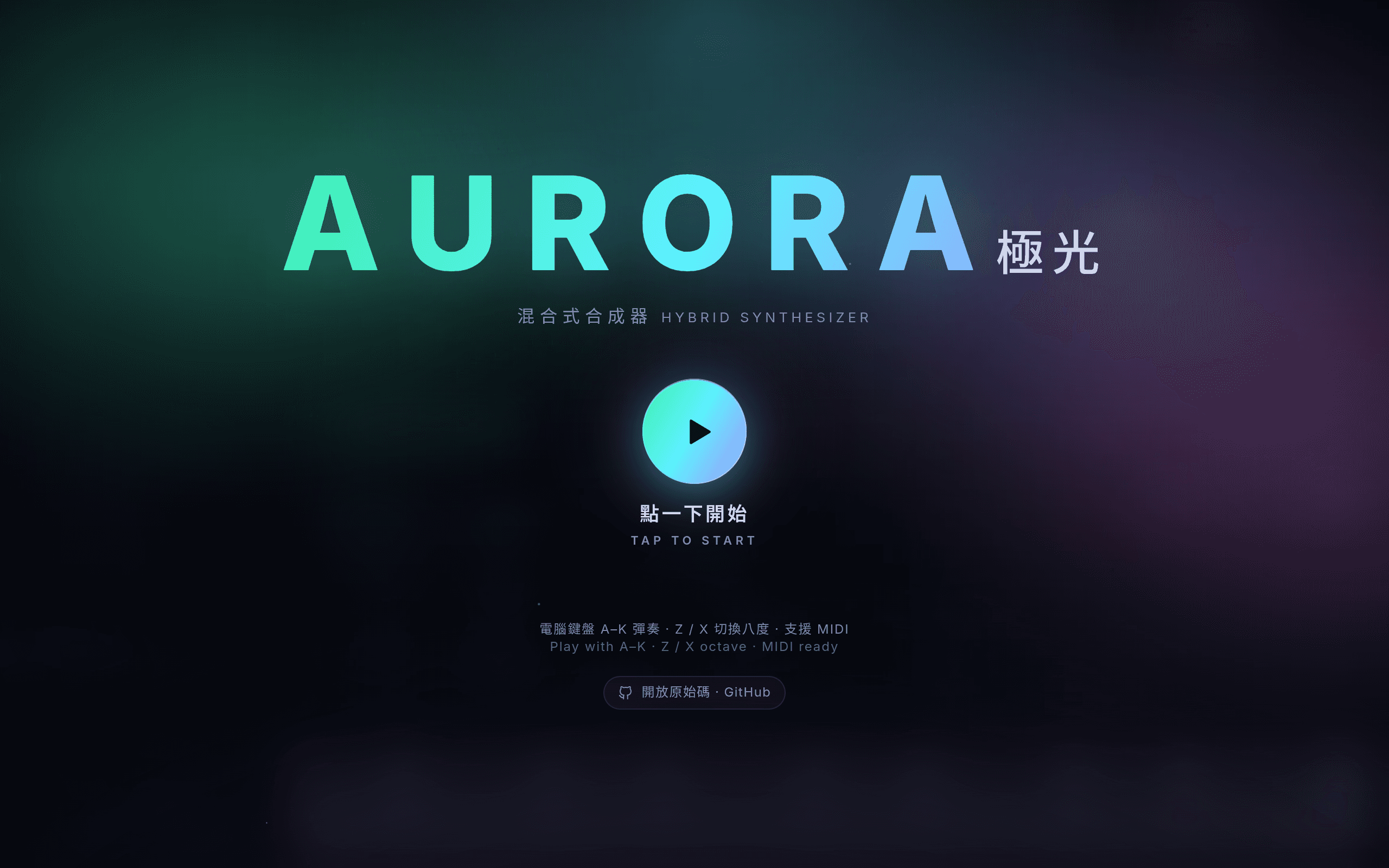
AURORA 極光是一款完全在浏览器里运行的混合式合成器:虚拟模拟(VA)、波表、4-op FM 与物理建模四种引擎,100 个出厂音色、6 首多声部示范曲、生成式即兴伴奏与剧院模式。零 npm 依赖、零音频采样——所有声音都由 AudioWorklet 实时合成,配合 WebGL2 极光主视觉。 作者 pixbvr 在仓库 README 中写道:“AURORA 極光 is a hybrid synthesizer that runs entirely in the browser … Zero npm dependencies, no audio samples: every sound is synthesized live in an AudioWorklet. Built with Claude Code.”中英双语 README 与界面,仓库 pixbvr/aurora-synth(截至 2026-10-11 已获 20 个 star)创建于 2026-09-30,键盘 A–K 弹奏、Z/X 切换八度、支持 MIDI,打开网页就能弹。

Showcase
Online
Music & Audiochatgpt

Guitar Tuning Tool

Check irregular guitar tunings: customize every string, pick a scale, and see the notes light up on the fretboard.

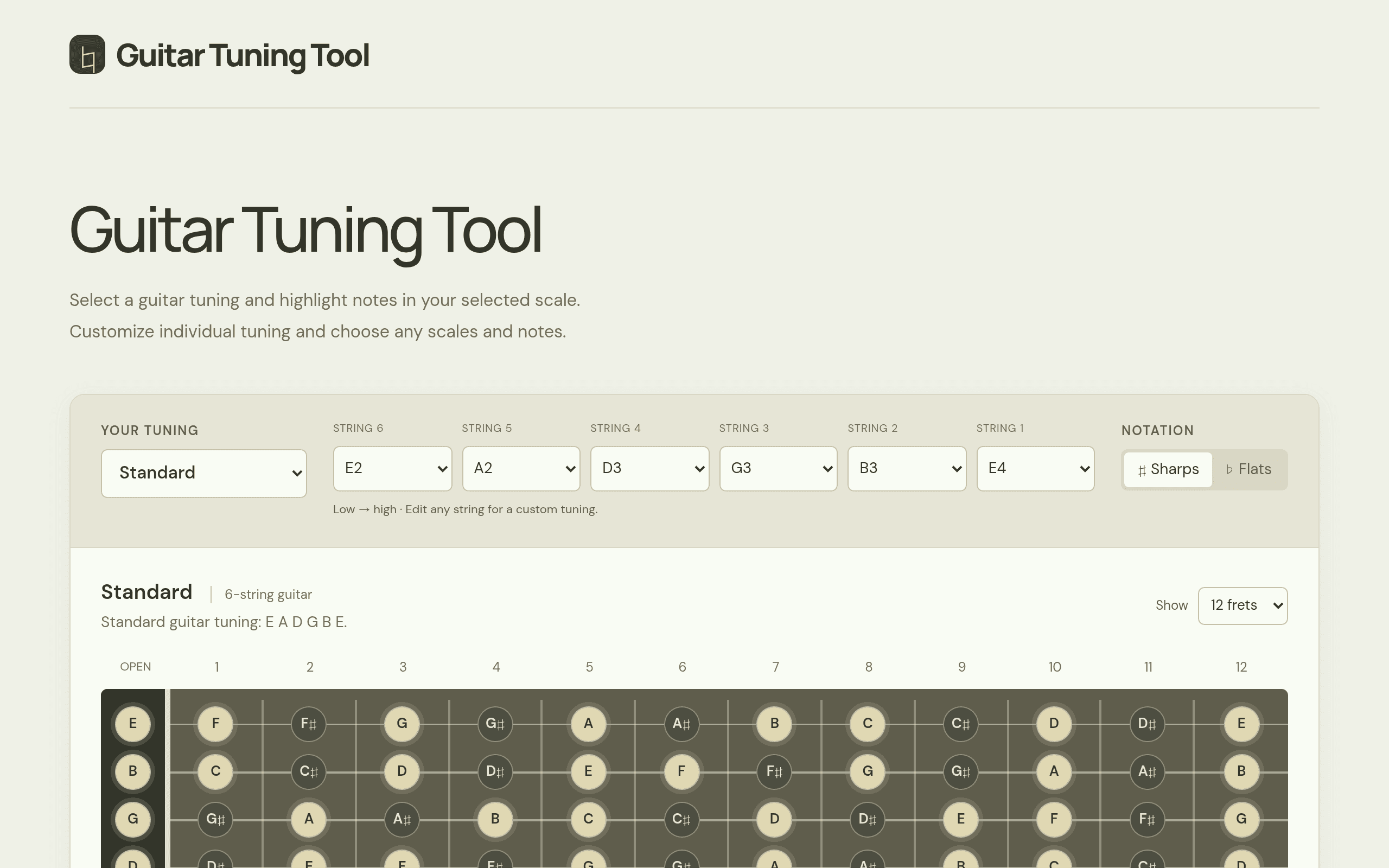
A small, sharp tool for guitarists who live outside standard tuning. Guitar Tuning Tool lets you pick a tuning (or customize every string yourself), choose a scale, and watch the matching notes light up on a 12-fret fingerboard — with sharps/flats notation toggle and left/right-hand view. It opens instantly and asks nothing of you. Author @kngwyu posted it on Bluesky (2026-09-23): "Vibe-coded a web app for checking irregular guitar tunings" — built for his own practice sessions, then shared for free. He adds, in the same post, that the build was his way of putting his ChatGPT tokens to good use. Created 2026-09-21, it does exactly one job and does it well — the kind of personal utility that vibe coding was made for. curated by the VibeFix editors

Showcase
Online
Music & Audioclaude-opus-55

Scrimshaw Jukebox

A pixel-art jukebox playing AI-composed adventure-game music — vibe-coded with Claude Opus 5.5

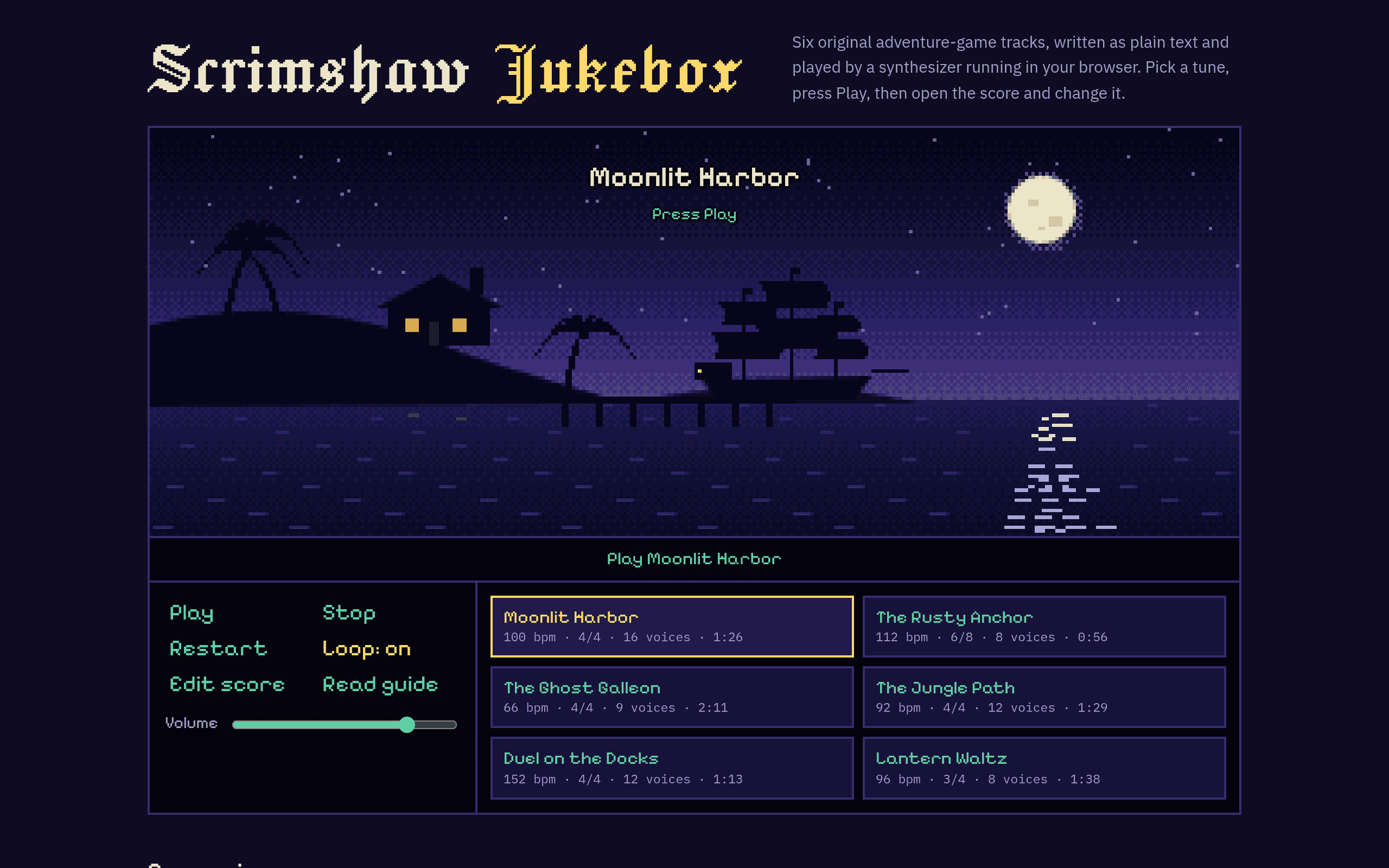
Scrimshaw Jukebox started as an experiment: "I wanted to see if Claude Opus 5.5 could compose music, so I tried this," wrote Simon Willison on his blog. He had the model design a plain-text score format, then build a playable artifact around it — the result is six original adventure-game tracks (Moonlit Harbor, The Rusty Anchor, The Ghost Galleon, The Jungle Path, Duel on the Docks, Lantern Waltz) played by a synthesizer running entirely in your browser. Each track gets its own pixel-art scene that changes with the music, and you can open the score and edit it live — the whole thing is one of Willison's prompt-driven experiments ("Miscellaneous HTML+JavaScript tools built mostly with the help of LLMs"), with the colophon marking "scrimshaw-jukebox code / AI generated". Added October 6, 2026; the simonw/tools repo has 1,907 stars and is pushed daily.

Showcase
Online
Music & Audioopencodeglm-53-flash

StemKit

Split any YouTube song into vocals, drums, bass, guitar and piano — free, open source, running entirely on your own GPU

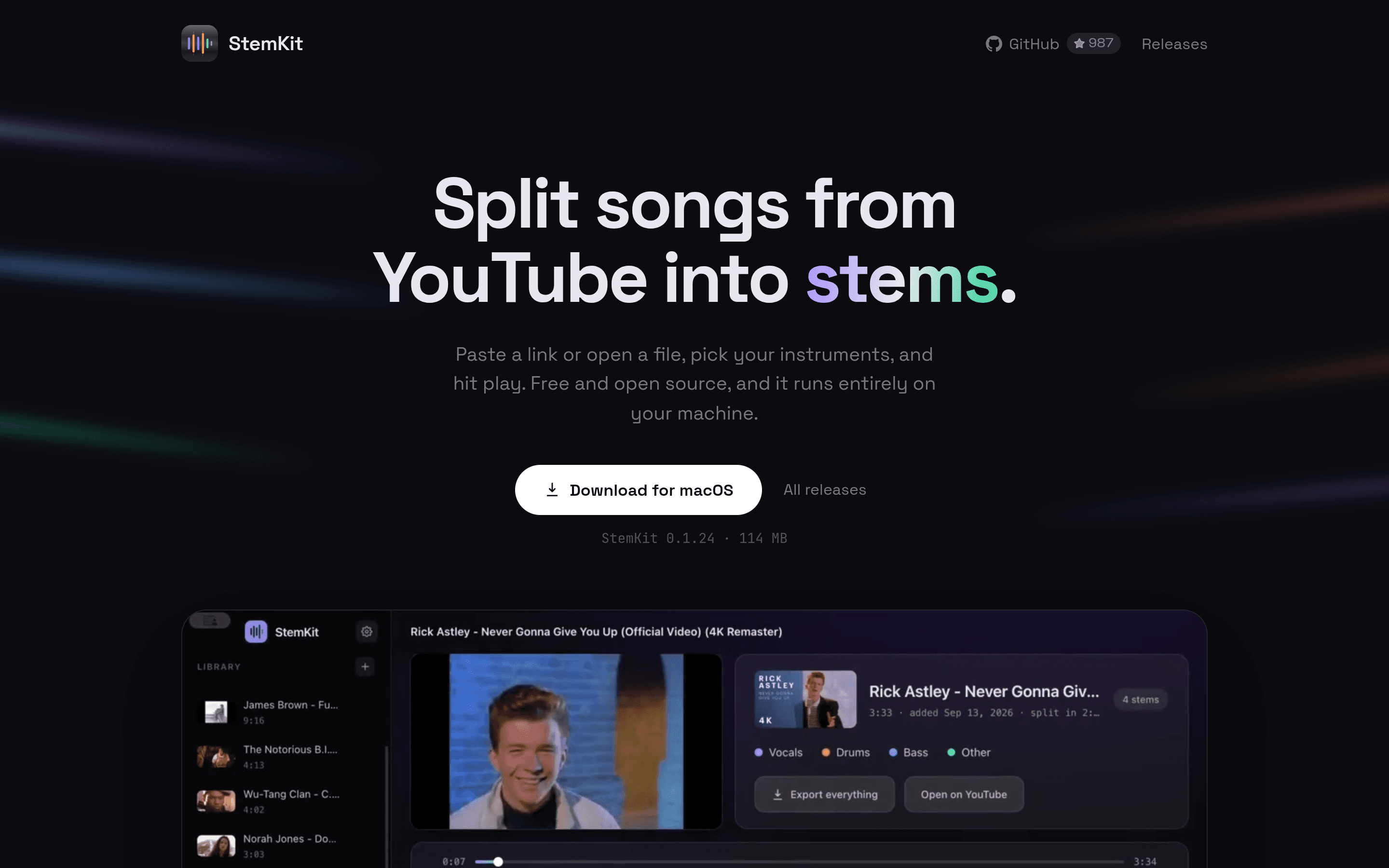
StemKit is a free, open-source desktop app that splits any YouTube song into stems — vocals, drums, bass, plus guitar and piano when you want them — with everything running locally on your own GPU. No account, no upload; songs and audio never leave your machine. Paste a link or open a file, pick your instruments, and every stem exports as a standard WAV file that drops straight into Ableton, Logic, FL Studio or GarageBand. The vibe-coding story is documented by the author on builtbyvibe.dev: “Built using Ox Alpha model (GLM 5.3 - Flash) with OpenCode.” Reddit's r/FL_Studio and r/linuxaudio communities have embraced it — comments praise the separation quality, the local-first design, and the polished UI, with one reviewer noting “it doesn't look like AI slop”. The project's homepage shows 987 GitHub stars, and notebookcheck covered it within days of release. Use cases the author calls out: learning an instrument by soloing the guitar, bass or piano; muting your own instrument to play against a backing track; pulling clean acapellas and drum loops for remixes; and stripping vocals for karaoke. First launch downloads a ~2GB engine once, then local files work fully offline. curated by the VibeFix editors

Showcase
Online
Music & Audioclaude-code

Viboplr

The music player you can just talk to — every line written by Claude Code, MCP built in

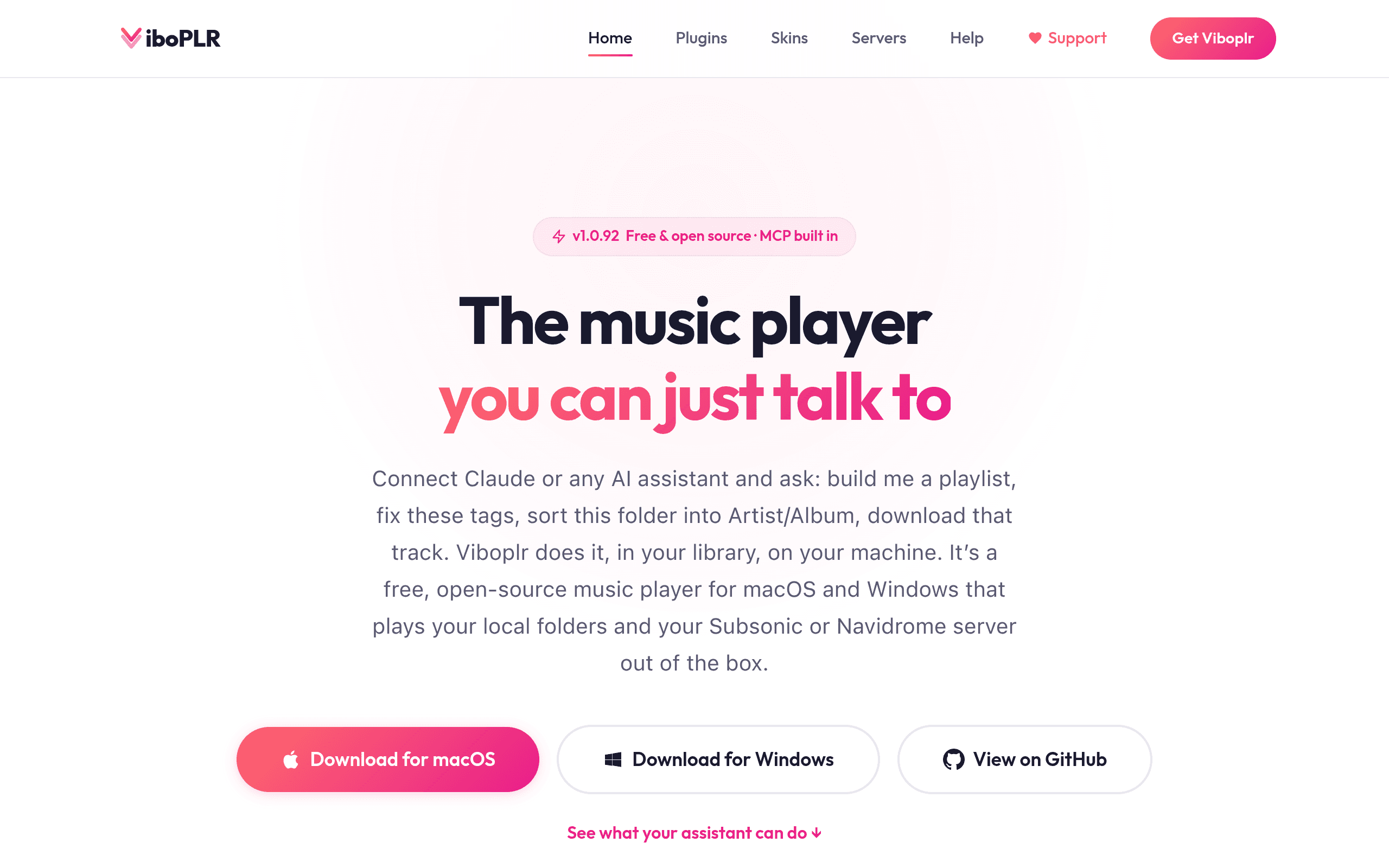
Viboplr is the music player you can just talk to: connect Claude or any AI assistant and say "build me a playlist," "fix these tags," "sort this folder into Artist/Album" — it does it, in your library, on your machine. A free, open-source player for macOS and Windows with a built-in MCP server. The README's "Built with AI" section is unusually honest: "Built by AI. Every line of code was written by an AI coding assistant (Claude Code). The human role is tech lead and product owner: decide what to build, define how it behaves, review, test, and push back until it's right." 2,500+ commits, 35 releases, GPL-3.0 — this is not a weekend demo, it's a shipped product at v1.0.92. The model it proposes is the interesting part: the human as tech lead, the AI as the entire engineering team, with .claude/rules/ guardrails and machine-checked linting standing in for code review. Viboplr is what that workflow produces when it's done well. curated by the VibeFix editors

Showcase
Online
Music & Audioclaude-code

Krisp

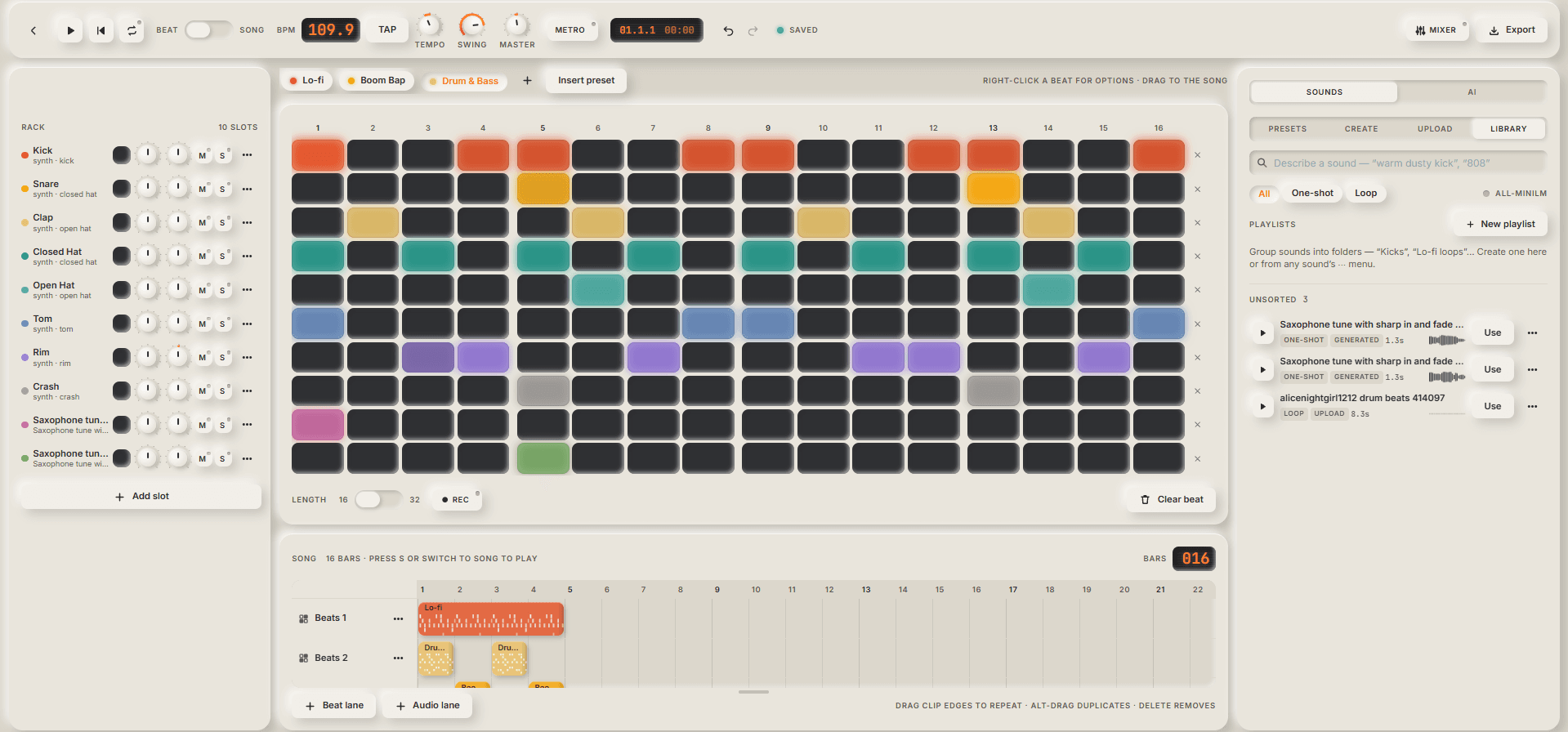
A calm browser beat studio with hardware feel: step sequencer, song arranger and full mixer — with Magenta.js in-browser AI to humanize and vary your beats.

Krisp is a calm, hardware-feel beat workspace that runs entirely in the browser — built for one producer friend during the Hacktoberfest "Build for a Friend" challenge. Make beats by hand on a 16-step sequencer (click, drag-paint, Shift+click for velocity, live record on keys A–K), arrange them into a song on beat and audio lanes, mix them through channel strips with a master chain (EQ, send, pan, fader, meter, reverb return, compressor, limiter), and export WAV and MIDI for your DAW. The timing is the thesis: everything musical runs on Tone.js in the browser with a 100 ms look-ahead scheduler and never waits on the network — the network is only for saving, the library and making new sounds. The AI is all open-source and in-browser: Magenta.js models humanize your beat (GrooVAE), generate variations (MusicVAE), continue it (DrumRNN) or morph it (MusicVAE), all undoable. Need a sound? ElevenLabs generates the exact one-shot or seamless loop you describe, and a hybrid search on Tiger Data (Postgres + pgvector) finds any sound by its name or by how it sounds — "warm dusty kick" actually works. The workspace holds 8 original preset beats (all credited as original to the project), autosaves with a save LED, and ships with 146 unit tests. And it's built the way we'd want every vibe project documented: every agent session was captured with Entire and linked to the commits it produced. The screenshots in the repo's "Blog images" folder — the song arrangement, the mixer, the ElevenLabs create flow — are the real studio, not mockups. A beat studio where "the groove is the 40 milliseconds a grid throws away" and it gives them back, one session at a time. Note: This project is curated by the VibeFix editors from public sources. All rights belong to the original creator. ---