VIBEFIX EXPLORE

Explore what to build next

Reusable AI coding guides, tool updates, and signals from the builder ecosystem.

Featured

Latest

A real photo: a person holding a phone in both hands, typing on a pinyin keyboard, with Chinese candidate words on screen.
Guide
Typing Pinyin Should Find Chinese Characters: Pinyin Search in Practice for Vibe Projects

Of 1,000 pinyin inputs, 934 parse correctly, 857 match candidates, 712 have the target first, and 640 finish selecting within three seconds. Pinyin search is not a bonus feature; it is the default expectation in a Chinese typing environment. The product, people, and numbers in this walk-through are fictional.

Mobile AppsDesign ExperienceFrontend Engineering
Real photo of several United Airlines jets parked at airport gates, UNITED livery clearly visible on fuselages and tails.
News
United Airlines Shuts the Cabin Door on AI Agents: No More Booking or Managing Trips for You, Citing Security and Federal Rules

On November 11, United Airlines said it will restrict unauthorized third-party personal AI agents from booking flights and managing reservations on its platforms and via travel agencies, citing credential security risks and FAA/DOT rules — including the requirement that a human personally confirms bags contain no banned items at check-in.

Industry TrendsAutomationAI Agent
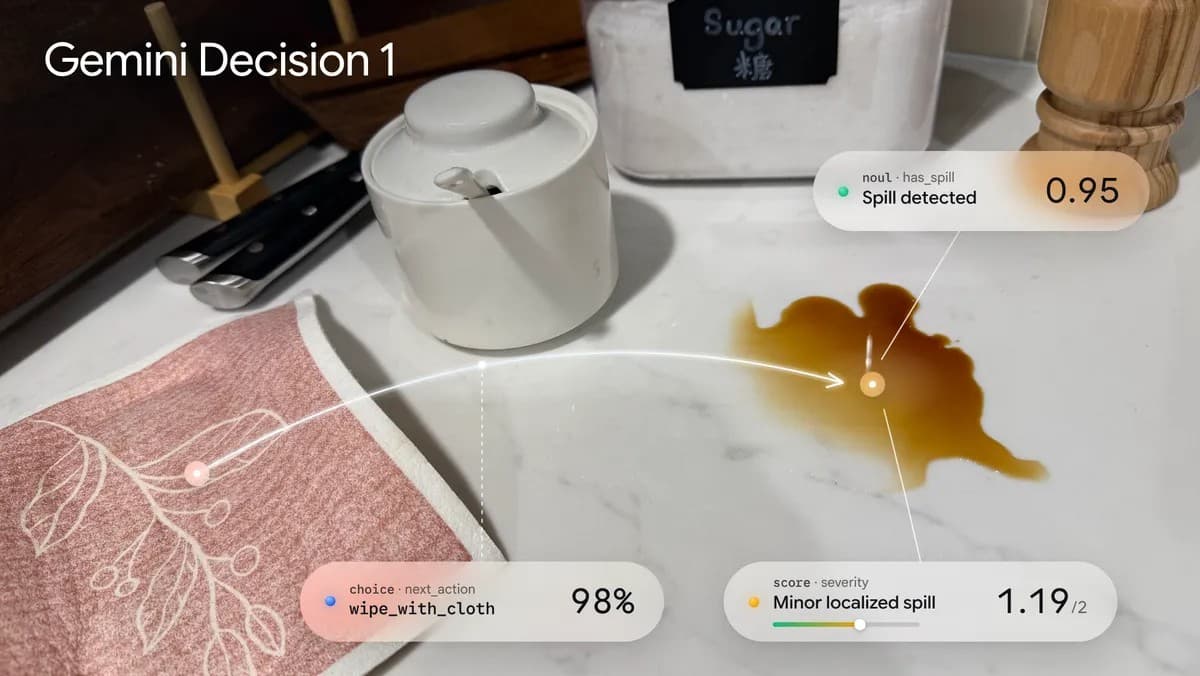
Google blog hero image: a kitchen counter spill photo with Decisions API result cards (spill 0.95, wipe with cloth 98%, severity 1.19 out of 2).
News
Google Joins the Decision-Model Race: Gemini Decisions API Lets a Model Judge Without Writing, 1,000 Questions in One Request

On November 11, Google launched the Gemini Decisions API with its Gemini Decision 1 model: instead of generating text, it answers up to 1,000 yes/no, choice, and rubric questions in a single pass, in 150-250 ms, at $0.10 per million input tokens with zero output tokens billed. Google is the fourth entrant in the decision-model race in three months.

Model UpdatesAI AgentAI Coding
A real photo: a cork bulletin board with a dozen blank sticky notes pinned to it in different colored pushpins.
Guide
The Most Important Message Always Sinks? Pinning in Practice: Four Kinds of Pins, Review Bars, and Expiry Rotation

Of 800 candidates, 214 pass review, 96 get pinned, 61 get opened while pinned, and 38 reach the goal. Pinning is not decoration but a promise to everyone to read this first: pin rarely, pin right, take it down when done. The author, product, and numbers in this walk-through are fictional.

User ResearchDesign ExperienceIndie Development
A frame from OpenAI's official announcement animation: one instruction split into two tasks — checking an iOS build on Mac Studio and fixing backend bugs on a Dev Box.
News
One Dot Can Now Manage Several Computers: OpenAI dots Connects Multiple Local Machines, Builds Go to the Spare Box

On November 9, OpenAI let one dot connect to several local computers: one computer per thread, parallelism through more threads. Builds, tests, and bug reproduction go to the spare machine while the main machine stays free for coding. Before connecting, weigh the permissions: whole-machine access, no folder-level controls, and offline is not disconnected.

Developer WorkflowAutomationTool Tips
Official Meta Research blog header art: an abstract pattern of blue orbital lines and dots on a pale blue background (decorative header art, not a product screenshot).
News
Meta's Smallest Model, Muse Ember, Is Here: 1M Context, $0.10 per Million Input Tokens, Built for Agents' Repetitive Work

On November 9, Meta launched Muse Ember, the smallest model in the Muse family: $0.10 per million input tokens, a 1M-token context window, and up to 512K output tokens. It matches Haiku 5.5's Intelligence Index of 36 at roughly a third of the cost per task — solving not how smart the model is, but how expensive repetitive agent work is.

Model UpdatesAI AgentAI Coding
A real photo: a woman laughing at an open laptop in a sunlit room, like someone who just started using a tool that clicks.
Guide
Give New Users Something to Play With: Sample Workspaces and First-Run Activation for Your Vibe Project

Pumpkin List had 1,000 sign-ups and only 168 people reached their aha moment within 10 minutes. The problem wasn't missing features — new users stared at a blank page with no idea where to start. A sample workspace fixes that: a complete, realistic set of content they can change or clear. The project, people, and numbers in this guide are fictional examples.

User ResearchIndie DevelopmentProduct Strategy
A real photo: a customer interview in a café — a man talks with both hands raised while a woman takes notes in a notebook; two coffees and a voice recorder on the table.
Guide
Good Words Trapped in Chat Logs: Customer Case Studies for Your Vibe Project

Out of 500 paying users, only 96 scored 9 or above, and only 40 of them agreed to talk — 9 published case studies in the end. Pick the right people, run a 20-minute interview, write it in six sections, put it where buyers hesitate. The walk-through project, people, and numbers in this guide are fictional.

User ResearchDesign ExperienceIndie Development
Official Chrome blog image: logos of the coding agents and IDEs supporting Modern Web Guidance — Codex, Cursor, Kimi, Antigravity, Grok, WebStorm, and Copilot.
News
Modern Web Guidance 1.0: Chrome, Edge and Firefox Team Up to Stop Agents Writing Legacy Web Code

Chrome shipped Modern Web Guidance 1.0 on November 10, 2026: a free, open-source skill pack that teaches coding agents modern web features instead of legacy JavaScript patterns. It adds a legacy-code scanner, 203 guides covering 250 features, and Firefox and Edge as co-maintainers. The case-study numbers are impressive, but they are vendor-reported and preview-era, so treat them as a hypothesis to test on your own project.

Developer WorkflowTool TipsDesign Experience