Claude Opus 5.5 Fast Mode Goes GA: No Beta Header Needed, Plus a Compliance API That Audits Employee Prompts
October 15, 2026: Anthropic graduates fast mode for Opus 5.5 — no beta header, no access request, default fast mode rate limits on Start/Build/Scale, day-one Azure Foundry. The Compliance API (Enterprise beta) gains an endpoint returning members’ full Instructions for Claude and Cowork Global instructions. Analysis: speed-tiered pricing is now a product line mirroring OpenAI; the Compliance API completes an October governance combo with METR’s evaluations and the usage policy’s hardware clauses.

One line to draw the boundary and avoid confusion with the previous piece: in cycle48's Opus 5.5 launch article, fast mode was still a research preview — gated behind an application and a beta header. This is a new event from the October 15 release notes: fast mode for Claude Opus 5.5 is now GA, and Anthropic has also opened a compliance endpoint that lets Enterprise organizations read employees' saved prompts in full. The two announcements look unrelated, but they are two cards played by the same company on the same day: one sells speed, the other sells governance.
Fast Mode Goes GA: No Beta Header Needed for Opus 5.5
The core of the update is one sentence: fast mode for Claude Opus 5.5 has left research preview and become a generally available feature. Starting October 15, requests to Opus 5.5 no longer need the fast-mode-2026-02-01 beta header, and there is no access request to file. If your existing code still sends the header, don't rush to remove it — Anthropic confirmed that requests carrying the old header keep working. That's the company's standing pattern for these graduations: old clients are never force-migrated, new clients can simply drop the header.
The second substantive change is rate limits. Opus 5.5 now ships with a default fast mode rate limit in the Start, Build, and Scale usage tiers. In plain terms: fast mode used to be application-gated, with quotas granted case by case; now it's on by default, and organizations in these three tiers get fast mode rate capacity out of the box. Evaluation-tier organizations need to move up to Start, Build, or Scale first. For teams running Opus 5.5 in production, that's a real lowering of the bar — many were waiting on quota approvals, and now the quota comes standard.
But note: only Opus 5.5 graduated. Fast mode for Claude Opus 5 and Claude Opus 4.8 remains in research preview — keep sending the beta header and going through access requests for those two models. The support table in the official docs is explicit: of the three models, only 5.5 crossed the line. Why graduate only the newest model? The reasonable inference is capacity allocation on the inference side — fast mode is essentially a faster inference configuration that needs its own compute pool, and prioritizing the newest model is the commercially natural choice.
 The Claude app on a phone: a hand holding an iPhone showing the Claude chat interface
The Price of 2.5x Speed Is a 2x Bill: Do the Math First
The official description of fast mode: the same model running a faster inference configuration, delivering up to 2.5x higher output tokens per second, with no change to intelligence or capabilities. You opt in by setting speed: "fast" on the request, and the usage.speed field in the response tells you which speed actually ran — "fast" or "standard". If fast mode quota or capacity is exhausted, the request fails with a 429 or 529 rather than silently degrading, which matters if you're writing retry logic.
On pricing, the docs give blunt numbers: fast mode on Opus 5.5 costs $8 input / $40 output per million tokens. Against the standard rates of $4 / $20, that's exactly a 2x multiplier. And the multiplier stacks: prompt caching multipliers and data residency multipliers apply on top of fast mode pricing. In other words, fast mode isn't "accelerated pricing" — it's "standard pricing times two," with every surcharge still collected in full.
A few operational details deserve to be called out individually. First, switching between fast and standard speeds invalidates the prompt cache — the two speeds don't share cached prefixes. If you've carefully engineered cache hit rates, flipping everything to fast mode could cost you a wave of cache misses first. Second, fast mode is not available with the Batch API or Priority Tier, and it hasn't landed on Claude Platform on AWS (Azure's Foundry got it this round; AWS is still waiting). Third, the speedup is concentrated on output tokens per second (OTPS); time to first token (TTFT) is essentially unaffected — your agent won't start working sooner, it will just emit tokens faster once it does.
Also on Azure: Fast Mode Arrives on Foundry-Hosted Opus 5.5
The third October 15 item is easy to skim past, but it carries real weight for enterprise users: fast mode for Opus 5.5 is now available on Claude in Microsoft Foundry for deployments hosted on Azure. Anthropic has visibly accelerated its multi-cloud rollout in recent months — Bedrock, Google Cloud, and Azure Foundry advancing in parallel — and fast mode now ships to Azure on day one instead of the old pattern where the API led and cloud vendors trailed behind. For large enterprise customers restricted to Azure compliance channels, that means fast mode is an option from the start: no more choosing between compliance and speed.
Compliance API: Enterprises Can Finally "Audit" Employee Claude Instructions
If fast mode is sold to developers, the Compliance API is sold to compliance officers. The new endpoint GET /v1/compliance/organizations/{org_uuid}/user_preferences does something very specific: it returns the full text each organization member saved as "Instructions for Claude" in claude.ai, and as "Global instructions" in Cowork. Calls require a Compliance Access Key plus the read:compliance_user_data scope. It's in beta, for Claude Enterprise organizations only.
The backstory is worth unpacking. The Compliance API isn't new — in the September 24 release notes, it blanked out file names, project document names, and artifact titles in the Activity Feed (looking up a name now requires the compliance key); on October 8 it added chat retrieval from the unified Claude experience and Word downloads of Claude Docs. Anthropic's cadence on the compliance track is consistent: tighten the default exposure surface first, then open an "auditor's channel" for enterprises. The October 15 addition brings members' long-term instructions under the audit umbrella too.
Why instructions rather than chat transcripts? Because the governance value of instructions has been underestimated for a long time. What an employee writes in "Instructions for Claude" might be "always use our company's quoting format when replying to customers" — or it might be "help me phrase things to get around the approval process." The first is a corporate knowledge asset; the second is a compliance risk — and until now, compliance teams were blind to both. The Compliance API is Anthropic's formal acknowledgment that the text employees use to customize AI behavior is itself enterprise data that needs auditing.
It's a double-edged sword, of course. Personal instructions employees wrote in claude.ai can now be read in bulk by their employer — where's the privacy boundary? Anthropic's answer is scope isolation: read:compliance_user_data is not a default permission, it must be explicitly granted, and it's Enterprise-only. But between "can audit" and "should audit, and how far," there will always be labor law in each jurisdiction and each company's internal policy. The API gives enterprises the capability; it doesn't hand them the standard. That standard has to be written into the employee handbook by the enterprise itself.
 The Claude app on a phone: a hand holding an iPhone showing the Claude chat interface
The Same Week's Backdrop: October 14's Observability and AWS Moves
The three October 15 items don't stand alone — one day earlier shows the配套 moves. On October 14, Anthropic launched OpenTelemetry export in beta: the Claude SDK emits spans directly in Python, TypeScript, C#, Go, Java, PHP, and Ruby, so Messages API requests and Managed Agents sessions can be traced in your own observability backend. The same day, scheduled deployments for Claude Managed Agents landed on Claude Platform on AWS.
Those two get only background treatment here — together with October 15 they form the puzzle of a single week: Anthropic is simultaneously making models run faster (fast mode), making calls more visible (OpenTelemetry), and making enterprises more governable (Compliance API). Speed, observability, governance — three tracks each landing a move in the same week. That's no coincidence; it's the full shape of Anthropic's API strategy for the second half of the year. (The October 9 dynamic workflows beta is deliberately untouched here — it already got its own article on this site.)
Analysis: Two Cards Played the Same Day Are Really One Combination
The first card first. Fast mode going GA establishes something formally: latency-and-cost tiered pricing is now an official product line of the Anthropic API, not an experiment. From "one price at standard speed" to "two price tiers: standard and fast," the API's pricing gained a "speed" dimension. This mirrors the Ultrafast tier on OpenAI's side — both companies discovered, independently, that "fast" itself can be sold separately (we analyzed the same logic in GPT-6.1's Sol pricing). For developers, model selection gains a dimension: not just "which model," but "which model times which speed tier."
Now the second card. A Compliance API that reads instruction text in full is just an enterprise feature on its own; placed next to two other October developments, it reads differently: in cycle59 we covered METR becoming Anthropic's independent evaluator (evaluation power delegated) and the new hardware-related clauses in the 2026 usage policy (policy tightened). Independent evaluation answers "is the model safe" for trust; the usage policy answers "what can it be used for" for boundaries; the Compliance API answers "how does the enterprise govern it internally" for enforcement — the three pieces together are Anthropic's October "governance combination." Anthropic clearly understands that enterprises don't just buy model capability; they buy the governance toolkit that lets them answer for it when something goes wrong.
Read together, the two cards reveal a deeper signal: Anthropic is upgrading its API from "an interface for calling models" to "enterprise-grade AI infrastructure." Selling speed is the performance dimension of infrastructure; selling audit is the compliance dimension; selling observability (OpenTelemetry) is the operations dimension. When a model company starts filling in all three dimensions in a single week, it's no longer aiming at "developer experimentation" — it's aiming at "enterprises running core business on top." That's a warning to every agent-infrastructure startup: Anthropic is turning many of the capabilities you charge for today into platform defaults.
A Practical Checklist for Agent Developers
Down to concrete actions, here's what fast mode GA suggests. First, production use of speed: "fast" is fair game now — but check your fast mode quota on the Console's Rate limits page first; don't assume "default" means "enough." Second, monitor the returned usage.speed — you need to know which tier each request actually ran on, or the bill won't reconcile. Third, have a degradation plan for 429/529: the SDK retries automatically up to 2 times by default; if that's too slow, set max_retries to 0 to fail fast, then reissue without speed: "fast" to fall back to standard speed.
Fourth, and most important: re-benchmark on "cost per completed task," not "price per million tokens." The sourcing here needs to be stated plainly — public community testing has reported a counterintuitive finding: under high-intensity settings like max effort, the model's output token volume inflates noticeably, and the cost increase from token inflation can eat most of the discount. That is a third-party measurement, not an Anthropic official claim, and its methodology and sample size are unverified by the vendor. But the methodology it points to is right: fast mode changes the price and speed per token; it doesn't change how many tokens a task takes. Your benchmark metric should be "dollars and seconds to fix one bug," not "dollars per million tokens."
Fifth, review your caching strategy. Fast and standard don't share prompt cache, so if your agent leans heavily on long-context caching, measure the hit-rate change before switching speed tiers — don't let cache invalidation cancel out the 2.5x speedup. Sixth, Batch API and Priority Tier users take note: fast mode doesn't support those channels yet, so offline batch workloads stay on standard speed.
One last word on the Compliance API — if you're the engineer driving AI adoption inside an Enterprise organization, this update is worth forwarding to your compliance colleagues. The endpoint is beta, the scope needs a separate grant, but the direction is set: instructions employees write for Claude are becoming auditable corporate data. Writing "which instructions are allowed, and who reads the audit logs" into internal policy now beats scrambling when the auditors come knocking.
October 15 in one sentence: Anthropic told developers "you can go faster now" and told compliance officers "you can govern more finely now." Speed and governance are the two growth curves of the API economy — and both curves are converging in the same company's release notes.
Comments (0)
Sources
Related articles

NVIDIA released Nemotron 3.5 Super VL on October 15: a 120B-total / 12B-active MoE multimodal model unifying text, image, document and video reasoning. NVIDIA claims up to 5x single-GPU throughput for agentic tasks vs open peers (vendor claim). Artificial Analysis scores it 26.5 on the Intelligence Index — the top US open-weight model — with near-lossless NVFP4 quantization, runnable on a single H200. OpenMDW-1.1, commercially usable.
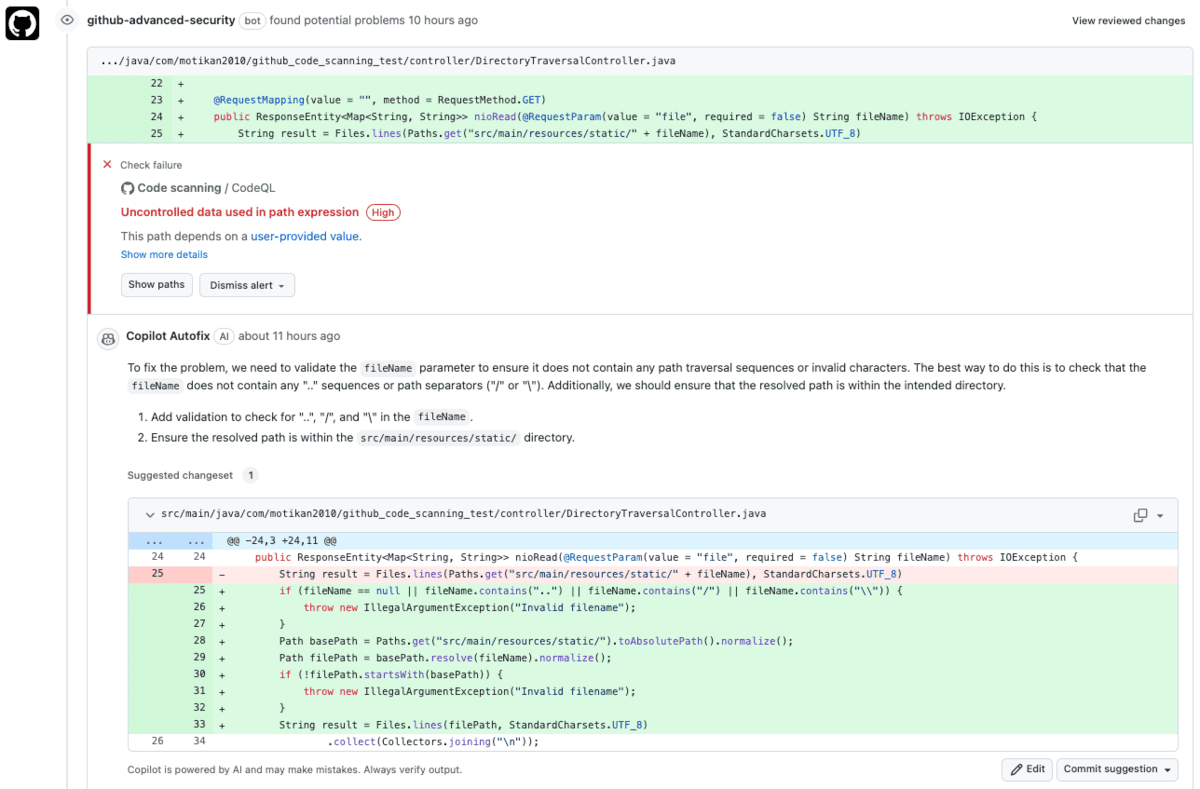
On October 15, GitHub's agentic autofix for code scanning went GA: alerts get assigned to Copilot, which explores the codebase, generates fixes, re-runs CodeQL to verify, and opens a draft PR. The free Generate Fix button is replaced by Assign to Copilot — billed in AI Credits plus Actions minutes, with an Advanced Security line on the enterprise bill.
On October 13, Ramp launched Glass, its internal vibe coding platform, as a public AI workspace product: 323 employees produced 6,500+ edits of reusable Skills — one account manager's prompt took feature-request intake from 300 to 20,000 a month — and after the CEO admitted burning $1.5M in tokens in one week, every project now ships with a taxi-style meter plus a Router that picks the cheapest adequate model.