The most common brand disaster for indie hackers: your product isn't launched yet and the name is already squatted. This guide gives the complete two-week pre-launch lockdown checklist — four-step name clearance, defensive domain registration, hands-on US/China trademark filing, 12 must-claim account slots, and how UDRP enforcement connects when squatting happens. Two weeks of prevention beats six months of lawsuits.
VIBEFIX GUIDES
AI Coding Guides
Practical knowledge for tools, deployment, workflows, and building projects.
When results stall, the first instinct is 'let's fine-tune a model' — but 90% of the time, RAG or prompt engineering is cheaper, faster, and better. This decision guide gives you the three-way tree (task type × data volume × latency/cost), data-volume thresholds, the full cost formula, LoRA vs full fine-tuning, eval gate rules, and the 'don't fine-tune' anti-pattern list — so you spend the training budget only when it pays.
The biggest waste in vibe coding isn't tokens — it's rewrites caused by building the wrong thing. My rule: before any code, force the AI to interrogate you. This guide gives you a 10-question checklist, a one-line opener, and a three-round convergence method that turns "I thought I was clear" into "the AI actually got it." In practice, it cuts rework by more than half.
The CLI is the mother tongue of developer tools. When your users are developers, operations repeat at high frequency, and tasks fit into pipelines, the web page is a redundant middleman. This guide gives the full playbook for shipping a CLI from zero to one: the three-question decision test, --help-as-documentation UX, human/--json dual-mode output, Node/Python/Go/Rust selection, npm/pip/brew/cargo distribution, auto-updates, config and secrets, snapshot testing, and a v1 checklist.
When a user hits cancel, don't panic and don't obstruct: ask why on one screen, offer fix, switch, then discount in that order, and hold four red lines. This guide gives the per-reason scripts, the five metrics that matter, and the pre-launch checklist. Examples fictional.
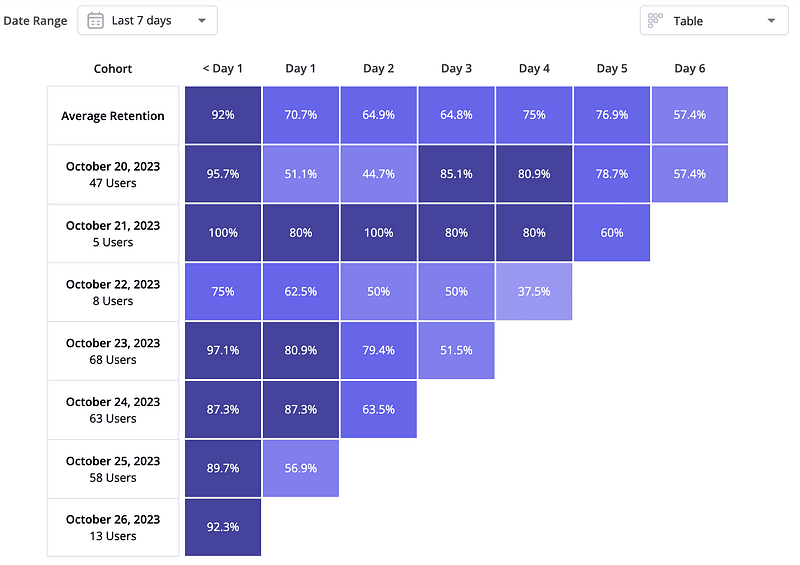
Launch day is the peak; what follows is the war. This hands-on guide covers defining D1/D7/D30 without fooling yourself, reading cohort tables, segmenting churned users into 4 tiers and 6 churn reasons, a channel selection matrix, 3 copy-paste win-back email templates, tiering SQL, PostHog/Plausible setup notes, a Resend vs self-hosted SMTP comparison, 5 anti-patterns, and a day-30/60/90 review checklist.
A launched project without an admin panel sends you back to hand-writing SQL over ssh at the first support ticket. This guide starts from the day-1 MVP feature list: the admin feature matrix across users, orders, content, and config; three role tiers with three isolation layers; human-review double confirmation for dangerous actions; append-only tamper-proof audit logs; a time-limited-token impersonation safety chain; plus a Retool-vs-custom build comparison and an 8-item launch checklist.
Taxes aren't an "after you scale" thing — they're an "after your first dollar of revenue" thing. A practical field guide for indie developers: three real-world cautionary tales, US/EU/China compliance playbooks, the minimum one-person toolchain, and a 30-minute monthly reconciliation SOP.
The coding workflow changed: the agent writes, you review. But reviewing AI code line-by-line no longer works — AI rarely writes syntax errors; its specialty is "looks done, actually isn't." This checklist gives 12 checkpoints: 3 for requirement alignment, 4 correctness traps, 3 engineering quality, 2 security red lines. The thesis: reviewing AI code isn't about finding bugs — it's about finding "things you thought it did, but it didn't."
Share decisions, not progress; dominate one channel; build assets, not traffic — the two principles and weekly operating system for solo-founder content growth.