All articles

VIBEFIX GUIDES

AI Coding Guides

Practical knowledge for tools, deployment, workflows, and building projects.

Community cold-start and open-source acquisition playbook for vibe projects: from 0 to 100 true fans with ops SOPs, README positioning, and trending tactics.
Guide
From 0 to 100 True Fans: Community Cold Start and Open-Source Acquisition for Vibe Projects

Vibe coding made building easy and getting noticed hard; community and open source are the few fair arenas where time trades for traffic. This tactical manual covers venue picks, 5 seed-user sources for the 0-20 cold start, a daily 15-minute ops SOP for 0-100, the README-as-landing-page formula, GitHub trending mechanics and launch timing, issue-driven marketing, build-in-public rhythms, crisis playbooks, 5 health metrics, and the path from community to revenue.

Indie DevelopmentGrowth & MarketingOpen Source

Illustration of a declined credit card being recovered through a dunning email sequence and retry schedule
Guide
Card Declined, Revenue Gone? A Practical Dunning Guide for Vibe-Coded Subscription Products

Involuntary churn — customers who never wanted to leave but whose renewal charge failed — typically makes up 20-40% of subscription churn. This guide covers the missing fourth piece of subscription revenue: failure triage by decline code, a D+1/D+3/D+7/D+14 retry schedule, four recovery email templates, grace-period and degradation strategy, the 8-element self-serve recovery page, a 4-metric weekly dashboard, and a production-ready invoice.payment_failed webhook skeleton.

Payments & MonetizationIndie DevelopmentGrowth & Marketing
Technical documentation writing scene on a dark desk
Guide
Your AI App Can Be Broken by One Sentence: Prompt Injection Defense in Practice

If your app feeds user input to AI, someone can hijack it with one sentence telling it to 'forget previous instructions.' Not theory: in real 2026 attacks, agents were hijacked by hidden instructions in webpages and tricked into leaking system prompts. Three injection shapes and four defense layers — required reading before your vibe app ships.

Developer WorkflowAI CodingSecurity & Privacy
Screenshot of WordRocket's pricing page: free tier for acquisition, Pro lifetime $199, Premium lifetime $249 — a lifetime deal is itself a marketing hook
Guide
Subscriptions Not Selling? A Hands-On Playbook for Lifetime-Deal (LTD) Monetization of Vibe Projects

When subscriptions stall, many indie hackers pivot to lifetime deals — but LTD is a financing strategy, not a pricing strategy. This guide does the LTV math of LTD vs. subscription, gives the pricing ≥ 3× annual fee rule, walks through an AppSumo launch (revenue share, review process, bad-review firefighting) and the self-run flash-sale process, and dissects five real pitfalls that killed products. One-page checklist included.

Payments & MonetizationIndie DevelopmentProduct Strategy
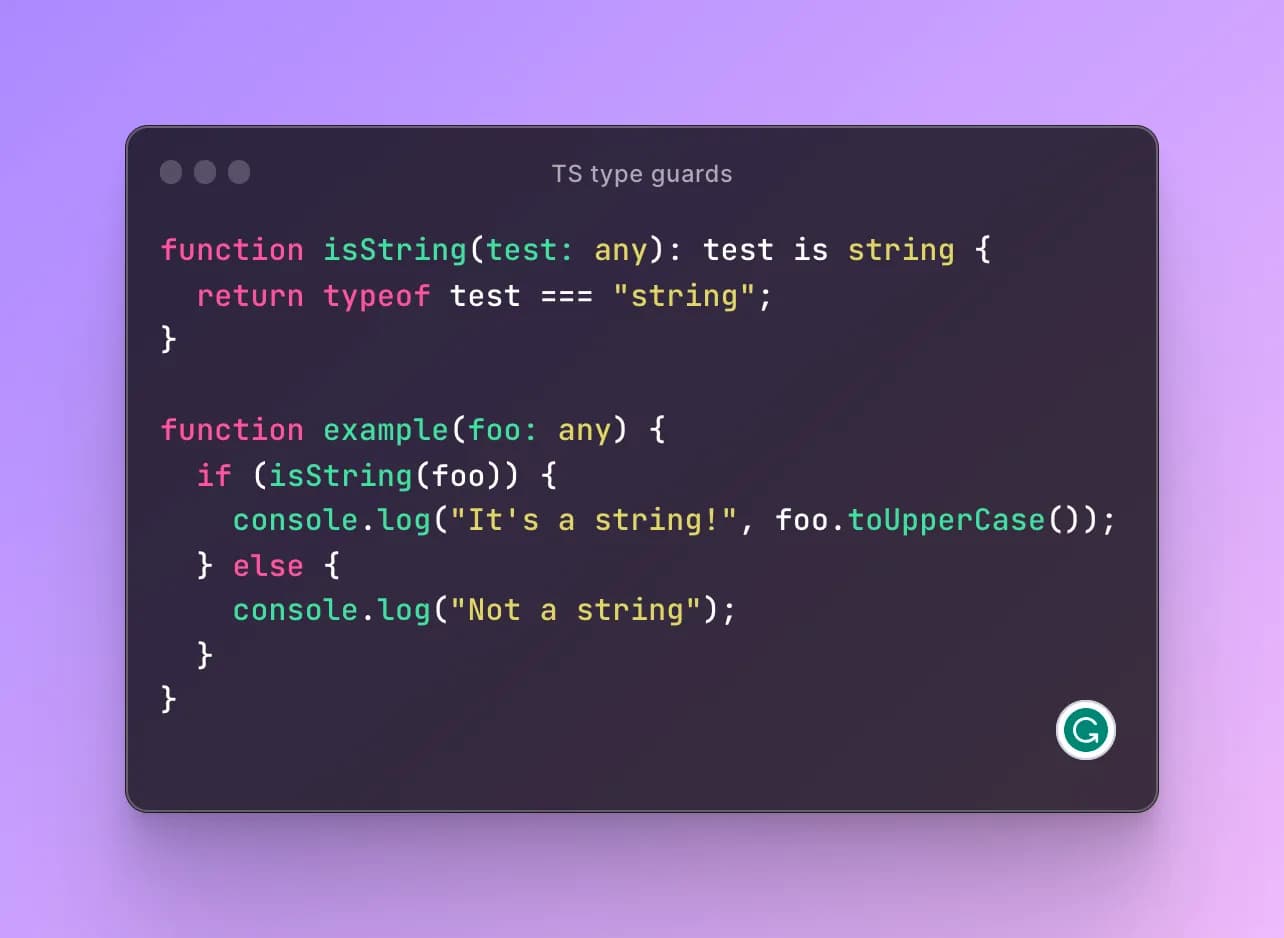
TypeScript code snippet in a dark editor window
Guide
Write Your First Claude Code Mod: From Blast Radius to Your Own Agent Guardrail

Anthropic just opened up Claude Code to mods. Instead of chasing the flashy official demos, write something that actually protects you every day: a guardrail mod that intercepts dangerous commands. This guide walks the full loop — understand the event model, have Claude write it for you, install and hot-reload, then run the security self-check.

Developer WorkflowTool TipsAI Coding
Pricing-themed cover art: price tags, scales, and a rising arrow in flat illustration
Guide
Indie Pricing Mindset: Low Prices Aren't Humility — They're Fear of Charging

Indie developers share an affliction: product built, hands shaking at pricing time. This piece makes an uncomfortable argument: low pricing isn't humility — it's fear of pricing your value. The math ($5/month needs 16,667 users for $1M ARR; $99/month needs 842), three inner demons ("even I think it's expensive," "Big Tech is free," "free now, charge later"), and a four-step pricing practice: replacement cost, price interviews, three tiers, one price raise six months in.

Payments & MonetizationIndie DevelopmentStartup Journey
A developer writing software documentation, desk close-up photo
Guide
Docs Are Your Product's Second Face: Developer Documentation for Vibe Projects

Landing page gets them in; docs decide whether they stay. This guide covers the full playbook for vibe-project developer docs: the 5-minute Quickstart test, the Divio four quadrants, API reference that machines generate, docs-as-code discipline, navigation, metrics, i18n, and an honest assessment of llms.txt.

Developer WorkflowTool TipsDesign Experience
A developer typing at a keyboard in front of a monitor showing a code editor
Guide
Don't Write Code Yet — Write the README First

Throw a one-line prompt at an AI coder, come back two hours later to 40 files and a login page you never asked for? The problem isn't the AI — it's that you never defined what "done" looks like. This guide teaches README-driven development: write an agent-friendly README before coding — positioning, quickstart, architecture map, env vars, non-goals — then let the AI build. With a four-step workflow, three anti-patterns, and a pre-flight checklist.

Developer WorkflowTool TipsProject Building
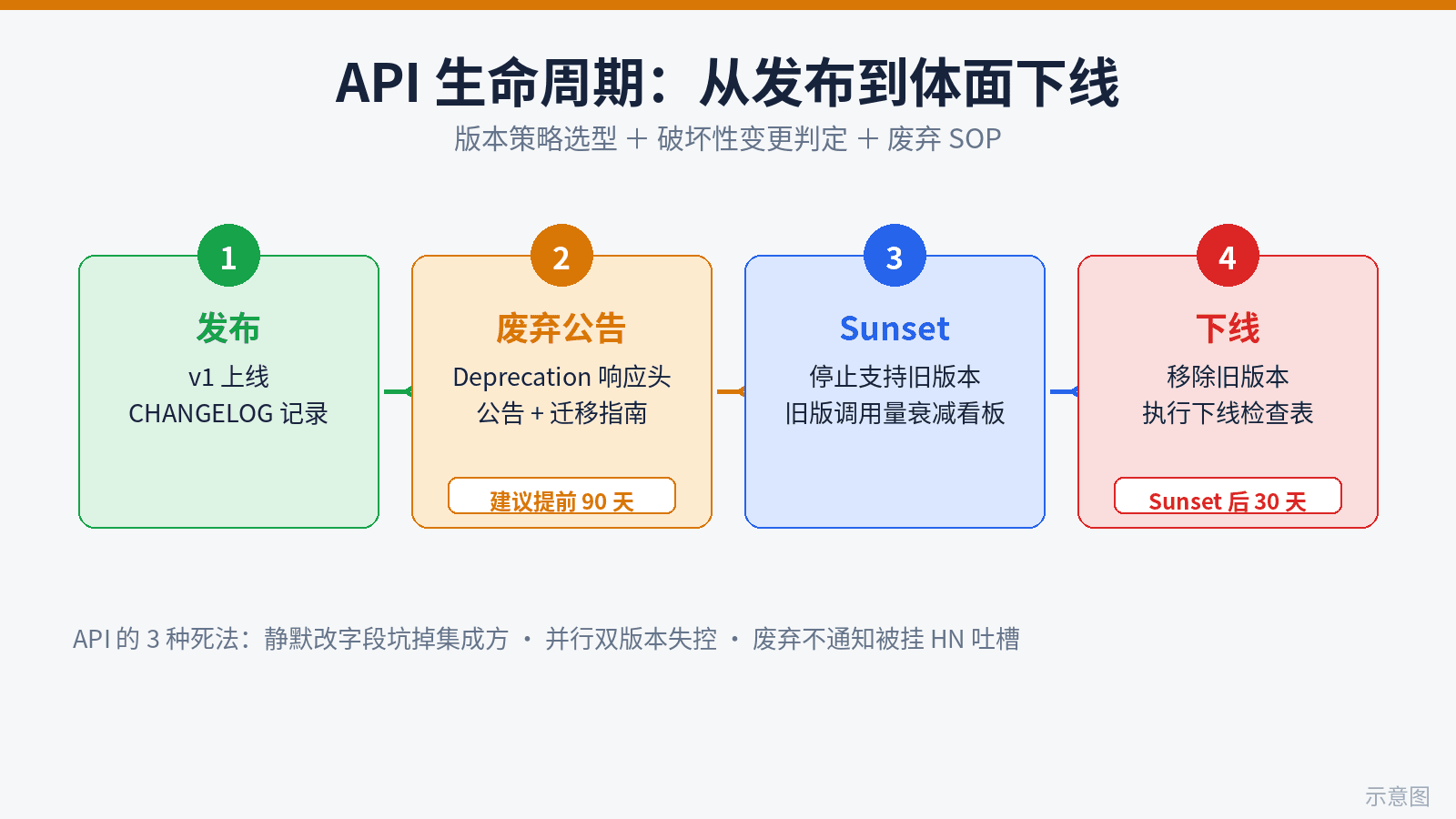
Illustration of API lifecycle management: version tags v1 and v2 connected by a migration arrow, with a sunset clock marking the deprecation timeline
Guide
Don't Break Your API: Versioning and Deprecation SOP for Vibe Projects

Vibe coding ships 10x faster than API contracts can move — where solo projects blow up. This guide fills the gap: 3 real ways vibe APIs die, a version-strategy decision table (URL path vs header vs versionless), a 12-rule breaking-change checklist, a 4-step deprecation SOP (headers, announcements, dual-run dashboards, sunset checklist), a copy-ready migration template, and the minimal solo setup: CHANGELOG-driven development plus CI auto-blocking breaking changes via openapi-diff.

Developer WorkflowBackend EngineeringIndie Development
Illustration of a road splitting into two paths, symbolizing A/B testing dividing traffic into control and variant groups
Guide
Stop Guessing Button Colors: A/B Testing and Experiment Design for Vibe Projects

Low traffic means you need experiment design more, not less. A field guide for vibe builders: the three myths (sample-size illusion, peeking, testing only UI colors), a one-sentence hypothesis template with north-star vs. guardrail metrics, a sample-size lookup table and run-length formula, a 30-line Next.js feature-flag middleware with a three-stage rollout, five classic traps with real crash stories, a PostHog/GrowthBook/DIY cost comparison, and a one-page experiment retro template.

Indie DevelopmentProduct StrategyGrowth & Marketing