Project Directory

Browse all indie developer projects and co-creation requests

Active: Health & Fitness
Showcase
Online
Health & Fitnessclaude-codeclaude-sonnet-45

Fitness Pizza

Track your macros like slices of pizza — a lightweight, privacy-focused PWA for macros, measurements and workouts.

Fitness Pizza is a lightweight, privacy-focused Progressive Web App that turns macro tracking into something fun: your daily intake is visualized like slices of a pizza. It covers macros, body measurements and workouts, with trend views and a setup wizard that calculates your TDEE and suggests macro targets. Food photos can be analyzed by AI (Claude Sonnet 4.5) to estimate nutrition. The author states in the README: "Entirely vibe-coded with Claude Code." The repository was pushed on October 16, 2026, the day before this listing. A fresh, zero-star personal project with a live app — a clean example of what a vibe-coded PWA looks like in the wild.

Showcase
Online
Health & Fitnessclaude-code

Pani Kaisa Hai

Community drinking-water early warning for Indian neighbourhoods: residents report tap-water signals, but only a health worker can confirm contamination.

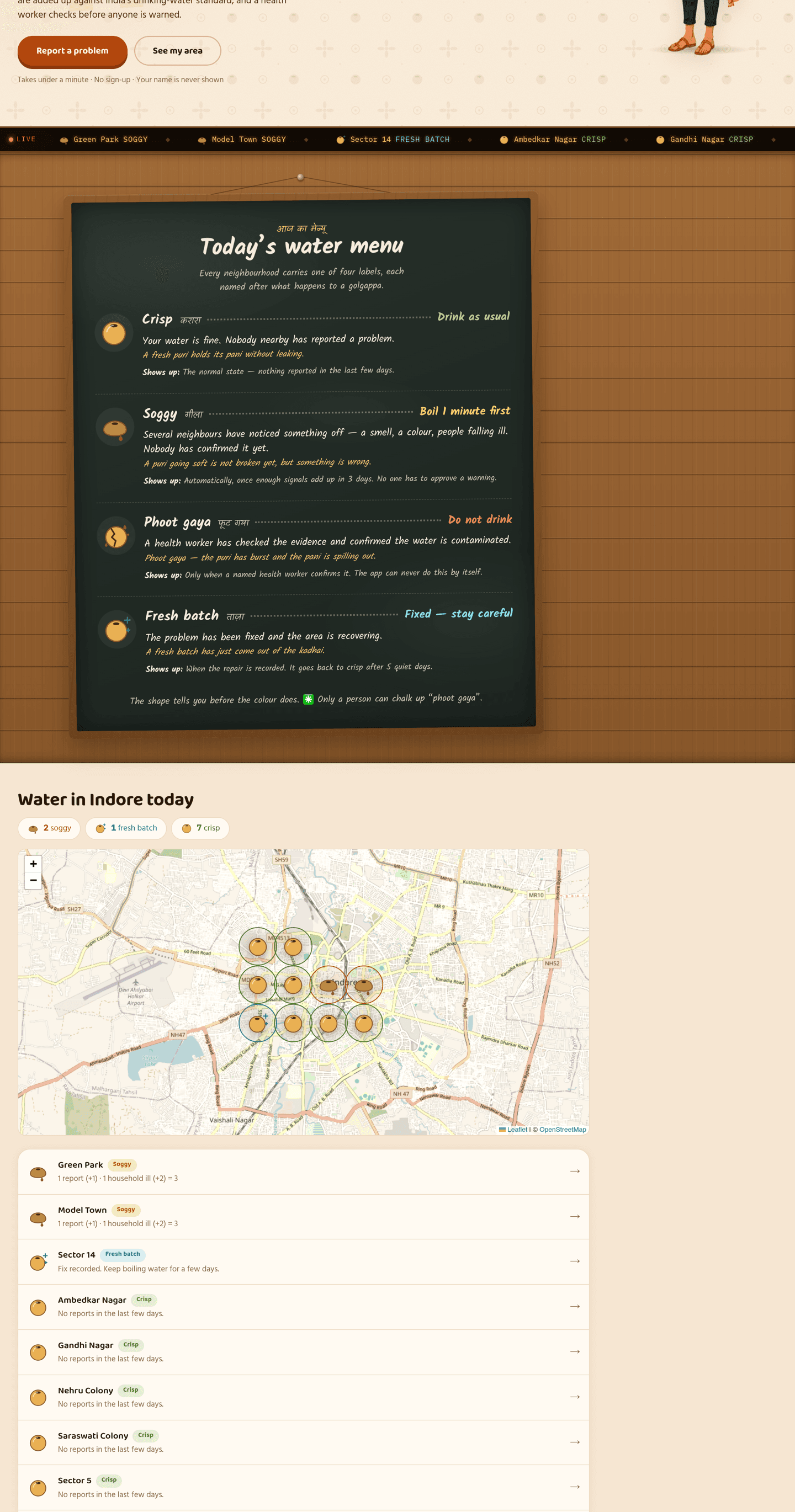
Pani Kaisa Hai — Hindi for “how is the water?” — is a community early-warning app for drinking-water safety in Indian neighbourhoods. The premise is deceptively simple: before you take the first bite of your golgappa, you ask whether the pani — the flavoured water it is filled with — is clean. The app lets residents report what they notice about their tap water (smell, colour, taste, grit, or illness at home), scores those signals against India’s drinking-water standard (IS 10500), and shows a live “golgappa map” where every neighbourhood carries a label named after what happens to a golgappa: Crisp (all fine), Soggy (something is off), Phoot gaya (burst — contaminated), or Fresh batch (fix recorded, area recovering). The sharpest design idea is who gets the final say. The app never lets a machine declare water unsafe by itself: once signals reach a threshold (six points, or a positive bacteria test), a case is raised but stays locked until a named health worker reviews the evidence and confirms or dismisses it — with a reason put on the record. As the site puts it: “A machine can raise a case. Only a person can declare the water unsafe.” A public “Shake the golgappa” simulator lets anyone pile on signals and watch the scoring logic work — including the one step the software will never take on its own. The build is unambiguously vibe-coded. The author built the whole app with Claude Code over about seven sessions between 19 September and 4 October 2026, kept a build log the entire way — including the parts that went badly — and wrote the process up for the Sanity “Vibe-Code Something Strange” challenge. BUILD_LOG.md is public in the GitHub repo (github.com/Reet24-del/pani-kaisa-hai), which also ships 33 tests. Declared stack: Next.js 16 (App Router), TypeScript, Sanity Studio v6, and Leaflet + OpenStreetMap for the map. The demo currently online runs on sample data: the author honestly labels the site “Sample data — demo build” throughout, with an Indore neighbourhood set used for illustration. It is live and fully functional — the reporting flow, the live status ticker, the map and the simulator all render and work.

Showcase
Online
Health & Fitness

LET: track your life, discover patterns

A cross-platform habit and life-event tracker — log workouts, sleep, mood and milestones offline, then spot patterns in your days.

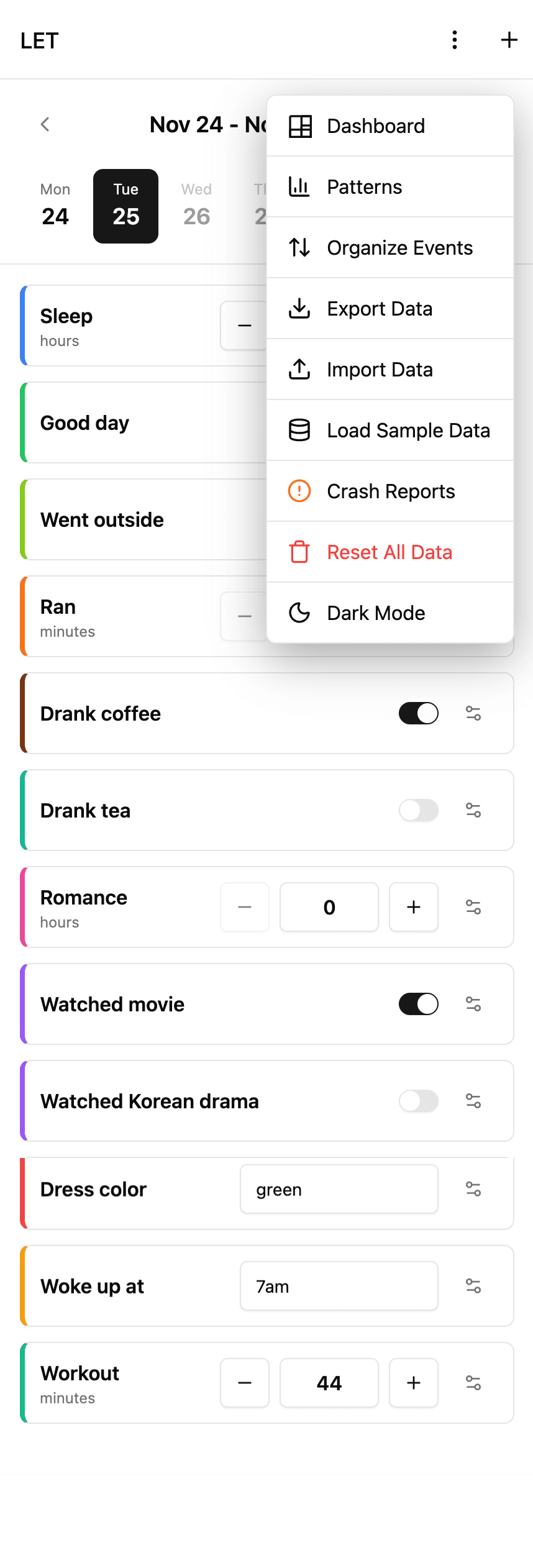
What it isLET (Life Events Tracker) is a simple yet powerful mobile app for tracking daily habits, life events, and discovering patterns in your daily life. Log exercise, meditation, reading, water intake, sleep hours, meals, mood, and important milestones — everything stays in a local SQLite database on your device. No cloud, no account. It runs on iOS, Android, and Web from one React Native + Expo codebase. Vibe-coded — the confessionThe author is refreshingly honest in the README: "I have to be honest with you. I vibe-coded this entire project." The confession goes on: "I didn't write a single line of code manually" — "I just talked to Claude (the AI, not some French guy)" — while mostly drinking tea and approving changes. The author notes this project started as a serious evaluation of whether React Native + Expo could deliver consistent UI across iOS, Android, and Web — and it shipped. Pattern analysis, offlineThe standout feature is the Patterns view: custom SVG charts that surface how your habits correlate over time. Week-based navigation with a calendar picker, dark/light mode, customizable event colors, JSON export/import, swipe gestures — and it all works offline on local SQLite. Who it's forSelf-quantifiers who want their data on-device; Expo developers looking for a real-world cross-platform reference; and skeptics who need one more proof that a full app can be built by describing it to an AI.

Showcase
Online
Health & Fitness

称伴 ScaleMate

云麦体脂秤的蓝牙同步桥:称重后自动确认,经 Health Connect 写入 Google Health,Material 3 深色模式、中英双语,开源免费。

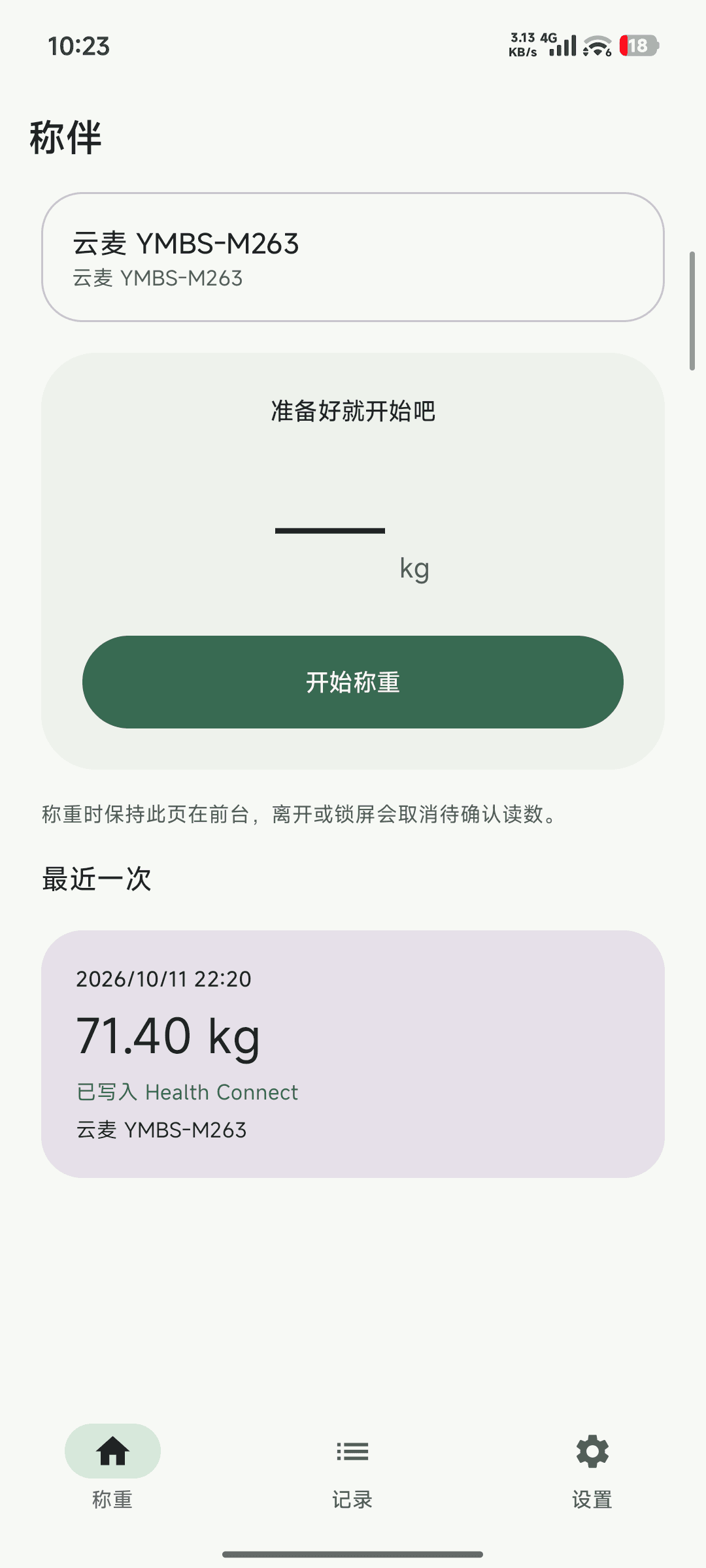
称伴 ScaleMate 是一款开源 Android 应用,解决一个很具体的问题:云麦智能体脂秤 3 SE 的数据无法自动同步到 Google Health,之前每次称完都要手动录入。作者周末用 Vibe 的方式写了这个 App——蓝牙连接体脂秤,称重读数经确认后通过 Health Connect 写入 Google Fit / Google Health,体脂秤“终于复活了”。 核心能力: 蓝牙直连体脂秤:适配云麦 YMBS-M263,称重时保持页面在前台即可自动读取; 自动写入 Health Connect:每次称重本地保存并同步到 Google Health,无需手动录入; 称重记录:历史记录按时间倒序排列,标注每次写入状态; Material 3 设计:深色模式、中英双语,界面干净现代。 作者 vibe-coded 证据:作者 rccoder 在 V2EX(https://www.v2ex.com/t/1248020,2026-10-12)原话——“于是周末 Vibe 了个 APP,把体脂秤数据同步到 Google Health,体脂秤终于复活了”。仓库 https://github.com/rccoder/ScaleMate 创建于 2026-10-11,当天持续 push,公开可访问。 技术栈:作者未公开声明(仓库语言显示 Kotlin,仅供参考)。开源免费。

Showcase
Online
Health & Fitnessclaude

Run Card Generator

A free iOS app that reads your Apple Health workouts and turns them into AI-art run cards — 98% AI-generated code, built over two Saturdays.

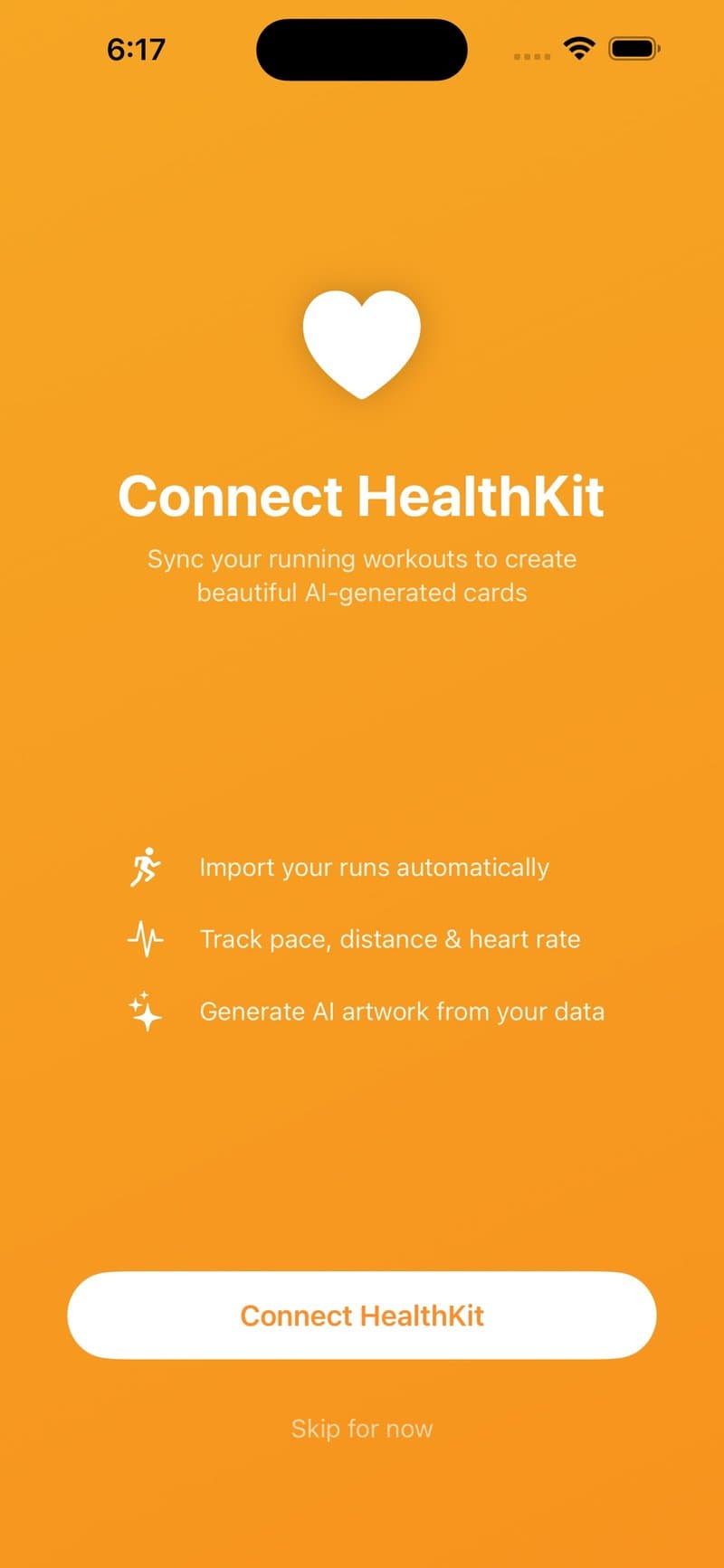
Minjie Zou's own words: "I spent two Saturdays building an iOS app with 98% AI-generated code." The result, Run Card Generator, is live on the App Store (free, version 1.0.0) and does one thing well: it reads your running workouts from Apple HealthKit and renders them as beautiful, AI-generated artwork cards you can share. A companion open-source skill (mz462/run-skill, MIT, 1 star) documents the card-generation workflow. The App Store screenshots show a polished product: a HealthKit connect screen, runner profile settings, sync controls for the last 30 days or full history, and a card-display panel where you toggle exactly which stats appear on your cards and in AI prompts — distance, duration, pace, heart rate, calories, elevation, location, date, VO2 max — with card sizes tuned for Instagram feed (portrait 4:5). Your data stays on your device; the app only asks for HealthKit read access. Verdict: a textbook two-weekend AI build — narrow scope, real utility for runners, native iOS polish. If you've ever wanted your Strava-less runs to look shareable, this is the shortcut.

Showcase
Online
Health & Fitnessgemini-25-flash

NutriSnap

A privacy-first, backend-free nutrition PWA: snap a meal photo, Gemini 2.5 Flash returns calories and macros in seconds — bring your own API key.

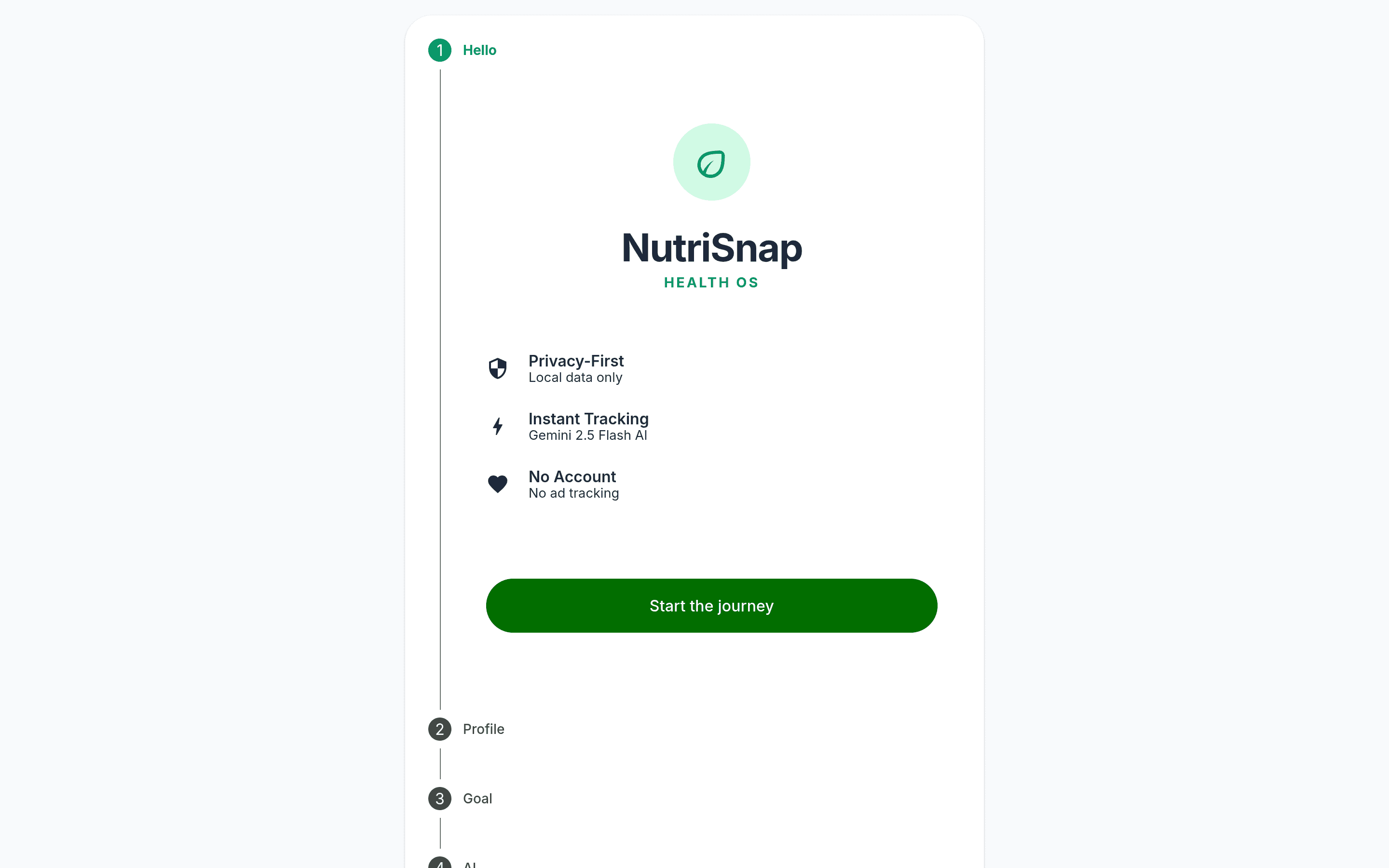
Dorian Naaji's own headline says it best: "I vibe-coded a Nutrition Tracker That Has No Business Model, and That's the Point." NutriSnap is a free, open-source (MIT) nutrition tracker with no backend, no account and no subscription. The PWA at nutrisnap.dorian-naaji.fr is live, and the GitHub repo (DorianNaaji/nutrisnap, last pushed August 15) is tagged angular, dexie, gemini-ai and byok. The flow is: photo of a meal → Gemini 2.5 Flash → calories and macros in seconds. The honest privacy model is the interesting part: there is no NutriSnap server sitting between you and Google — you paste your own free Gemini API key once (BYOK), and the relationship is direct: your browser, your key, Google. Everything else (BMR/TDEE from your metabolic profile, a daily AI coach recap, 7- and 30-day trend analysis, a color-coded monthly calendar) is computed locally and stored in Dexie.js/IndexedDB. It installs on iOS and Android and works offline. Verdict: the rare health app whose business model is architecturally impossible — Naaji made that a feature, not a bug. If you distrust nutrition apps with opaque privacy policies, the stack (Angular standalone, Dexie.js, Gemini 2.5 Flash, static SPA) is simple enough to audit in an afternoon.

Showcase
Online
Health & Fitness

Offscreen

An AI outdoor-discovery journal: one small photo challenge, put the phone down, Gemma judges your discovery

Offscreen is an AI-powered outdoor discovery journal with a simple ritual: each session gives you one small real-world photo challenge, you put the phone away and go outside, return with a photograph, and Gemma (open-weight) scores whether the discovery satisfies the challenge and writes a reflection — with journal and streak tracking. No feed, no infinite scroll, by design. Author Harsh-0986 wrote on dev.to (2026-10-08): “I built Offscreen from the initial idea through implementation and submission planning with an agentic coding workflow — twenty-two commits, phase by phase, from a written specification.” It was submitted to the Hacktoberfest '26 Open-Source AI Challenge (Week 1: Touch Grass). The backend is FastAPI + Pydantic with SQLite via SQLAlchemy, the frontend is Next.js, and workflow orchestration uses LangGraph, with Gemma served through the Google AI Studio API (all author-stated). The repo (github.com/Harsh-0986/OffScreen) was pushed on 2026-10-08 and includes a 63-second real demo video.

Showcase
Online
Health & Fitnessclaude-codeopus-46

PostVisit.ai

AI post-visit companion for patients: understand, remember, follow through — built by a cardiologist with Claude Code in 7 days.

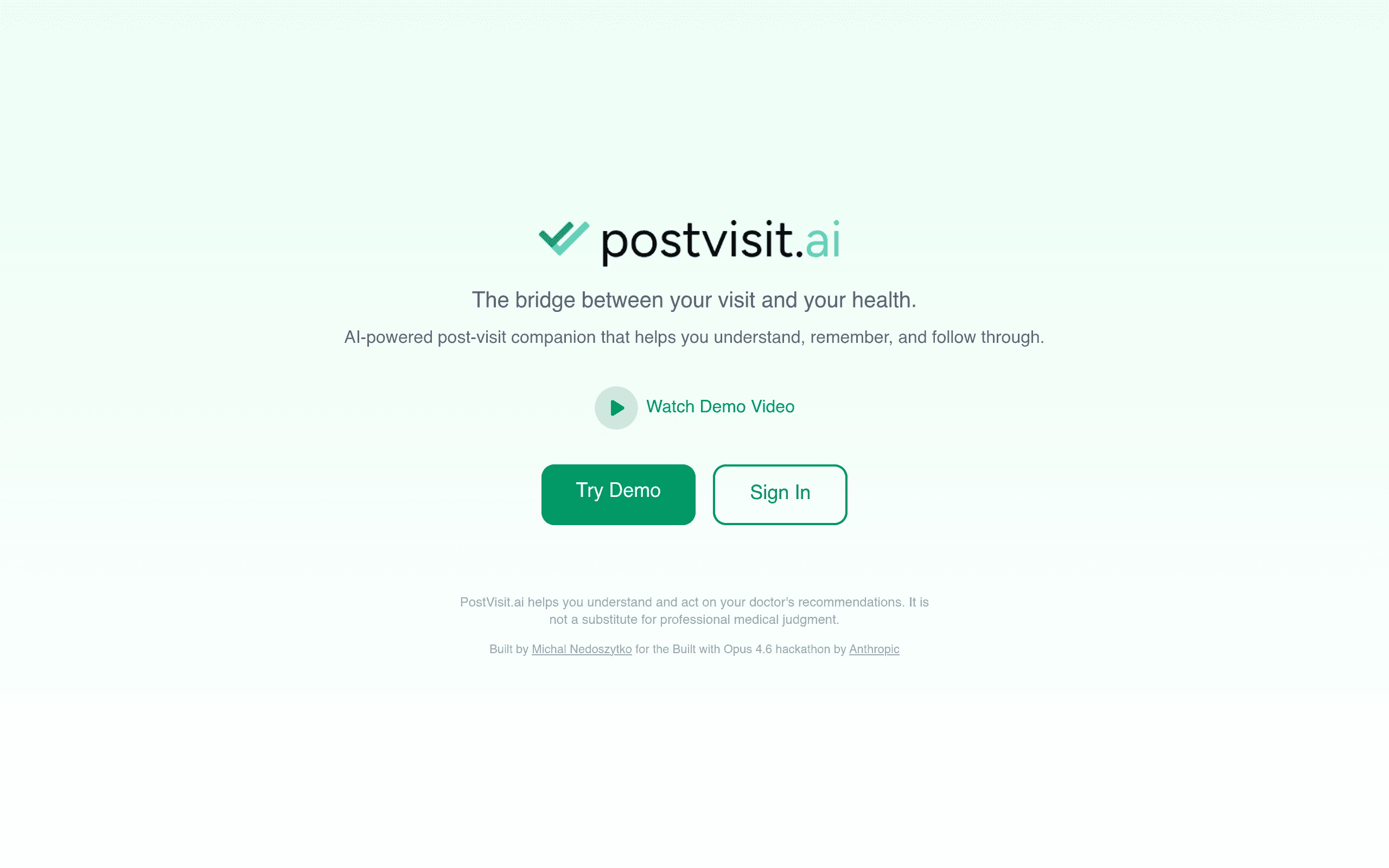
PostVisit.ai is "the bridge between your visit and your health": an AI-powered post-visit companion that helps patients understand, remember, and follow through on their doctor's recommendations. The site carries its own medical honesty label — "not a substitute for professional medical judgment" — and was built for Anthropic's Built with Opus 4.6 Claude Code hackathon, where it took third place. The author is Dr. Michał Nedoszytko, a practicing interventional cardiologist in Brussels, and the build story is on the record: "Built by a practicing cardiologist / coder in 7 days using Claude Code with Opus 4.6. Built for the Claude Code Hackathon (Feb 10-16, 2026)."

Showcase
Online
Health & Fitnessclaude-codeclaude-managed-agents

Medkit

AI-powered clinical training simulator: practice patient encounters with simulated cases, graded against published clinical guidelines.

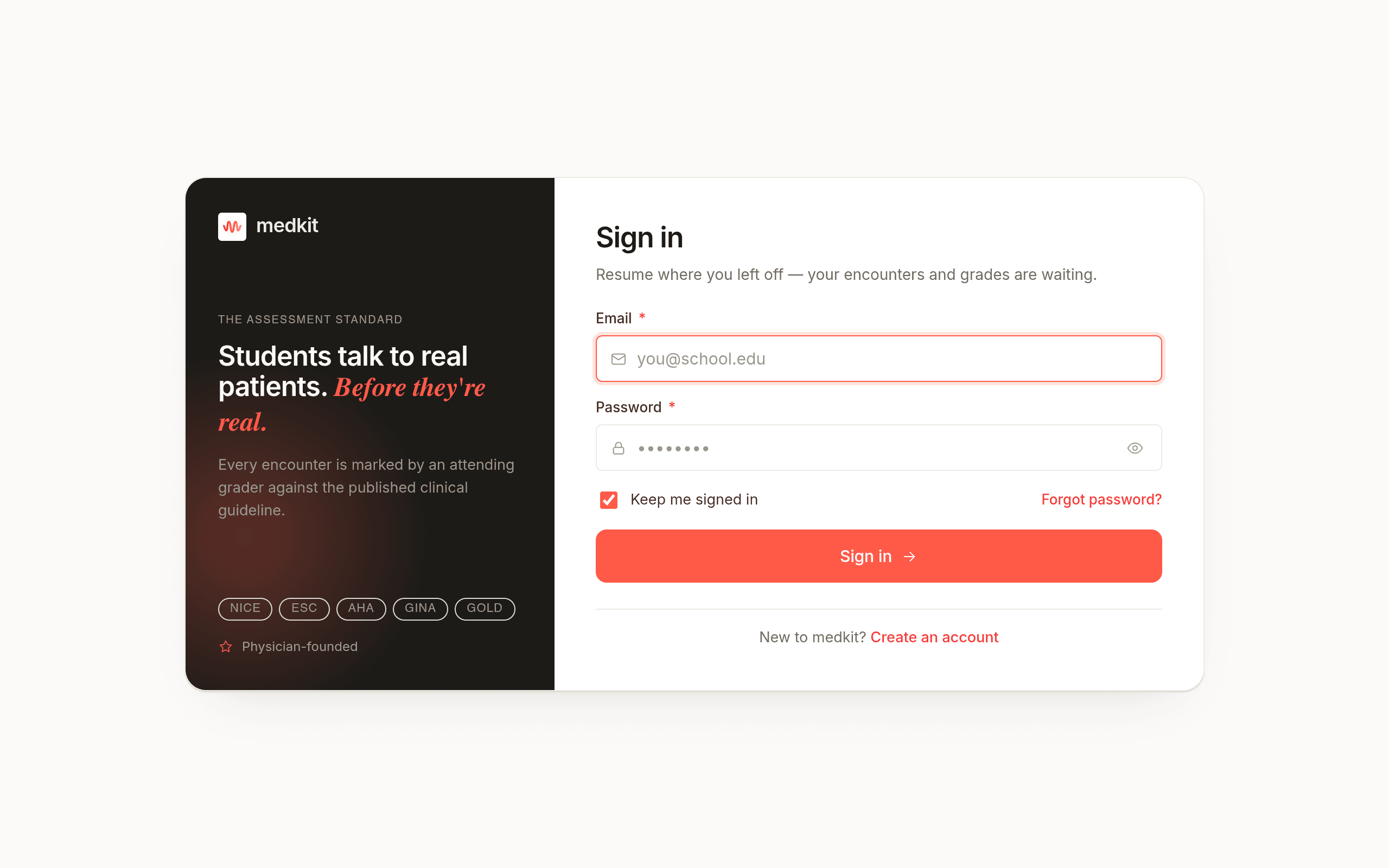
An AI clinic where medical students practice before touching real patientsMedkit is a gamified medical training simulator built by Bedirhan Keskin, a physician-turned-software-engineer from Istanbul. Medical students take medical histories, order labs, read imaging, diagnose and prescribe — all with simulated patients — and at the end of each encounter an agentic grader scores the whole session against the same published clinical guidelines a board examiner would use. The login screen says it plainly: "Students talk to real patients. Before they're real." Built almost entirely by voice with Claude CodeAccording to Anthropic's official coverage of the Built with Opus 4.7 Claude Code hackathon — where Medkit took first place — Bedirhan built Medkit across four separate Claude Code sessions (voice engine, content generation, 3D game layer, and the core app), following a "talk, don't type" approach and working almost entirely by voice, with Claude Managed Agents doing the heavy lifting. Real traction, not just a demoThree medical faculties and a pharma company in Istanbul are running pilots, and the project carries 333 GitHub stars. The product is now being operated as a company — this is vibe coding that made it past the demo stage into real clinical training.

Showcase
Online
Health & Fitnessclaude-codeclaude-in-chrome

Steadywag

A care companion for a chronically ill dog: turns 180 pages of records into answers with sources

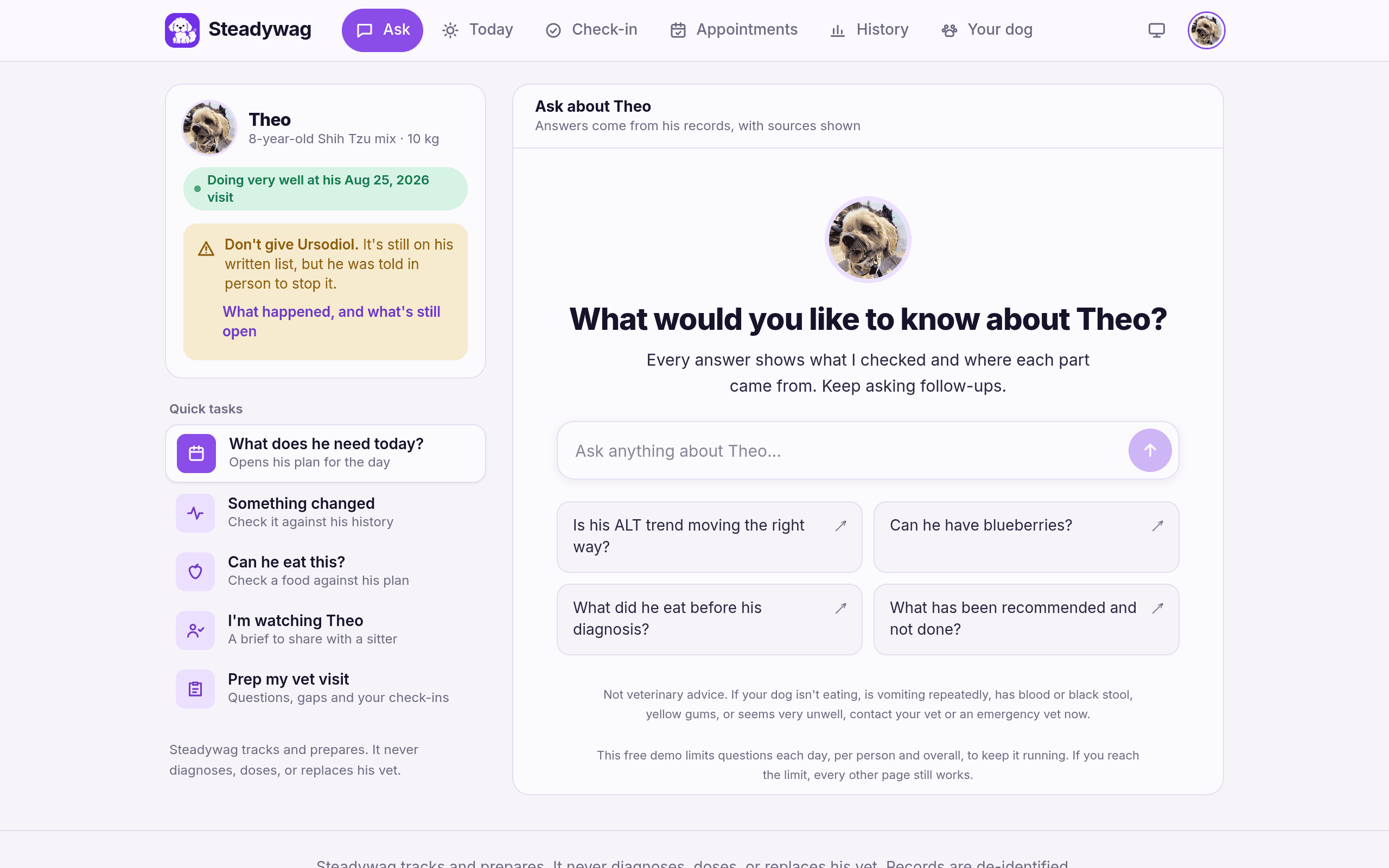
Steadywag is a care companion for a dog with a chronic illness. It turns roughly 180 pages of veterinary records into structured Sanity records, and an agent answers questions about them — telling you what the records don't say, like a drug that's still on the written list but was stopped verbally. Every answer shows what it checked and where each part came from. The author is explicit about the build: "I used Claude Code in a terminal as my AI IDE, plus Claude in Chrome to drive a real browser so it could look at its own work. I direct the product. I did not write the code." Created 2026-10-03, 40 commits, MIT — a deeply personal project where the human directed and the AI wrote everything.

Showcase
Online
Health & Fitnessclaude-code

Carbs

A homemade vibe-coded Android diet diary: carb-cycling tracker with photo meal logging and AI calorie advice

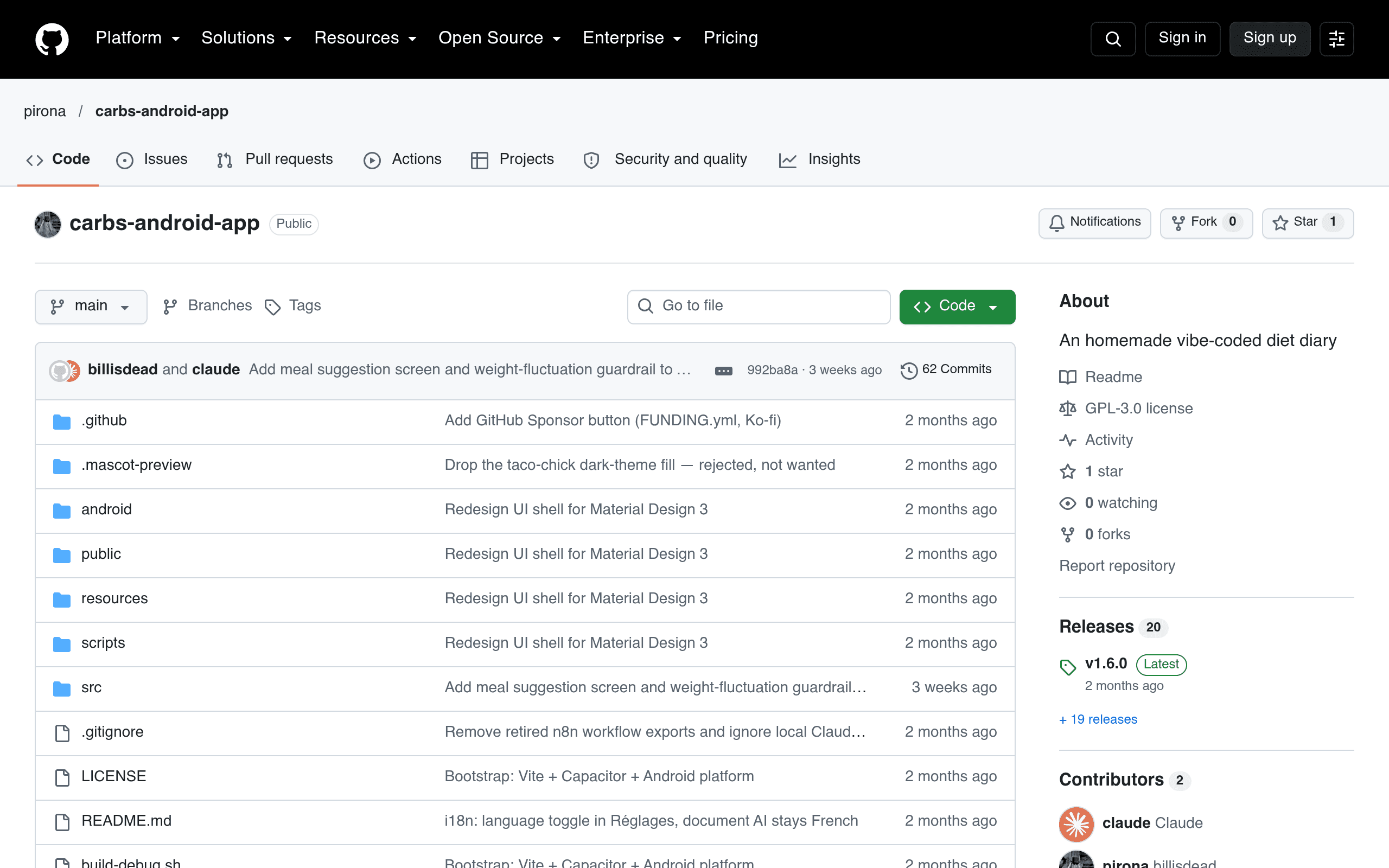
Carbs is a homemade, vibe-coded Android diet diary. It tracks carb-cycling nutrition — HIGH/MEDIUM/LOW/PLAISIR day types with different carb targets — plus calorie deficit and macros, and logs food by photo: snap a plate, a shopping receipt, a barcode, or just describe the meal in plain language. Four optional AI features (food parse, food vision, receipt scan, carb advice) run entirely on Mistral, with the exact prompts committed to the repo as source code. Unusually, the app also tracks and shows its own AI usage footprint — an estimate of the carbon and water cost of its AI calls, computed from real token counts, visible in Settings. The author is a Linux/Kubernetes systems engineer, not a mobile developer, and says so in the README: "This app was built with Claude Code." The git history's commits are co-authored by "claude", the UI is bilingual French/English, and nutrition data comes from OpenFoodFacts and ANSES-CIQUAL. GPL-3.0, 62 commits and 20 releases, still being iterated. (Note: a different project from the previously published CarbScan — different author, different app.)

Showcase
Online
Health & Fitnesslovablereplit

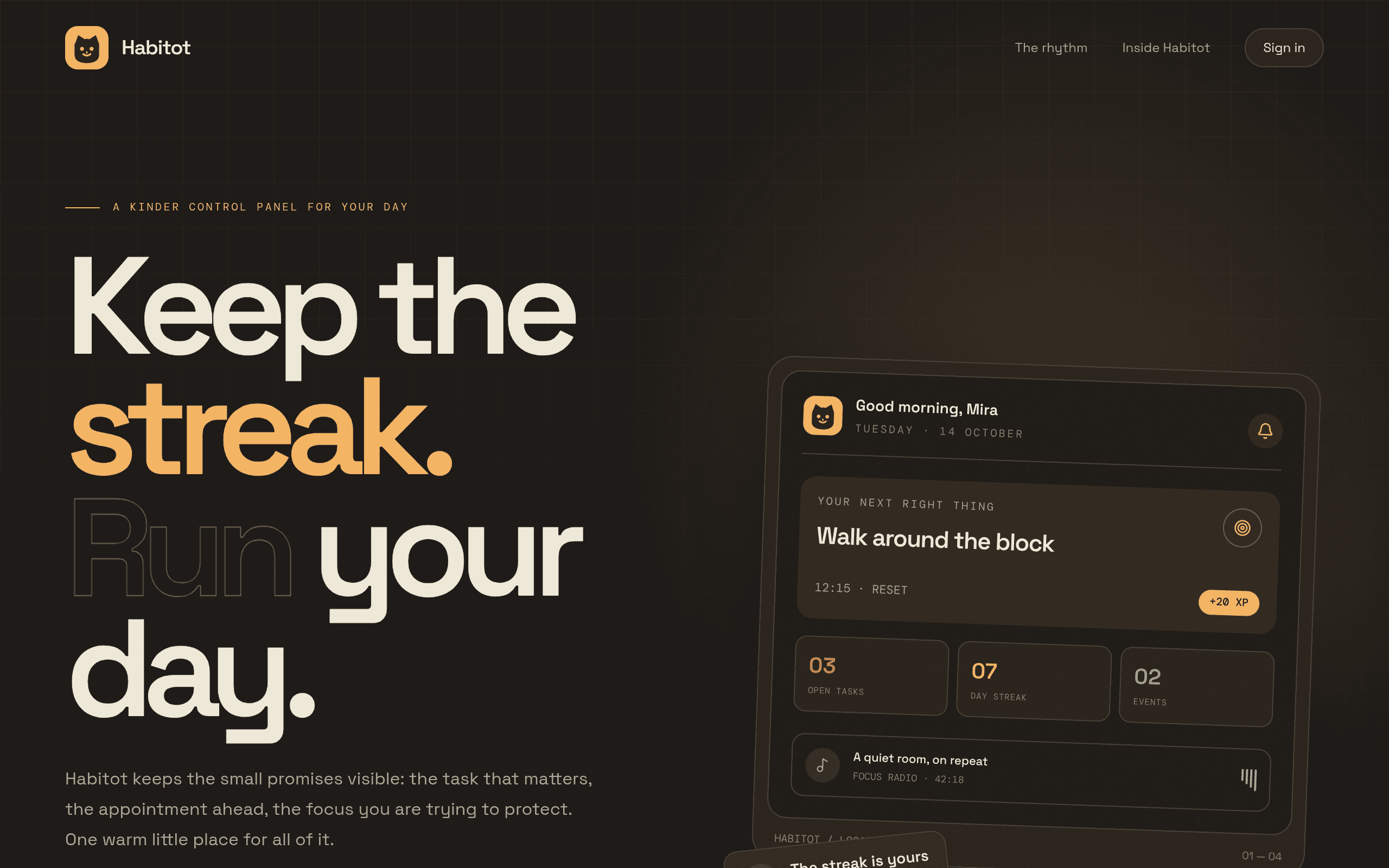
Habitot

A kinder control panel for your day — Duolingo-style streaks, XP, focus radio and a mascot that keeps your small promises visible

Habitot is a gamified habit and task companion that borrows Duolingo's streak psychology and points it at your whole day. Complete tasks to earn XP, protect a day streak, glance at a calendar view, and keep a focus radio playing while a warm cat mascot watches over it all. The pitch is disarmingly simple: “Keep the streak. Run your day.” The author's GitHub README states the build plainly: “Built with Replit and Lovable” (github.com/aquabyte9/habitotnightly). The declared stack is React + Tailwind CSS on Supabase, with the web app also packed into a native Android APK via Median. The repo was updated about 18 days ago, and the author published a YouTube walkthrough, so it's still being iterated. What makes it stand out in the crowded habit-tracker field is tone: the landing page frames it as “a kinder control panel for your day” — your next right thing, the appointment ahead, the focus you're trying to protect, all in one warm little place. The free web app is live now, no install needed. curated by the VibeFix editors

Showcase
Online
Health & Fitnessclaude-code

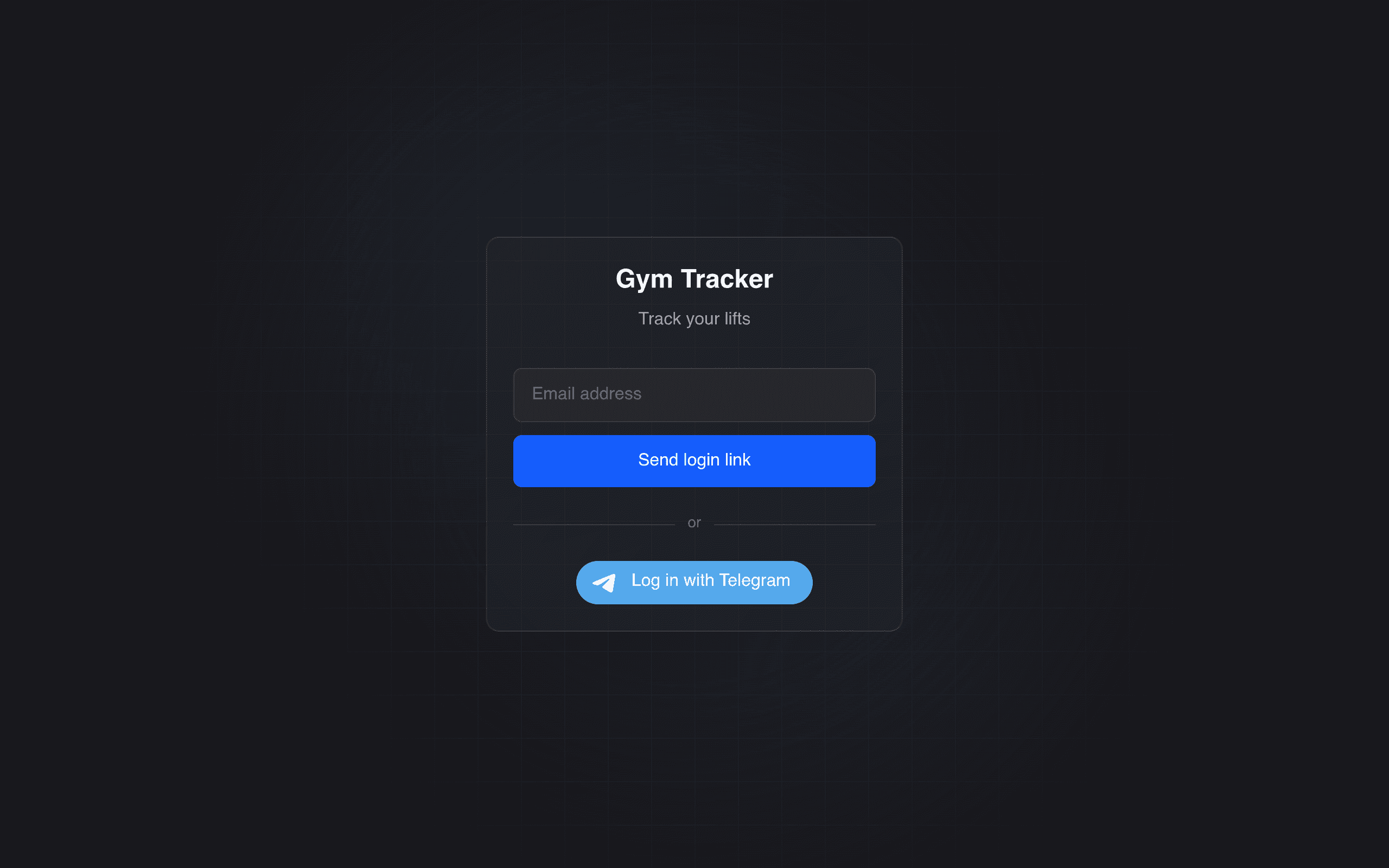
Agent Arnold

A gym tracker 100% vibe-coded from a phone between sets: log lifts, get AI coaching from Claude, and face the "Dishonored" shameboard if you fake your numbers.

The Show HN title says it all: "Agent Arnold — Gym tracker 100% vibe-coded from my phone between sets." The author never touched a single line of code — "a part of it is halluci-coded" — and instead forwarded feature requests to CLI agents while SSHing from the gym. Because he is a daily user of his own app, he catches bugs immediately, sometimes literally between sets. The app itself is a proper gym tracker with a built-in AI coach. You can ask it things like "this exercise hurts my shoulder at the end of the movement, remind me proper form and cues" or "how should I modify my workout today based off last week's reps and weights," and there is a /generate command for full routines (the example given is bouldering-focused). It is free, your data is fully exportable, and there is an anonymous global leaderboard — plus a "Dishonored" shameboard for anyone caught faking their numbers, which is the kind of feature only a real lifter would think of. The stack is declared in the post: FastAPI + SQLite on a Linux box, a React PWA that works offline, the AI coach powered by Claude via the Anthropic API, Telegram OAuth plus Resend magic-link auth. "Vibe-coded with Claude, and the AI coach is also Claude. It's Claude all the way down." Note: This project is curated by the VibeFix editors from public sources. All rights belong to the original creator.

Showcase
Online
Health & Fitnessclaude-code

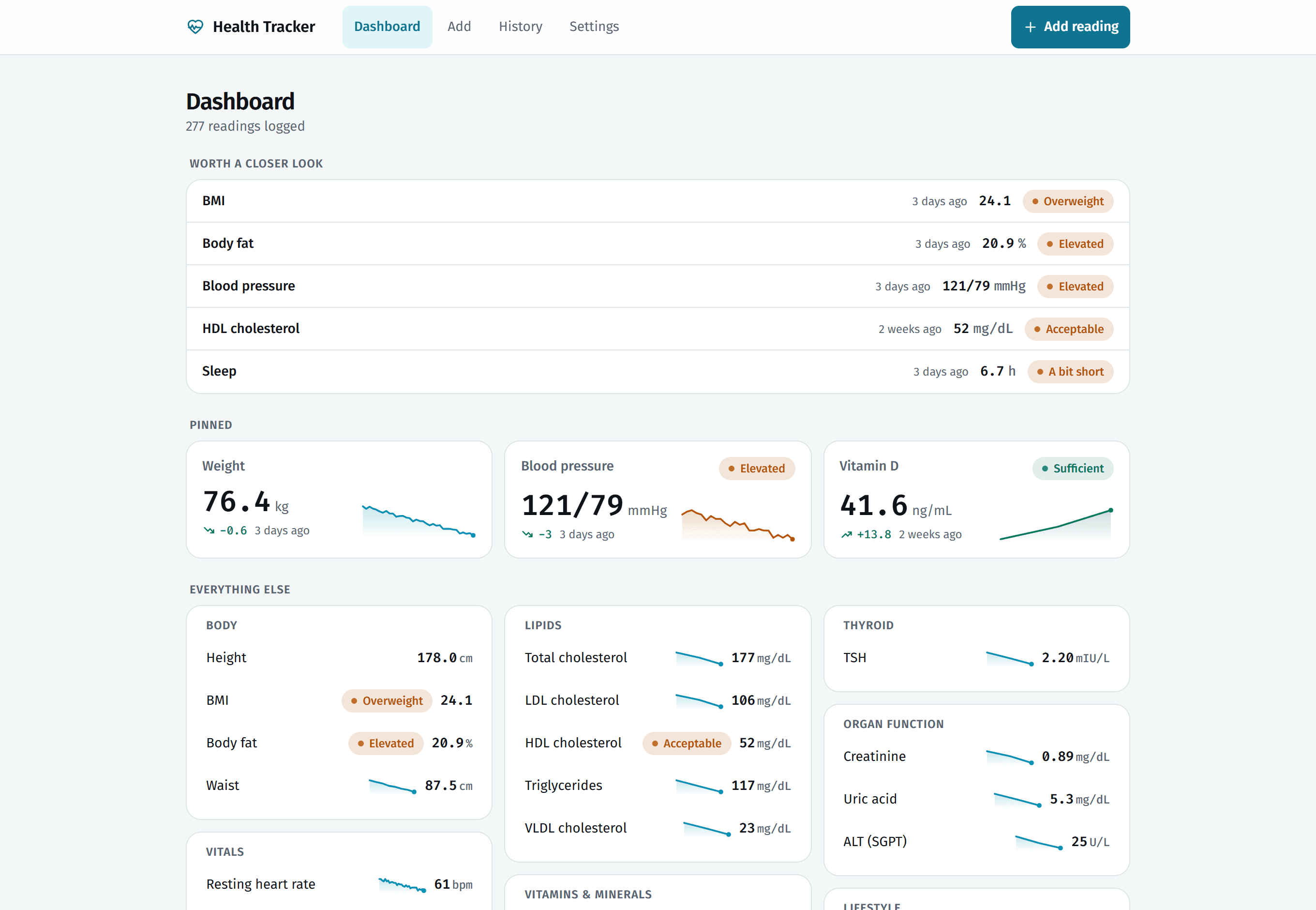
Health Tracker

A privacy-first health tracker that lives in your browser: log a reading in five seconds, watch trends on sparklines, and know if you're in a healthy range.

Most health apps want your account, your email, and your data on their servers before you can log a single number. Health Tracker goes the other way: no account, no server, no database. Your readings live in your browser and go nowhere unless you tell them to. The README's pitch is disarmingly simple — "Log a reading. See how it moves. Know whether it sits in a healthy range." Open it on your phone and you're logging in five seconds. The dashboard reads like a triage nurse's summary: a "worth a closer look" section surfaces the metrics that need attention — BMI flagged Overweight, blood pressure Elevated, sleep "a bit short" — each with plain-language status labels instead of raw numbers you're supposed to interpret yourself. Below that, pinned metric cards carry sparklines so you can see at a glance whether your weight is actually trending down or just had a good Tuesday. What makes it more than a spreadsheet is the range awareness. Every metric is judged against healthy ranges, and the app tells you where you stand in words a human understands. It follows your system theme, installs as a PWA so it sits on your home screen like a native app, and the whole thing is vibe-coded with Claude Code — badges for Next.js 15, React 19, TypeScript and Tailwind v4 line the top of the README like a spec sheet. For anyone who's ever thought "I should track my blood pressure" and then bounced off a signup wall, this is the version that finally removes the excuse. Note: This project is curated by the VibeFix editors from public sources. All rights belong to the original creator. --- ---

Showcase
Online
Health & Fitnessclaude-code

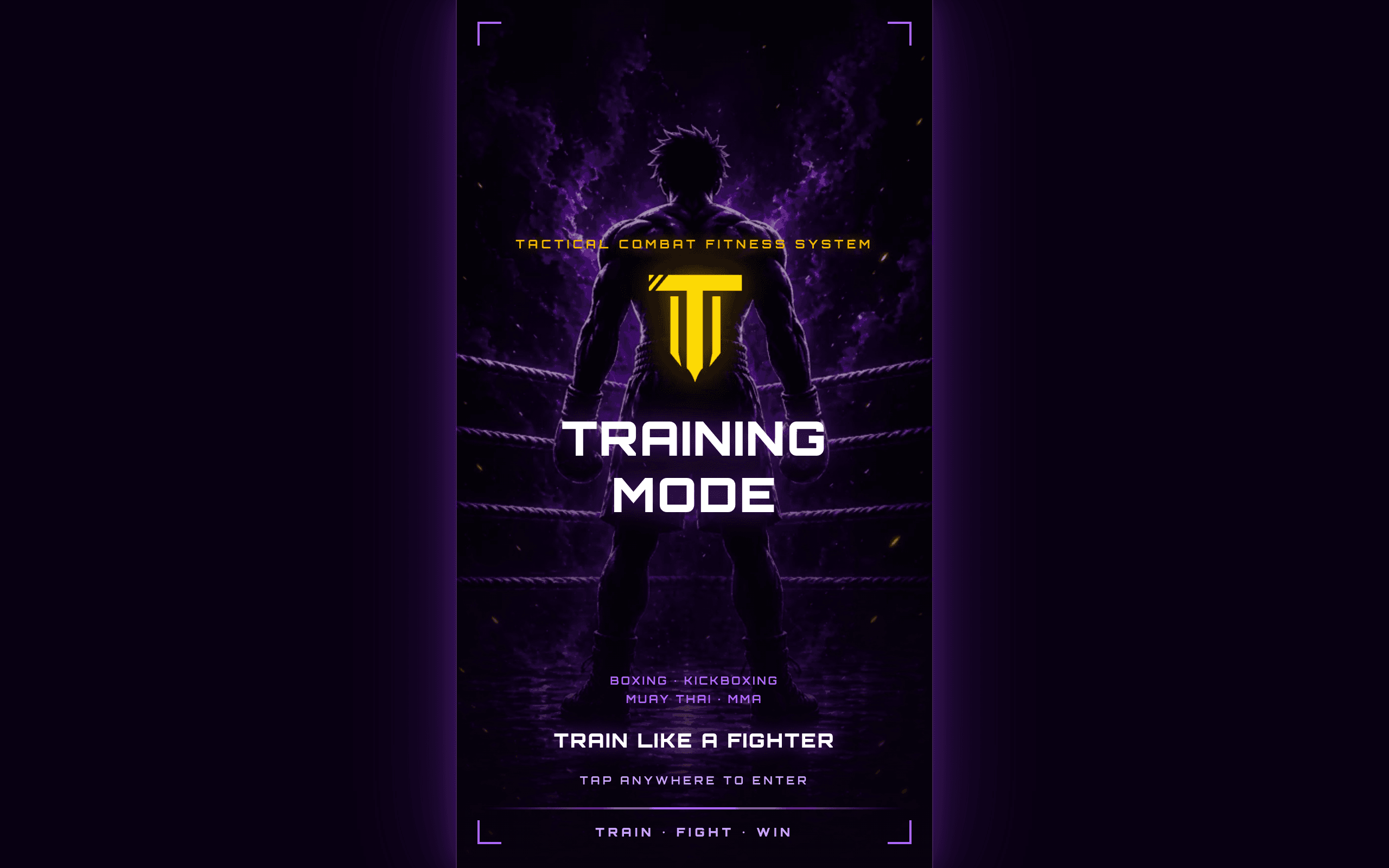
Training Mode

A combat-fitness app with voice-coached round timers for boxing, kickboxing, Muay Thai and MMA — plus workout builder, XP, streaks. Free beta.

Most workout apps are spreadsheets with a stopwatch. Training Mode is a tactical combat fitness system with the visual language of a fight night: "Train like a fighter." It has two halves. Fight Mode is voice-coached round timers across Boxing, Kickboxing, Muay Thai and MMA, with a Combo Coach that calls strike combinations at your pace and a Practice Mode for guided breakdowns of strikes, defense and footwork. Fit Mode is the gym half: a Workout Builder where you pick target muscles on a glowing anatomy body map, generate a workout, swap exercises, edit sets/reps/rest and save named routines; a voice-guided player that counts reps out loud on an adjustable cadence; Quick Mission round-based workouts; Combat Conditioning crossover modes; and cardio finishers — timed runs, intervals, Tabata — bolted onto any session. Progression is everywhere: every session earns XP, levels and ranks from Rookie to Champion, with an evolving avatar, daily streaks, a "Today's Bout" mission, trophies and one-tap share cards. Under the hood it's a single Expo / React Native Web codebase exported as an installable PWA with an offline app shell — and all progress stays on-device in localStorage, so there's no account to create. The author built the beta with Claude Code; the paywall is dormant during beta, so everything is currently free. The last code activity was about two months ago, but the app itself is live and playable at apptrainingmode.com. Note: This project is curated by the VibeFix editors from public sources. All rights belong to the original creator.

Showcase
Online
Health & Fitnessclaude-code

Brain Bed

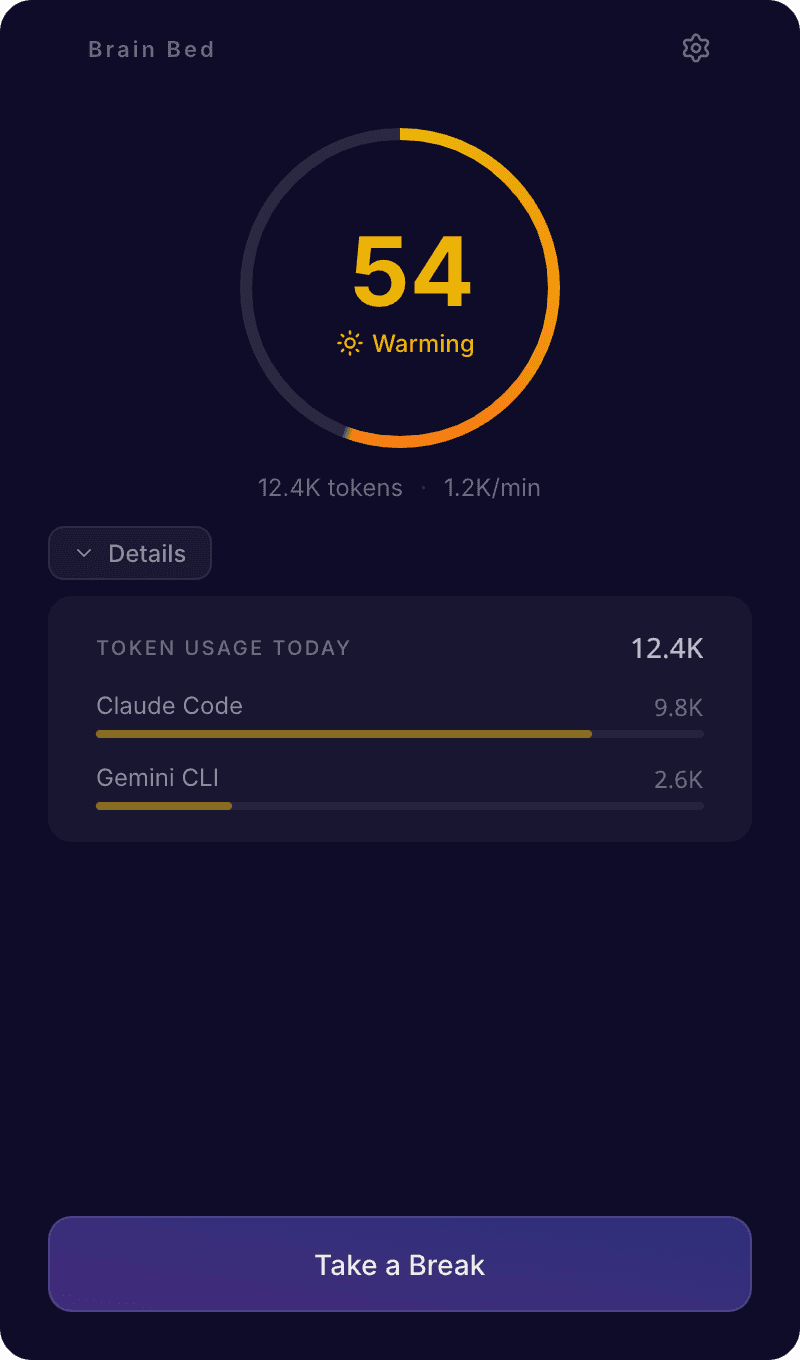
A macOS menu-bar app that scores your "Brain Fry Index" from AI coding sessions and force-locks your keyboard for meditation breaks.

If you have ever looked up from Claude Code to realize four hours have passed — dry eyes, aching shoulders, no memory of what you were building — you have met Brain Fry. AI removed the natural pauses from coding: no waiting for builds, no staring at the ceiling. Just prompt, judge, prompt, judge, at machine speed. Brain Bed is a macOS menu-bar app built for exactly that moment: it reads your local CLI session files (Claude Code, Gemini CLI, Codex CLI — no cloud, no API keys, nothing leaves your machine) and computes a real-time Brain Fry Index from 0 to 100. The index is not a gimmick. It weights five signals: message velocity (prompts per minute, 55%), context switching between projects, concurrent active sessions, token throughput, and late-night work. Stages run Calm → Warming → Heating → Brain Fry. When things heat up, exponential-backoff alerts warn you that your judgment is degrading — before you approve the diff you didn't read. And when the index spikes, Brain Bed takes the choice away: it locks your keyboard and takes over your screen with a breathing circle, classical music, and a deck of real-world activity cards — walk, stretch, tea, tidy your desk. The author tried timers and Pomodoro first and cheated at all of them, so the app is deliberately un-cheatable, with only a hold-to-exit emergency button. The build story is pure vibe coding: the author shipped it in one session with Claude Code (Electron + React + Three.js + Web Audio + SQLite), code-signed and notarized by Apple, distributed free as an open-source DMG from GitHub Releases. It is also a sharp commentary on our moment — the same tools that fry your brain are the ones you used to build the cure. Note: This project is curated by the VibeFix editors from public sources. All rights belong to the original creator. ---

Showcase
Online
Health & Fitness

Running Coach

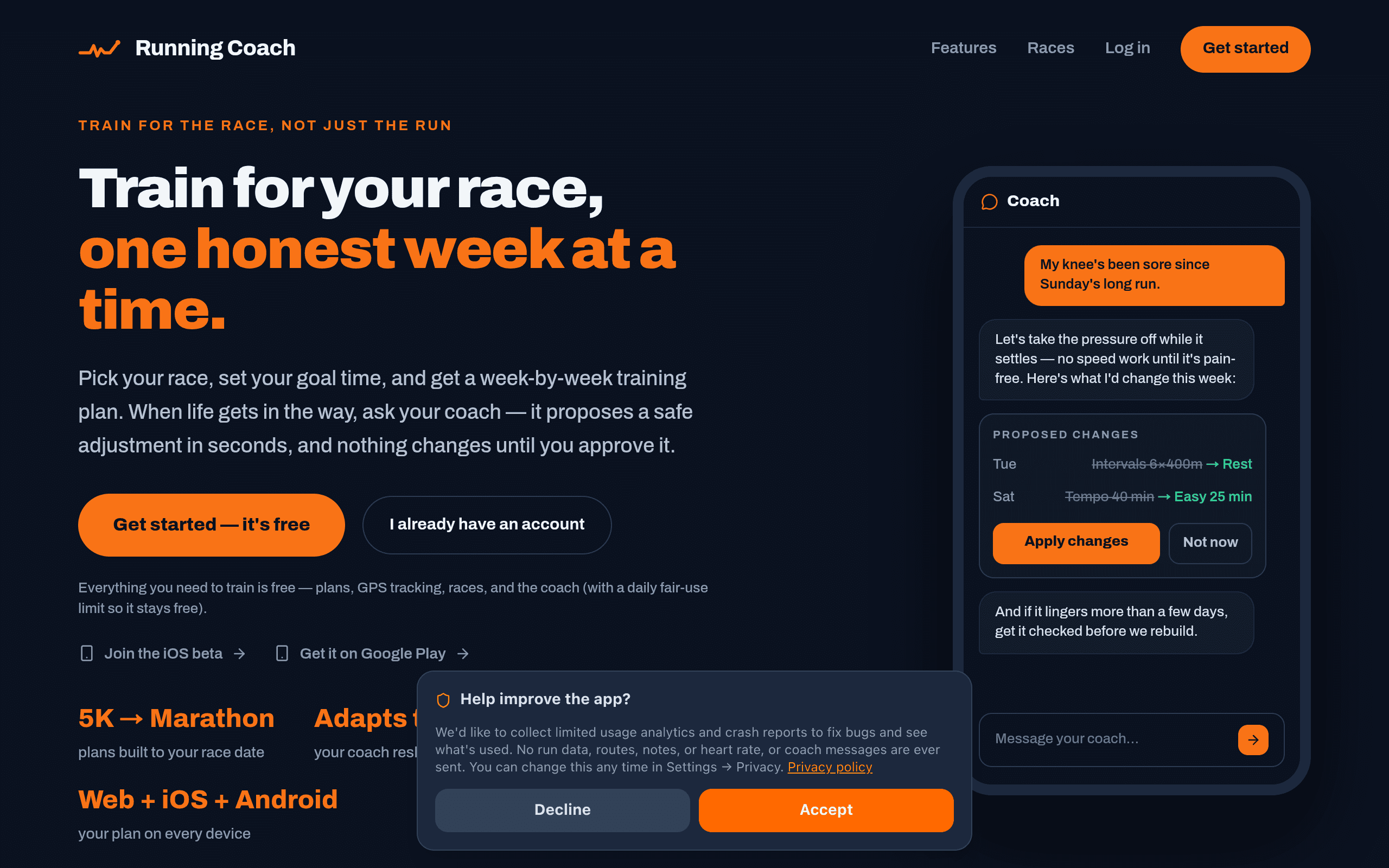
A free, open-source running coach vibe-coded over a weekend — race-day training plans, an AI coach that adapts when life happens, and zero premium upsells.

Running Coach exists for one petty, relatable reason, stated right in the README: the author "got tired of being nagged to upgrade" by running apps, so he "spent a weekend vibe-coding" his own. No premium tier, no upsells, ever. The product is more serious than the origin story suggests. Pick your race and goal time and it builds a week-by-week training plan from 5K to marathon, locked to your race date. When life gets in the way, you tell the AI coach — "my knee's been sore since Sunday's long run" — and it proposes a safe adjustment in seconds: intervals become rest, tempo becomes easy. Nothing changes until you approve it. There's a community race catalogue (Berlin Marathon down to local 10Ks), history/stats/trends with gentle badges, and imports from Strava, Garmin, Zepp or anywhere via GPX/TCX/CSV, plus Apple Health, Health Connect and Polar sync. The architecture is deliberately boring, which is the point: a 100% static React 19 + Vite SPA on S3/CloudFront, Supabase handling auth and a single JSONB row per user for all app state — tiny attack surface, near-zero hosting cost. It's genuinely cross-platform: web, Android on Google Play, iOS in beta. Repository theodiablo/running-coach (MIT), pushed as recently as 2026-10-02. For runners, the pitch is "train for the race, not just the run" — a plan and a coach instead of a feed of other people's runs. For vibe coders, it's a neat proof that a weekend project can grow into a real multi-platform product without ever adding the paywall that motivated it. Note: This project is curated by the VibeFix editors from public sources. All rights belong to the original creator.

Showcase
Online
Health & Fitness

Workout Coach

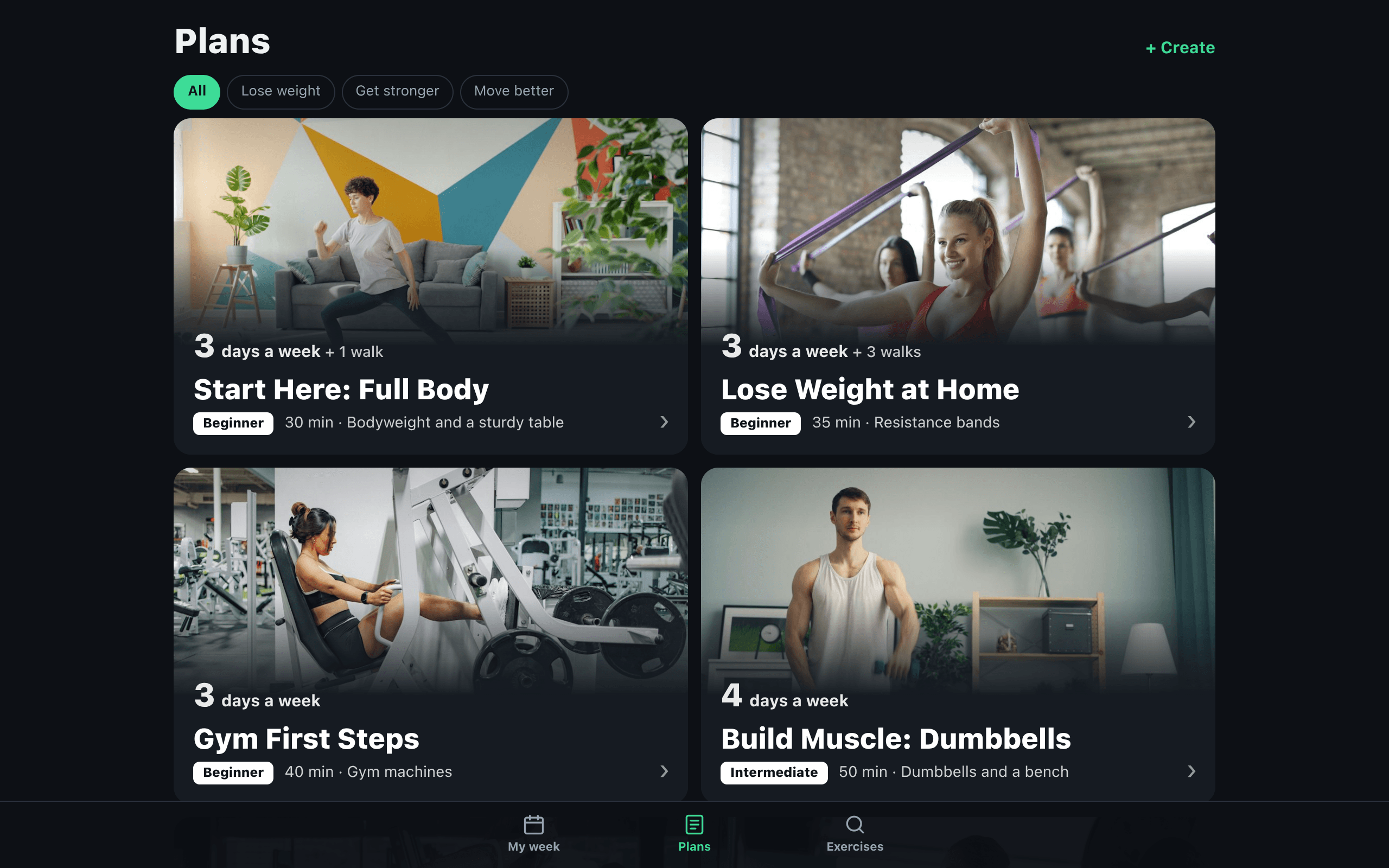
A free workout coach in your browser — ready-made plans, demo videos, spoken coaching and timers. No account, no ads.

Workout Coach is the kind of app that makes you rethink what "shipping software" means in 2026. The author, Ashwin, had an idea in his head, described it to Claude, and went back and forth until the app existed — no code written by hand, no build step, no backend. The result is a genuinely useful fitness companion that lives entirely in the browser. The app is built around one simple frustration: most people would rather press a button and start working out than keep figuring out what comes next. It ships with ready-made plans — a first full-body routine at home, weight loss with bands and walks, gym first steps, dumbbell muscle building — each with demo videos, spoken coach instructions, and rest timers. The plans are grounded in published training guidance (ACSM progression models, WHO activity guidelines), not vibes alone. The cleverest feature is the AI plan builder. Tap "Create" and it opens a chat with a pre-written message that turns ChatGPT or Claude into a personal coach: it asks about your goals, aches, training location and available time, one question at a time, then hands you a link. Open the link and your custom plan loads in the app — with the same videos, voice coaching and timers. Your plan lives in the link itself; nothing is tracked, no account exists, every demo video is checked to be ad-free. Under the hood it's refreshingly honest engineering: plain HTML, CSS and JavaScript, published free via GitHub Pages, with a self-test mode that runs every day's session on a simulated clock. The README even includes recipes for handing the repo to Claude Code to extend it — the project documents its own vibe-coding workflow. MIT licensed, fork it and make it yours. Note: This project is curated by the VibeFix editors from public sources. All rights belong to the original creator.

Showcase
Online
Health & Fitnessclaude-codecursor

Stella

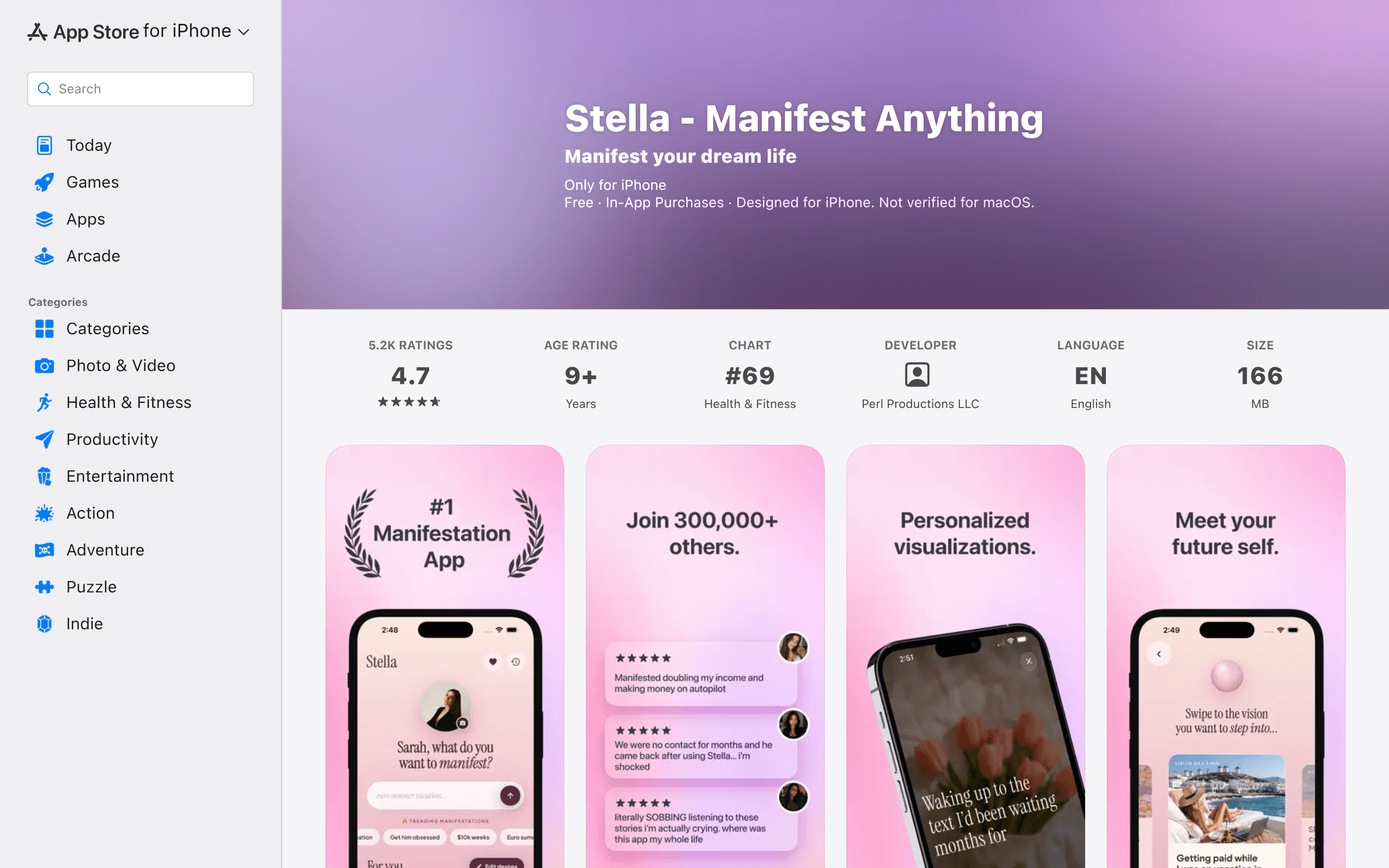
不会写代码的 450 万粉丝博主,用 Claude Code + Cursor 做出"显化"App,两个月干到约 30 万美元月收入。

Stella 的作者 Sarah Perl 是个坐拥 450 万粉丝的内容创作者,她公开承认自己完全不会写代码——整个 App 是她用 Claude Code 和 Cursor vibe coding 做出来的。用她自己的话说,AI 把产品化成本压到了接近于零,真正的护城河在发行端:她只需要在自己已有的 TikTok、Instagram、YouTube Shorts 上演示自己用它,就有现成的几百万人愿意下载。 产品是个"显化"(manifestation)应用:个性化可视化练习、遇见"未来的自己"、30 万人一起许愿。上线约两个月就积累了 12,000 个付费订阅用户,月收入约 $300K。App Store 上 4.7 分、5,200 多条评价,健康健美榜第 69 名,还挂着"#1 Manifestation App"的徽章。当分发能力拉满时,vibe coding 的天花板可以非常高。 本项目由 VibeFix 编辑从公开渠道精选收录,版权归原作者所有。 - 验证方式:curl App Store 链接返回 200,Microlink 截图显示"Stella - Manifest Anything / 4.7 分 / Perl Productions LLC",与项目相符。

Showcase
Online
Health & Fitnessreplit

CarbScan

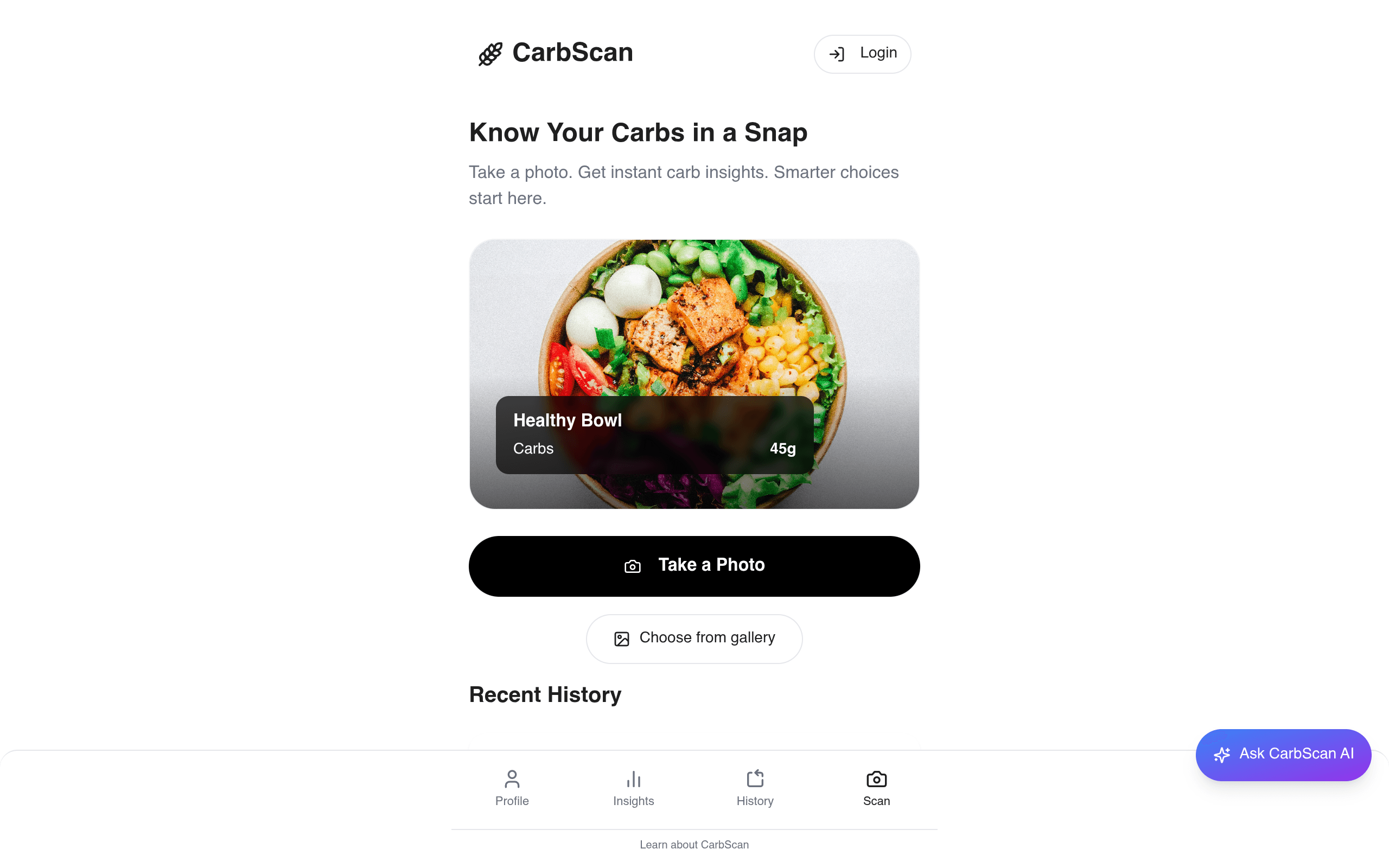
拍一张食物的照片,立刻算出碳水克数,帮糖尿病患者管住血糖。

CarbScan 的用法只有一步:举起手机拍下眼前的食物,它就会告诉你这顿饭大概含多少克碳水。对需要严格计算碳水、控制血糖的糖尿病患者来说,这比翻食物成分表快得多。应用里还有历史记录、趋势分析和一个随问随答的 AI 助手。 这个项目的起点很私人:作者 Morgan Brown 为了帮患糖尿病的儿子更快地数碳水,用 Replit 把它 vibe coding 了出来,结果成了自己每天离不开的工具。从"我家孩子需要"到一个完整上线的产品,是 vibe coding 最动人的那种故事。 本项目由 VibeFix 编辑从公开渠道精选收录,版权归原作者所有。