Project Directory

Browse all indie developer projects and co-creation requests

Active: Productivity
Showcase
Online
Productivity

Wattle Notes

A gentle desktop Markdown notebook with encrypted Google Drive sync for macOS, Windows and Linux — mostly vibe coded with AI assistance.

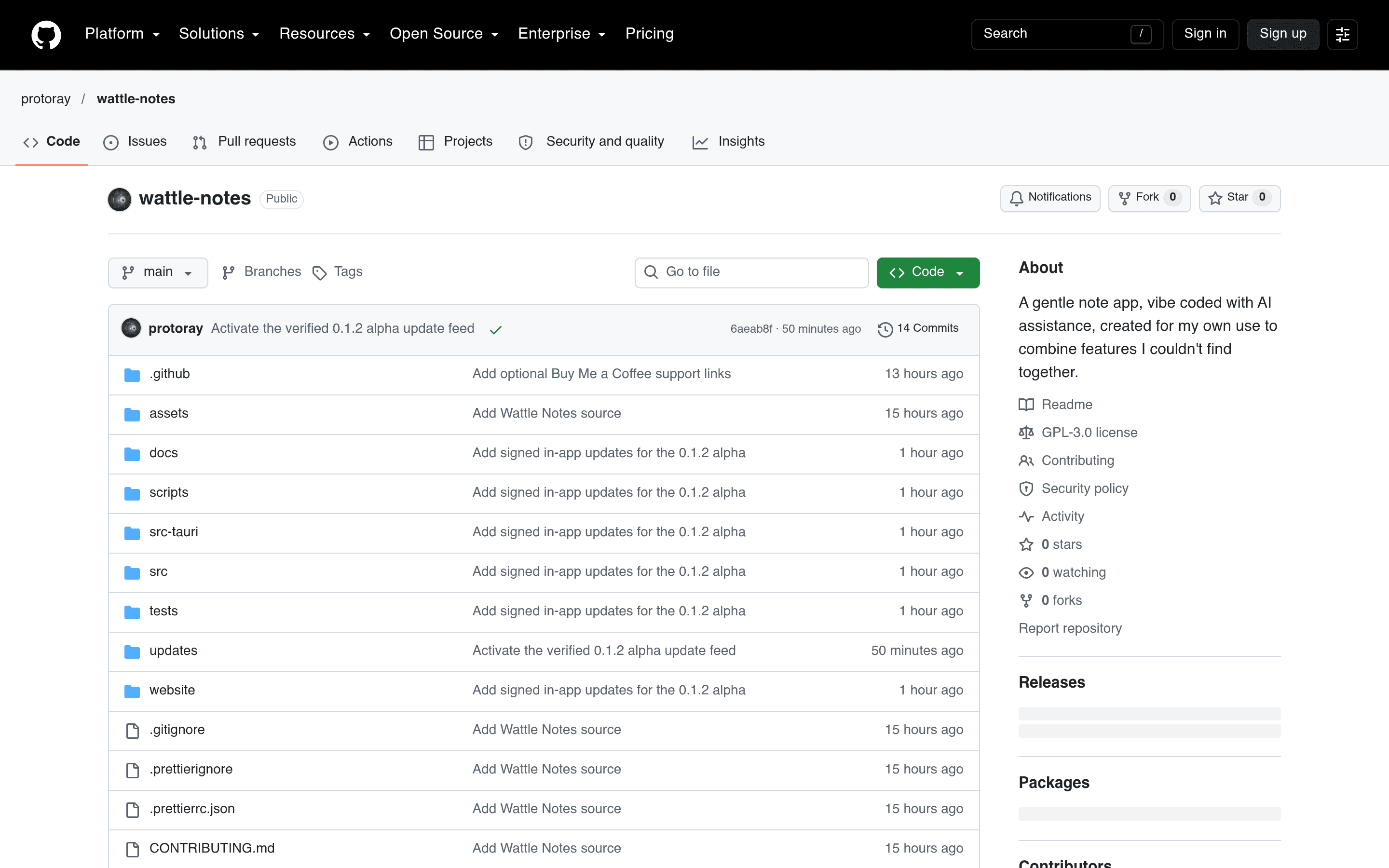
Wattle Notes is a desktop Markdown notebook that started as a very personal itch: its maintainer wanted a specific combination of note-taking features — ordinary Markdown folders, wiki links, backlinks, split preview, and encrypted cloud sync — that he couldn't find together in any existing app. The answer was to build it himself, with AI assistance doing most of the implementation while the design decisions stayed human. The app runs on macOS, Windows, and Linux as a native desktop build (Tauri 2, React, CodeMirror 6, Rust). Notes live as plain Markdown files in folders with YAML frontmatter tags, so nothing is locked into a proprietary format. Writing views include split preview, directly editable reading views, keyboard shortcuts, and five saved appearance themes; local full-text search, wiki links, and backlinks round out the note-taking core. Where it gets ambitious is sync and safety. Wattle Notes can mirror notes to Google Drive with passphrase-protected encryption — local copies and revision history are encrypted before upload, and no note content ever goes to an AI service or telemetry backend. Optional Nextcloud/WebDAV encrypted backups with verified restore, three-way merging of non-overlapping edits, and a conflict screen for overlapping ones handle the messy realities of editing on multiple machines, with signed in-app alpha update checks arriving in the 0.1.2 builds. It is public alpha software (v0.1.2-alpha.1 was cut the same day it was written about here), open source under GPL-3.0, and it carries its origin proudly: the README and release notes both describe it as mostly vibe coded with AI assistance — Joplin, Obsidian, and Zettlr informed the feature goals without contributing a line of code. The honest framing matches the product: a real tool for real note-taking, built the way its author wanted to build it.
Showcase
Online
Productivity

Treesum

An outline-first planning editor: write your plan as a text tree, sums, timelines and stats compute themselves — no backend, no account

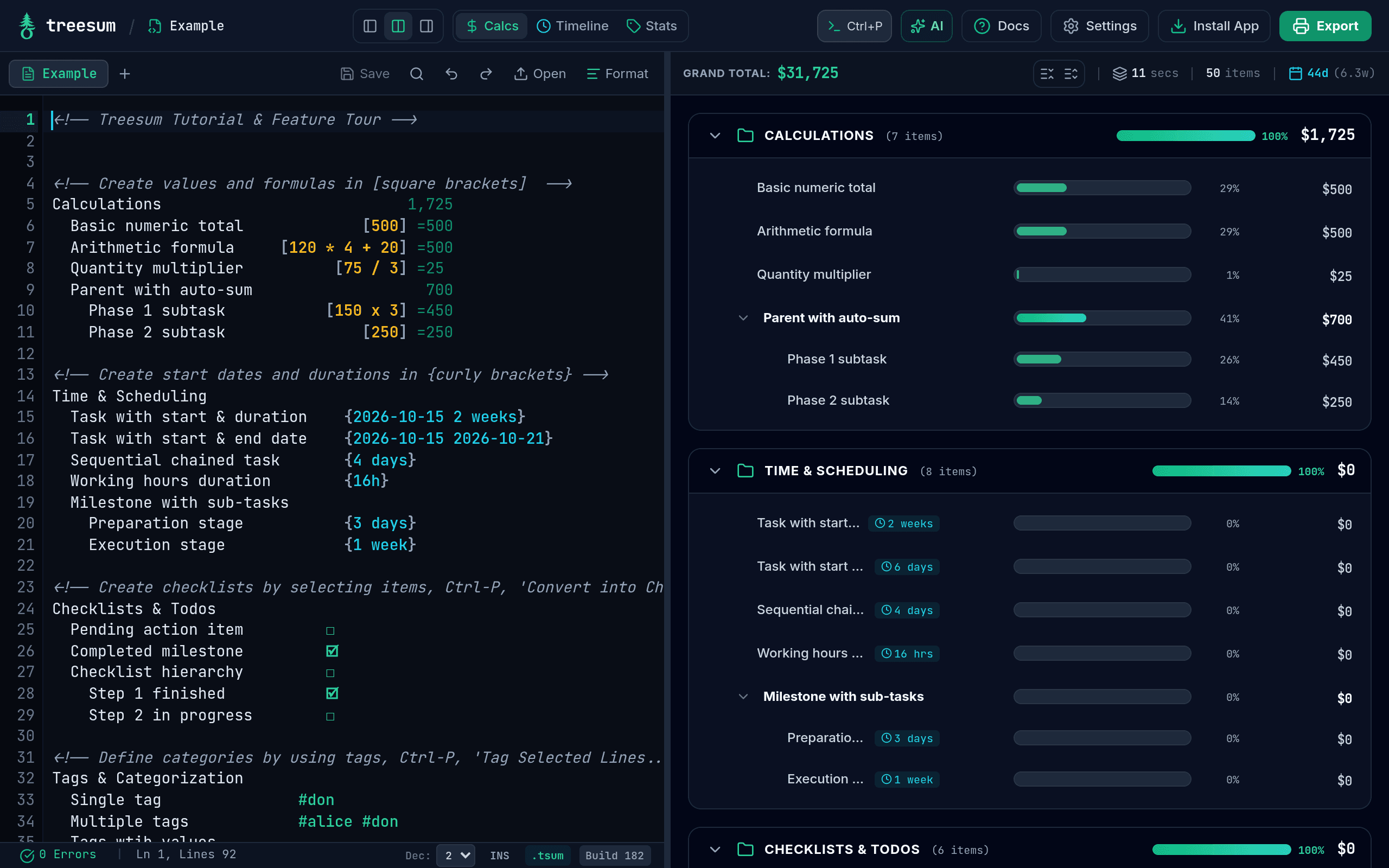
Treesum is an outline-first planning editor that wants to be "the Excalidraw of Excel": you write your plan as a plain-text tree, and the sums, timelines and statistics compute themselves. Values and formulas go in [square brackets] — [500], [120 * 4 + 20] — start dates and durations in {curly braces}, categories via #tags. Three live views — Calcs, Timeline, Stats — aggregate everything automatically: parent rows auto-sum their children, scheduling emerges from date annotations, and pivot-style stats need no formatting effort. Everything runs locally in the browser; a plan is saved permanently by downloading a human- and AI-readable '.tsum' text file, which can be reopened later. No backend, no account. The author, mallahan, is not a full-time developer. He wrote on Show HN (2026-10-13): "This software is entirely vibe-coded. It had to be — none of my developer friends would help me out. The front end JS on this app is too complex for a part time developer like myself." He had the idea for a while and "was only able to bring it to life because of AI", and he is a happy daily user himself. The live demo loads a full interactive tutorial editor, so you can try the concept in seconds.

Showcase
Online
Productivity

Transnap

1MB 的 macOS 菜单栏翻译工具:基于系统 Translation 框架做纯本机翻译,复制即翻,无需 API Key。

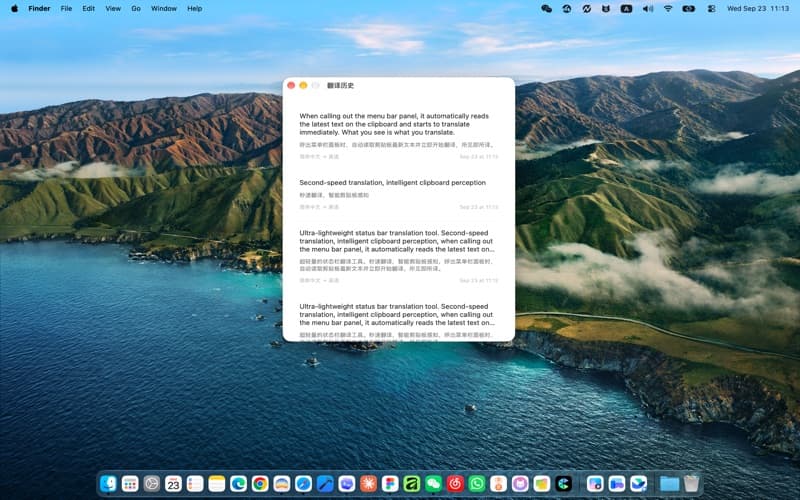
Transnap 是一款只有 1MB 大小的开源 macOS 菜单栏翻译工具,主打「复制即翻」。它基于苹果系统自带的 Translation 框架做纯本机翻译:唤出菜单栏面板时自动读取剪贴板最新文本并立即开始翻译,毫秒级响应,全程不联网、不需要配置任何 API Key。 功能包括:自动感知剪贴板、手动输入/粘贴、源语言与目标语言自动或手动选择、一键复制译文、SwiftData 本地保存翻译历史;默认全局快捷键 Command + Shift + C,可选双击复制快捷唤出。当前源码版本 v1.3(Build 55),已上架 App Store,完全免费,无会员无内购。 作者 deepsae 在 V2EX 分享时写道:因为找不到小巧快速的状态栏翻译软件,「我就 vibecoding 做了一个出来」,而自己多年产品用户体验背景保证了软件的设计和体验。仓库 17 stars,上线一天即有真实用户反馈。

Showcase
Online
Productivityclaude

whrss

独立开发者用 Claude 一周「蹬」出的四个 macOS 菜单栏原生小工具:Pop 右键圆环工具箱、Meno 图标整理、Stox 股票行情、Proxi 代理一键切换。Swift 原生、签名公证、免费开源。

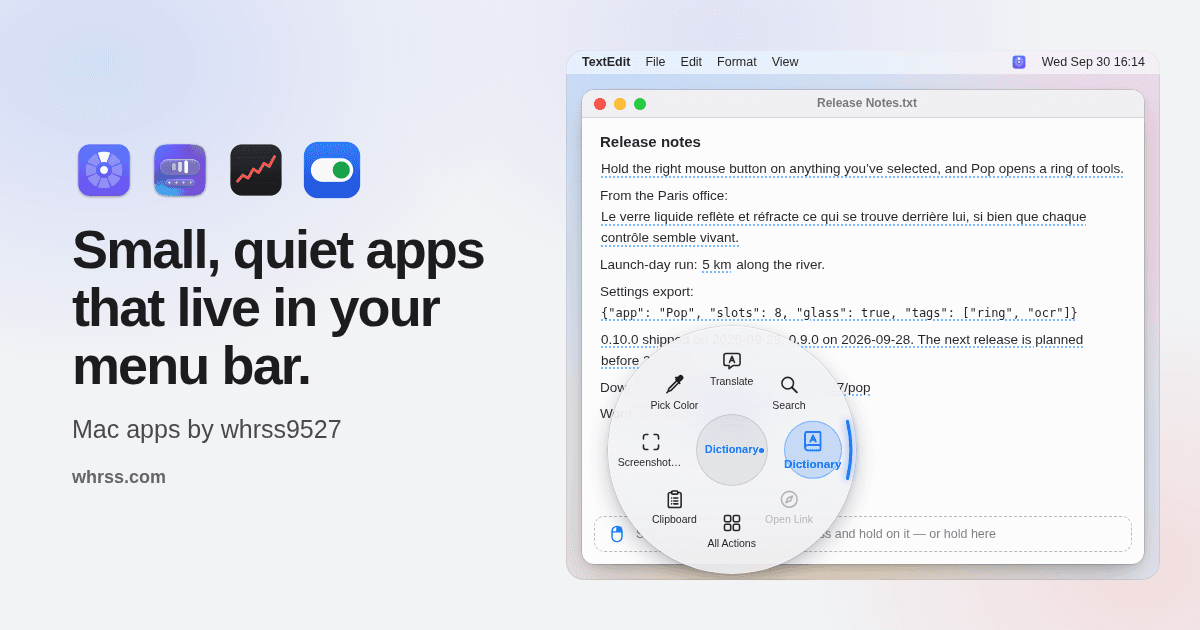
whrss 是独立开发者 whrss9527 为自己的 Mac 打造的菜单栏小工具四件套:Pop、Meno、Stox、Proxi。四个应用全部原生 Swift 编写,住在 macOS 菜单栏里,做一件事、做好一件事——长按右键唤出圆环工具箱、整理爆满的菜单栏图标、瞥一眼股票行情、一键切换代理。 四个应用,各管一摊 Pop —— 长按右键,圆环工具箱在指针旁边弹开。选中外文直接翻译、选中算式直接出结果,取色、截图、剪贴板历史、OCR 识字都在一个手势里,120+ 动作可自由排布,还支持自己写插件。 Meno —— 菜单栏图标收纳师。图标分成「可见 / 隐藏 / 仓库」三区,随叫随到;开会录屏前一键 Zen 模式,菜单栏瞬间清净。 Stox —— 菜单栏里的行情牌。A 股、港股、美股一眼扫过,持仓盈亏、价格提醒、iCloud 同步都有;不想让别人看见数字,右键图标一键隐藏。 Proxi —— 开发者的代理总开关。系统代理、终端、git、npm 一次全切,还支持按 Wi-Fi 自动切换,Charles / Proxyman / mitmproxy 用户也能直接用。 一周四个 App,靠的是「蹬」 这四个应用最有意思的不是功能,而是它们诞生的方式。作者在 V2EX 上分享时说: 「正好假期 Claude Max20X 的额度也用不完,就想着干脆自己蹬出来。」 「蹬」是社区里的黑话——让 Claude 写代码。一个假期、四款从零到上架的原生 macOS 应用,全部出自一人之手加一个 AI 结对编程伙伴。连 whrss.com 这个官网主页本身都是 AI 做的,作者的评价是:「还帮我做了个主页,还挺满意的哈哈。」 这恰恰是 vibe coding 最动人的地方:它不取代手艺,而是把一个人的手艺放大四倍。四个应用共享一套玻璃质感的设计语言,在 macOS 26 上还会变成 Liquid Glass;Universal 二进制同时支持 Apple Silicon 和 Intel;全部经过 Apple Developer ID 签名与公证,下载解压双击就能用,各应用还会自己检查 GitHub Releases 更新。 免费、开源、不打扰 四个应用全部 GPL-3.0 开源,代码在 GitHub 上公开可读、可自行编译。没有账号、没有统计、没有作者的服务器——数据只留在你的 Mac 或你自己的 iCloud 里。安装也省事,一行 Homebrew 搞定: brew install --cask whrss9527/tap/pop # meno / stox / proxi 同理 或者去官网 whrss.com 点下载按钮,直达各仓库的 GitHub Releases。Mac 用户如果正被杂乱的菜单栏困扰,或者一直想要一个趁手的右键工具箱,这一套值得装上试试——毕竟,它是某个人为自己趁手、顺手开源出来的东西。

Showcase
Online
Productivitycursor

KissFocus

极简在线番茄钟:大字计时器、工作 25 分钟 / 休息 5 分钟,Cursor 半天纯 AI 写完并一键部署到 Cloudflare。

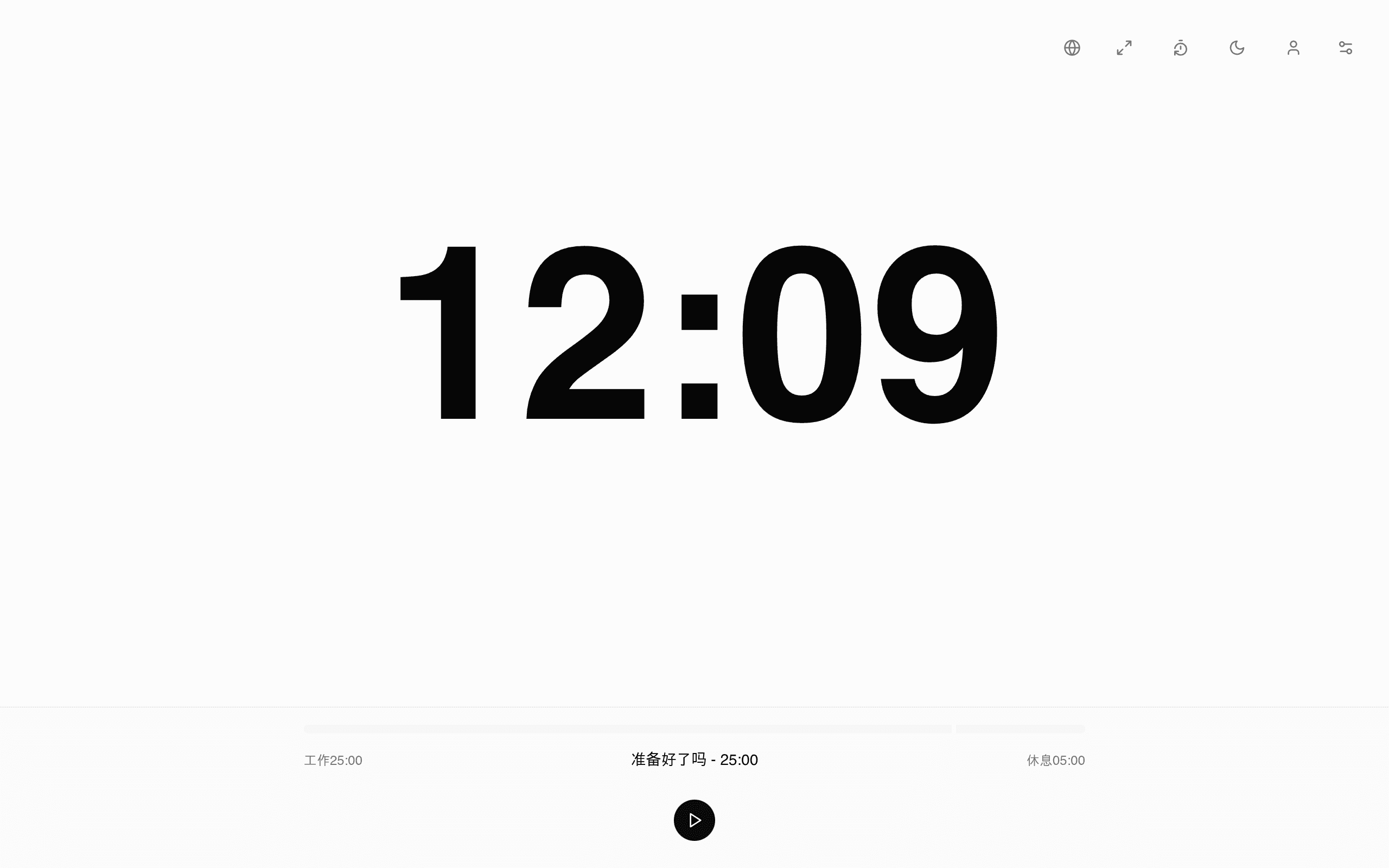
KissFocus 是一个极简在线番茄钟:打开即用的大字计时器,工作 25 分钟 / 休息 5 分钟,附带播放控制、历史记录与深色模式,部署在 Cloudflare 上,手机和电脑都能直接用。 作者在 V2EX 原帖(t/1144660)写道:"用 Cursor 半天时间做了一个在线番茄钟……纯 AI 撸完代码,一把梭让 Cursor 部署到 Cloudflare"。技术栈也是作者原话:Next.js + Tailwind CSS + shadcn/ui + Cloudflare。站点至今持续在线,计时器实测运行正常。

Showcase
Online
Productivitylovable

FocusBlox

A calm daily-planning workspace that starts from intention: pick up to three priorities, block focused time, and close the day with a short reflection.

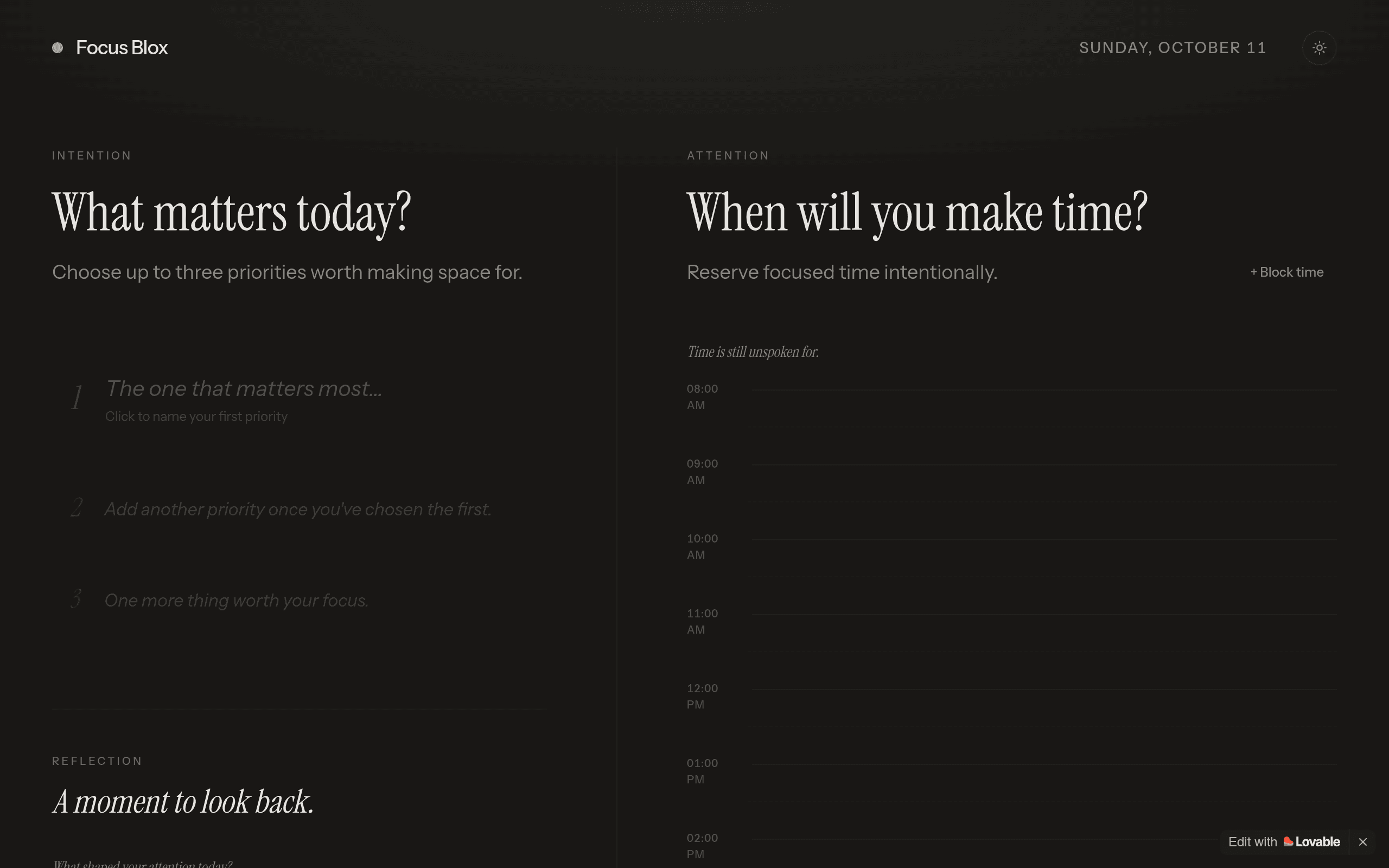
FocusBlox is a daily planning workspace built around a simple idea: start the day from intention, not from an inbox. Each morning you choose up to three priorities worth making space for, block focused time for them on a quiet timeline, and close the day with a short reflection on what shaped — and stole — your attention. No task-list anxiety, no gamified streaks. The interface is deliberately calm: serif headlines, generous spacing, and a day view that asks two questions — "What matters today?" and "When will you make time for it?" This is a Lovable build through and through: the repo carries a .lovable project folder, the demo runs at focusblox.lovable.app, and the live page still shows the "Edit with Lovable" badge. Under the hood it's React, TypeScript, Tailwind CSS and Vite.

Showcase
Online
Productivity

SayKuku

免费开源 macOS 原生语音输入:按 Fn 在光标处听写,双击 Fn 唤起语音助手

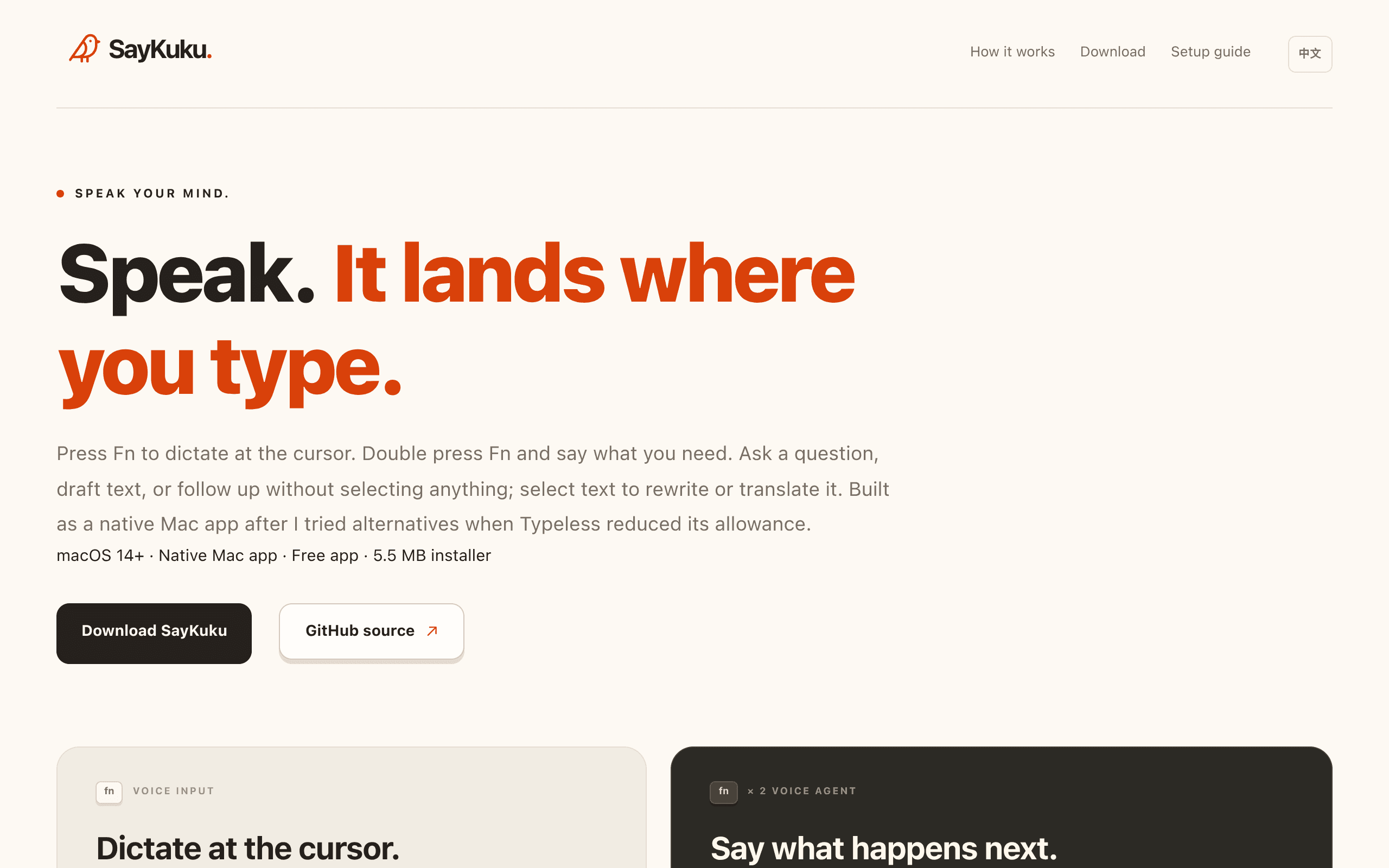
SayKuku 是免费开源的 macOS 原生语音输入应用:按 Fn 直接在光标处听写,双击 Fn 唤起语音助手做改写、翻译与问答;免费、Apache 2.0 开源、自带 Qwen API Key(BYOK)。 作者在仓库的 Product Hunt 发布文档中写道:"I vibe coded SayKuku to keep the cursor where I already am"。仓库创建于 2026-09-20,已有 339 次提交与 2 个 release,技术栈为 Swift 6 / SwiftUI / AppKit(均为作者明确声明)。

Showcase
Online
Productivity

TL;DR Peek

Hover any link to preview the article's TL;DR before you click — a vibe-coded Chrome extension, fully local, zero tracking.

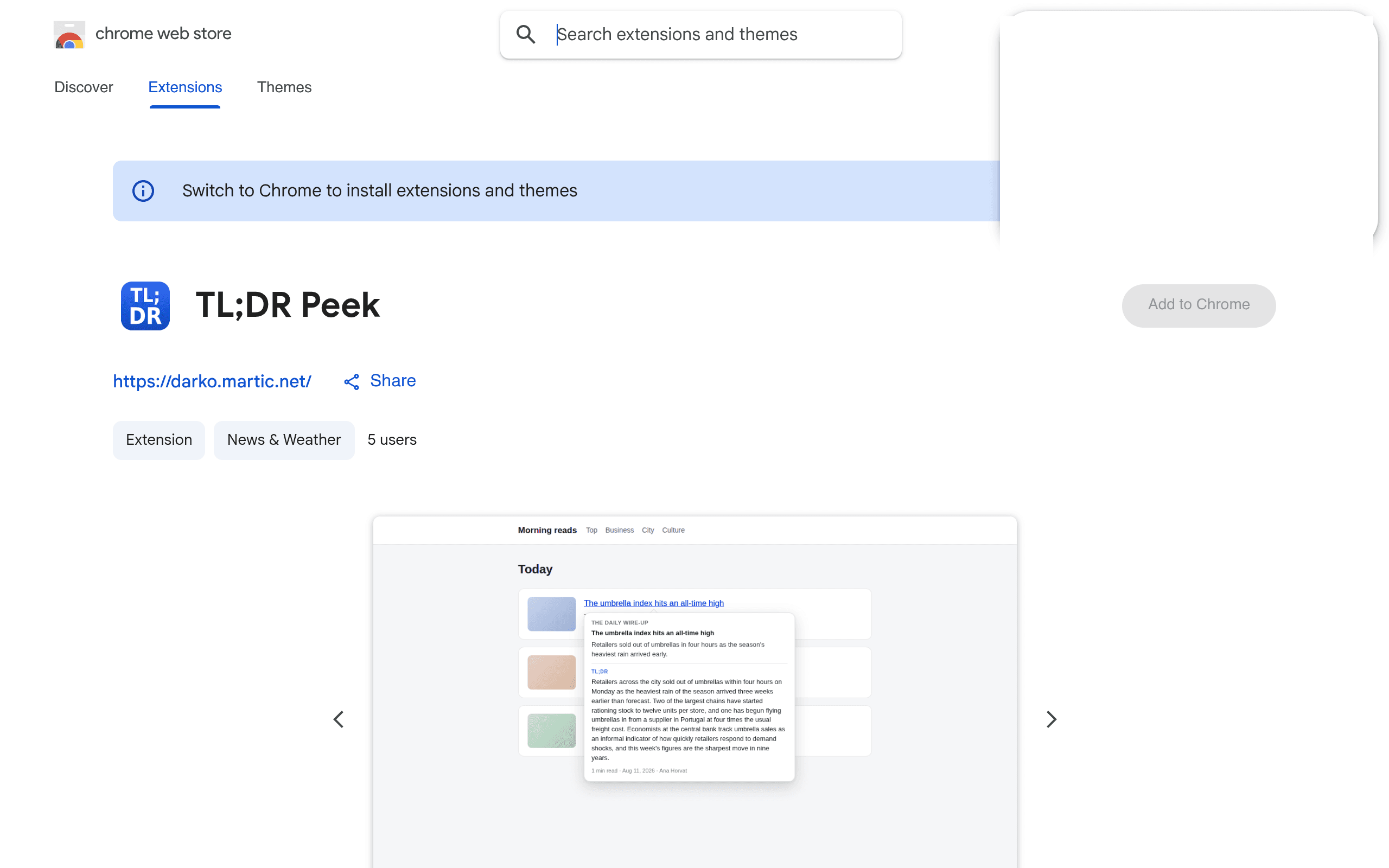
TL;DR Peek is a Chrome extension that shows you what an article says before you open it: enable it per site, hover any link, and a balloon pops up with the page's own description plus a TL;DR built from the article text itself — plus reading time, publication date and byline. Everything stays on your machine: the hovered page is fetched, its text extracted with Readability.js, and sentences are ranked and picked locally. No server, no API, no account, no analytics, nothing sent anywhere. Author Darko Martić writes on Medium that it is his first published extension: "My first published extension. Vibe coded, built for myself, now yours too." and "This was vibe coded from start to finish, and I'm not going to be coy about it."

Showcase
Online
Productivityboltnew

Flowcus

A focus coach for getting unstuck: gentle prompts, a companion timer, and experiments that learn.

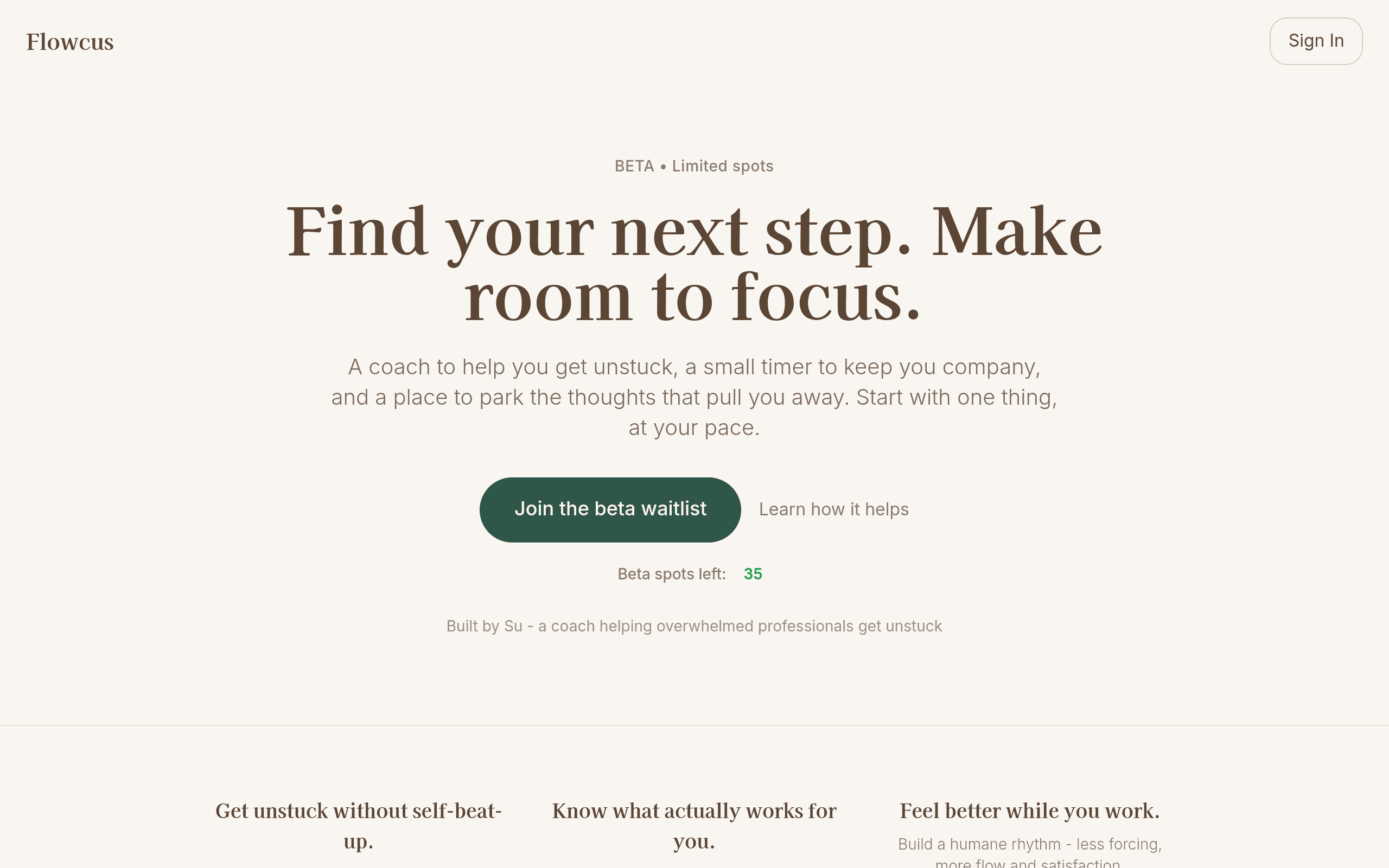
Flowcus (formerly Flowbound) is a focus coach built by Su for people who procrastinate: short in-the-moment prompts to move through anxiety, confusion, or boredom; a small companion timer; and a place to park the thoughts that pull you away. Instead of willpower theatrics, it runs quick focus experiments and remembers what actually lifts your energy — a "personal playbook" approach to getting unstuck. The build story is documented in Lenny's Newsletter's "What people are vibe coding (and actually using)": listed as "Find out what's blocking your flow, by Su using Bolt," with Su's own words: "Flowbound is an app that gives me games/exercises to do when I find myself procrastinating on something (which is often)." The site itself says "Built by Su — a coach helping overwhelmed professionals get unstuck," with account data in Supabase and companion responses generated by Anthropic and OpenAI models. It kept evolving after the newsletter feature: the product rebranded from Flowbound to Flowcus and now runs a limited beta with simple transparent pricing and a waitlist. A vibe-coded productivity tool with real users, real iteration, and a refreshingly humane design thesis. curated by the VibeFix editors

Showcase
Online
Productivityclaude-code

Mojito

本地优先、会自我进化的个人 AI 日程应用:日程、计划、笔记、信息流与对话,一个应用装下你的一天。

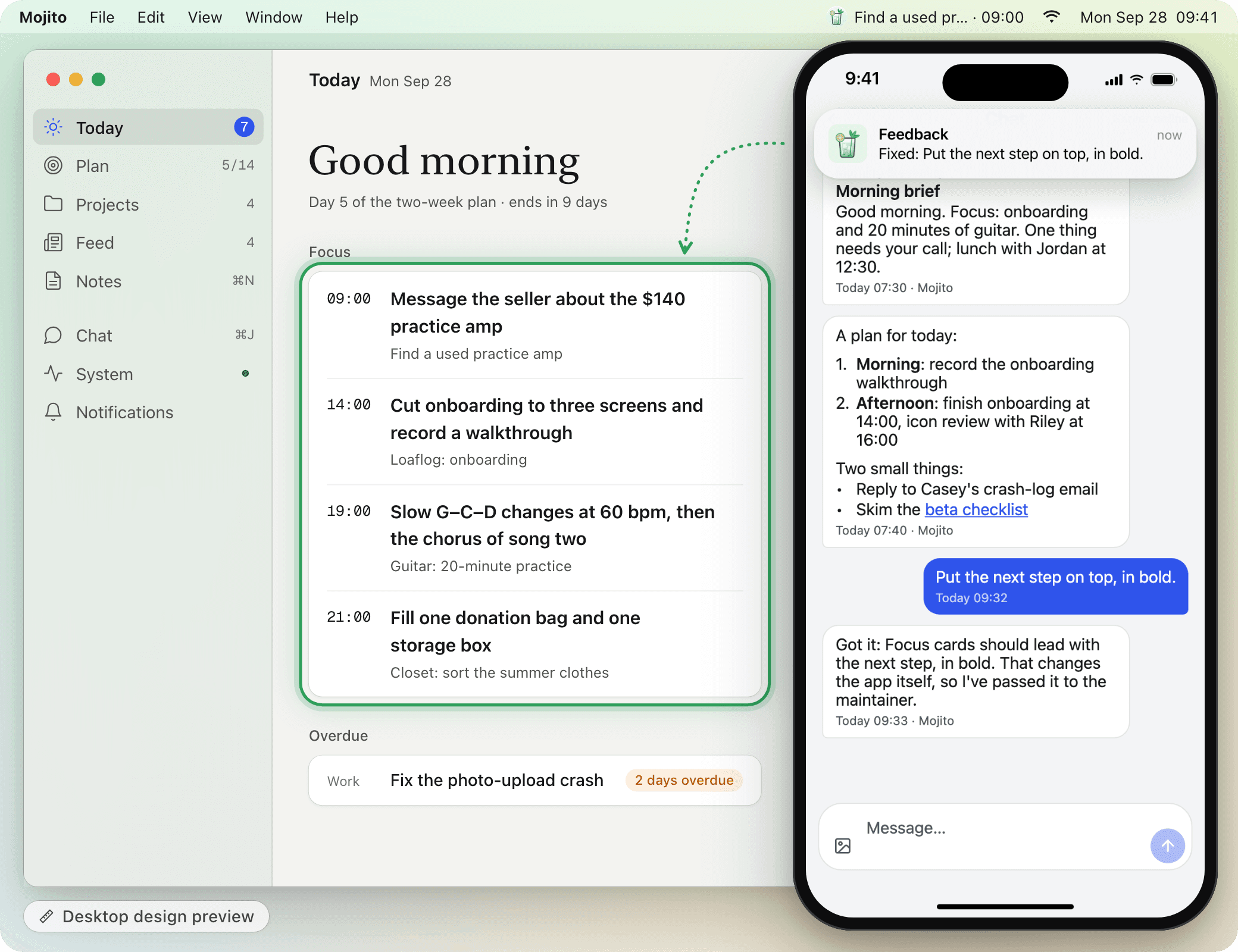
Mojito 是一个「本地优先、会自我进化」的个人 AI 日程应用:Today、计划、项目、信息流、笔记、对话,一套界面装下你的一天。它最特别的设定是「自我进化」——你可以直接在聊天里说「把下一步置顶加粗」,应用就会把这条反馈转交给维护者,界面真的会变。 作者在 README 里写得很坦白:"Most of its code was written by Claude Code sessions working under the rules in `CLAUDE.md`, `docs/design.md` and `docs/api.md`."(github.com/timelovercc/mojito,94★,2026-09-29 创建,2026-10-05 仍在推送,MIT 开源) 作者声明的技术栈:FastAPI + SQLite(hub 后端)、Expo(移动端)、Tauri(桌面端)、PWA。演示站 https://zhimeng.page/mojito/ 带样例数据可直接试用,无需注册。 curated by the VibeFix editors

Showcase
Online
Productivitylovable

AI Workplace Productivity Assistant

AI workplace dashboard: draft emails, summarize meetings, plan your day, research topics and chat with AI — no login, data stays in your browser.

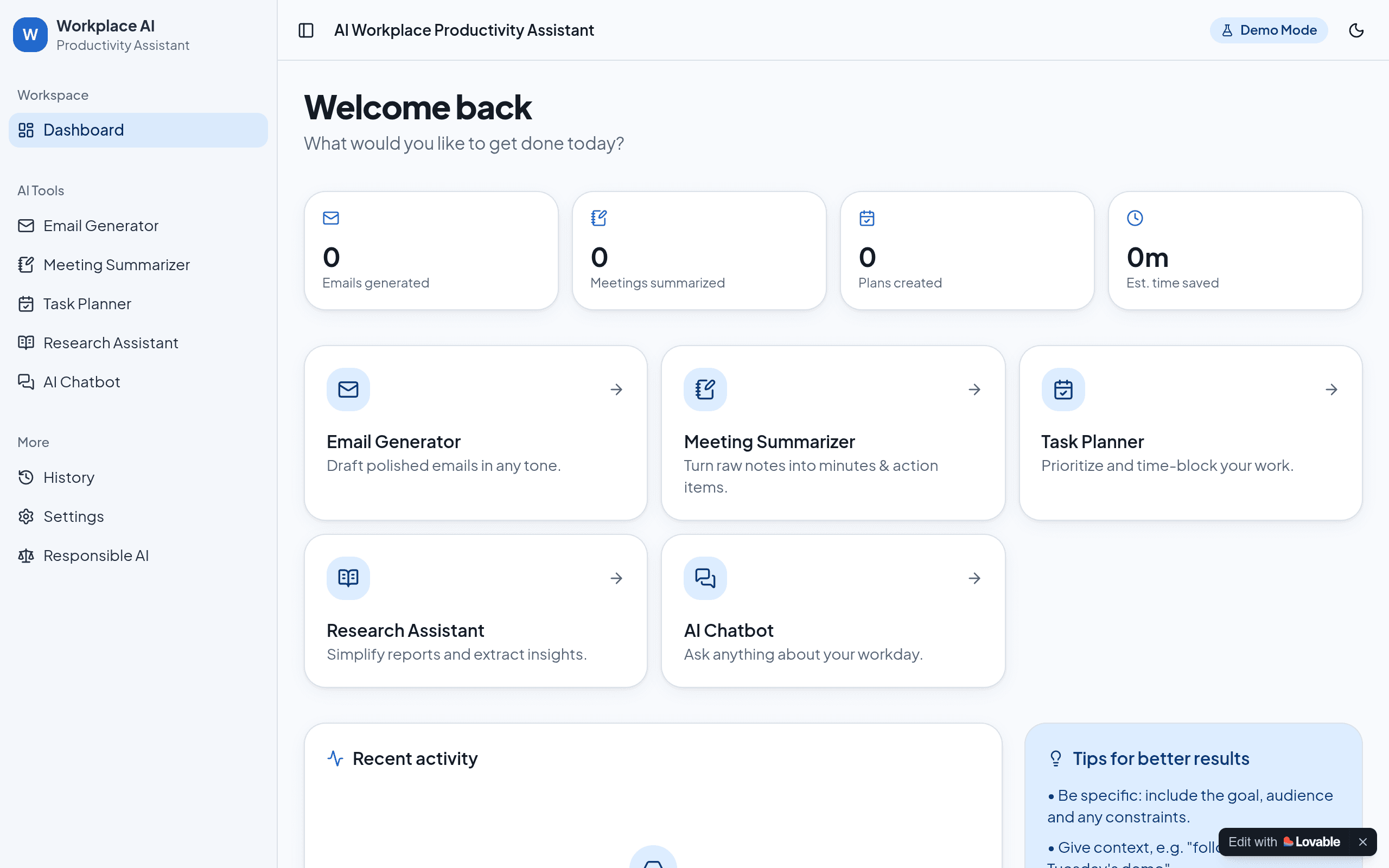
AI Workplace Productivity Assistant is a responsive web dashboard that helps professionals automate repetitive work with AI: drafting emails in any tone, turning raw notes into meeting minutes and action items, prioritizing and time-blocking tasks, researching topics, and an AI chatbot for workday questions. Its highlight is the backend-free design — open and use, no login needed, all data stored in the browser's localStorage. It can connect to OpenAI (ChatGPT) or Google Gemini APIs, and ships with a demo mode (simulated responses) so you can try it without a key. The project was built as part of the CAPACITI AI Skill Accelerator Programme. GitHub: 0 stars (new, updated 2026-10-09).

Showcase
Online
Productivityclaude-codecodex

Immerse

iOS focus timer with 5 visual timer styles, custom backgrounds, stats, and app blocking

Immerse 是 iOS 专注计时器 App:5 种可视化计时样式、可自定义背景、专注数据统计,外加 App 屏蔽功能,已上架 App Store。 作者 Nika 在 dev.to 的完整开发复盘里写道:"I built most of it using Claude Code and Codex… I didn't manually edit the code myself. Instead, I described what I wanted in normal language, tested what the AI built, found problems, and kept iterating." 提示词甚至用语音输入(Wispr Flow)。文章约两天前发表,第一版发布后还在持续迭代,新增了 App 屏蔽和统计功能。

Showcase
Online
Productivityclaude

Voice Memo

Voice-first second brain: record a voice note, get it transcribed, filed into projects, and searchable by meaning

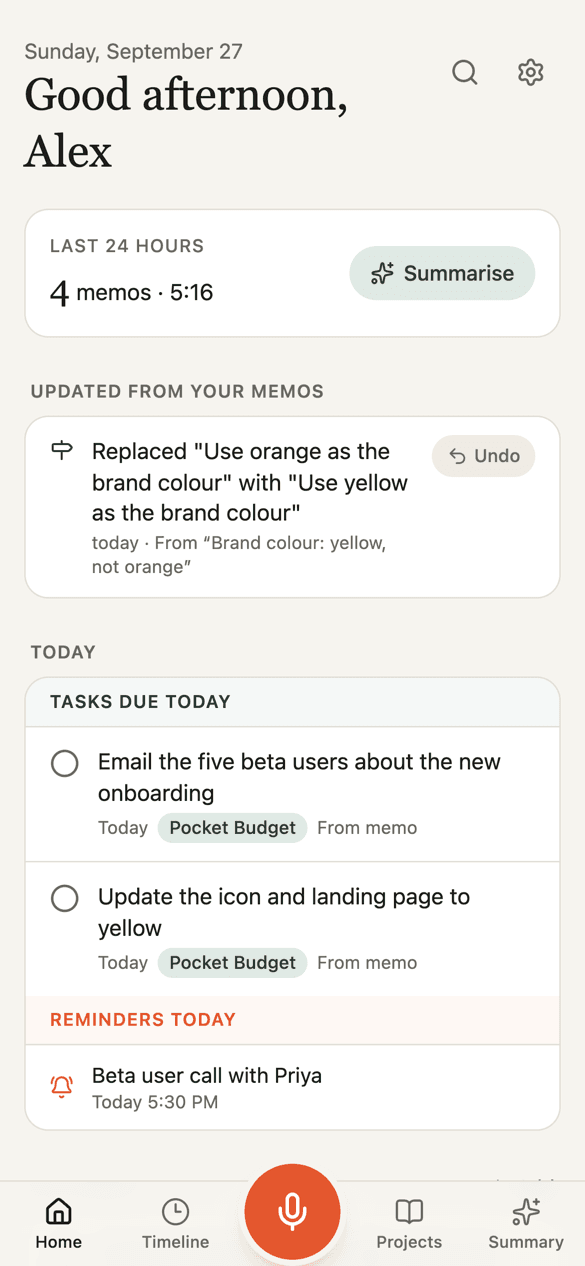
Voice Memo is a voice-first second brain, open source (MIT) and self-hosted. Record a 15–30 second voice note on your phone or Mac and it gets transcribed, cleaned up, and split into ideas, tasks, decisions, open questions and reminders — filed into projects automatically and indexed for semantic search. Its signature trick is that it keeps up when you change your mind: say "yellow, not orange" in a later memo and the old decision is marked replaced, the old task leaves your list, and every change shows up on Home with Undo. A built-in MCP connector (14 tools, OAuth-protected) lets Claude read your memos, add action points and set reminders directly. The whole thing runs on free tiers — Cloudflare (Workers, D1, R2, Vectorize, KV, Workers AI) plus free AI APIs with Groq first — so self-hosting costs nothing per month. Web, Android and Mac apps included. The vibe-coding story is unusually clean: the author's README opens with "vibe coded with Claude from the first line," and the git history's commits are co-authored by "claude". A serious multi-platform productivity system, pair-programmed with an AI from line one.

Showcase
Online
Productivityclaude-code

RioShot

A free screenshot editor that never uploads your images — annotate, redact, and paste anywhere, all in-browser

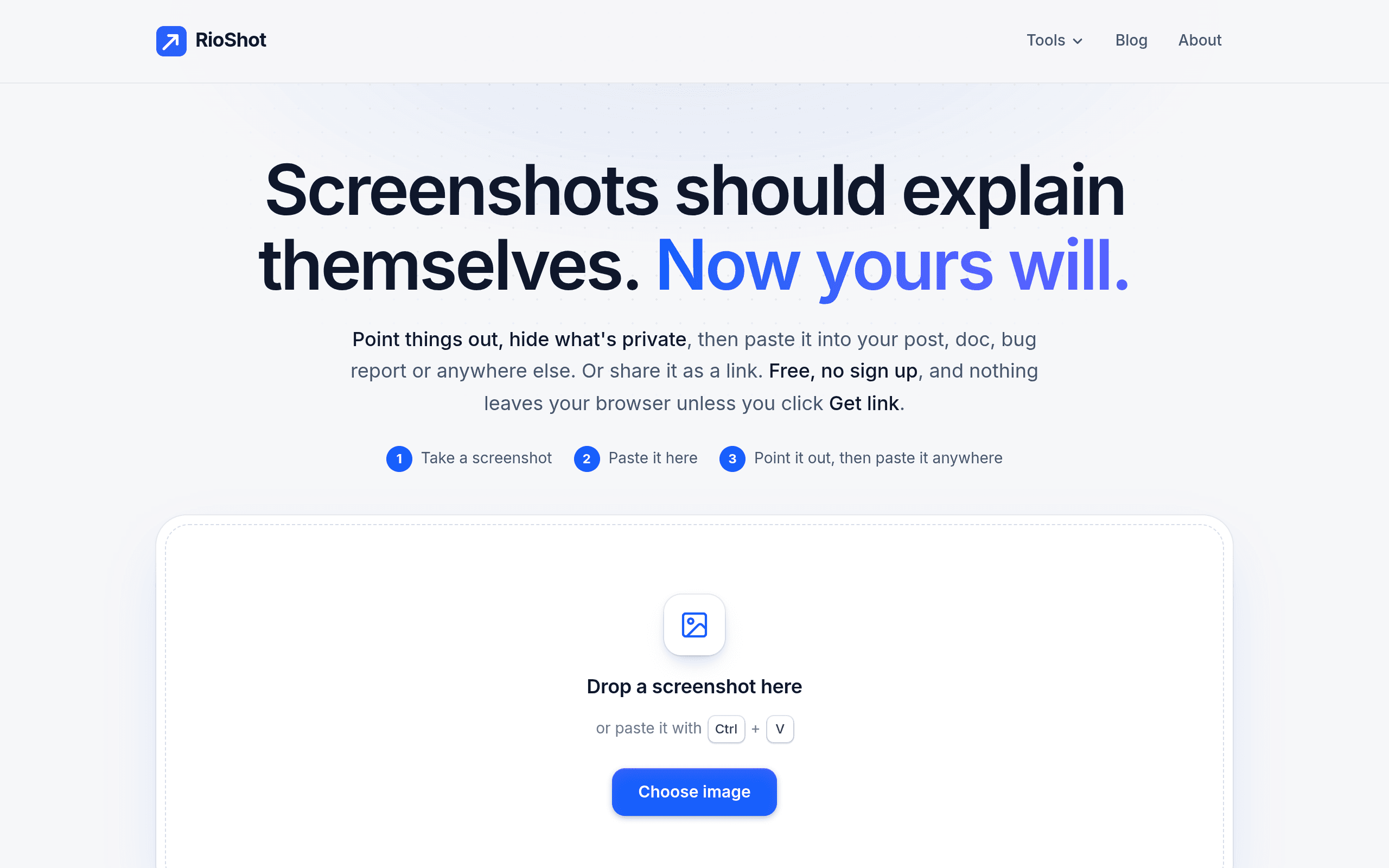
RioShot is a free screenshot editor built around a radical simplicity: take a screenshot, paste it (Ctrl+V), annotate it, and paste the result anywhere. No upload, no account, no watermark. Everything happens inside your browser — the only time an image leaves your device is when you click Get link to share it. The toolkit matches how makers actually communicate: arrows, highlights, blur and redact to hide private details, zoom callouts to point at tiny buttons, and a dark spotlight that dims everything except the number that matters. Fourteen before/after examples on the homepage show how much a single annotated screenshot can say. It is also a vibe-coding case study. Maker Alberuni Azad announced it in the vibecodinglife Facebook group on October 1, describing “building and launching a free screenshot editing app called RioShot in a single sitting … development with Claude Code and the Opus 5.5 model” — from idea to domain purchase, testing, deployment and launch in one session. Private by design, instant, and free — the rare annotation tool that never makes you wonder where your screenshots went. curated by the VibeFix editors

Showcase
Online
Productivity

Relokato

Cross-border moving planner built end-to-end on Lovable: visa checklists, costs, official sources

Relokato takes the most paperwork-heavy project of an adult life — moving to another country — and turns it into a guided plan. Enter your nationality, destination, and household, and it generates a relocation roadmap with visa thresholds, document checklists, deadlines, and a cost budget — every requirement linked to the official source it came from, with the date it was last reviewed. The build story is on its madewithlovable.com project page, verbatim from the maker: "Built end-to-end on TanStack Start, Tailwind CSS, and Lovable Cloud." (Added October 1, 2026.) A live freemium SaaS with real pricing ($19/mo, $149 Move Pass), a live demo, and destination guides from Portugal to Costa Rica. It's the kind of unglamorous-but-useful domain where AI builders shine: high trust requirements, heavy research work, and a checklist that would take a human team months to assemble. Relokato ships it as a working product. curated by the VibeFix editors

Showcase
Online
Productivity

ChromeSideBar

The Arc browser's vertical sidebar, vibe-coded for Chrome: Spaces, pinned tabs and one-click Arc import in a side panel.

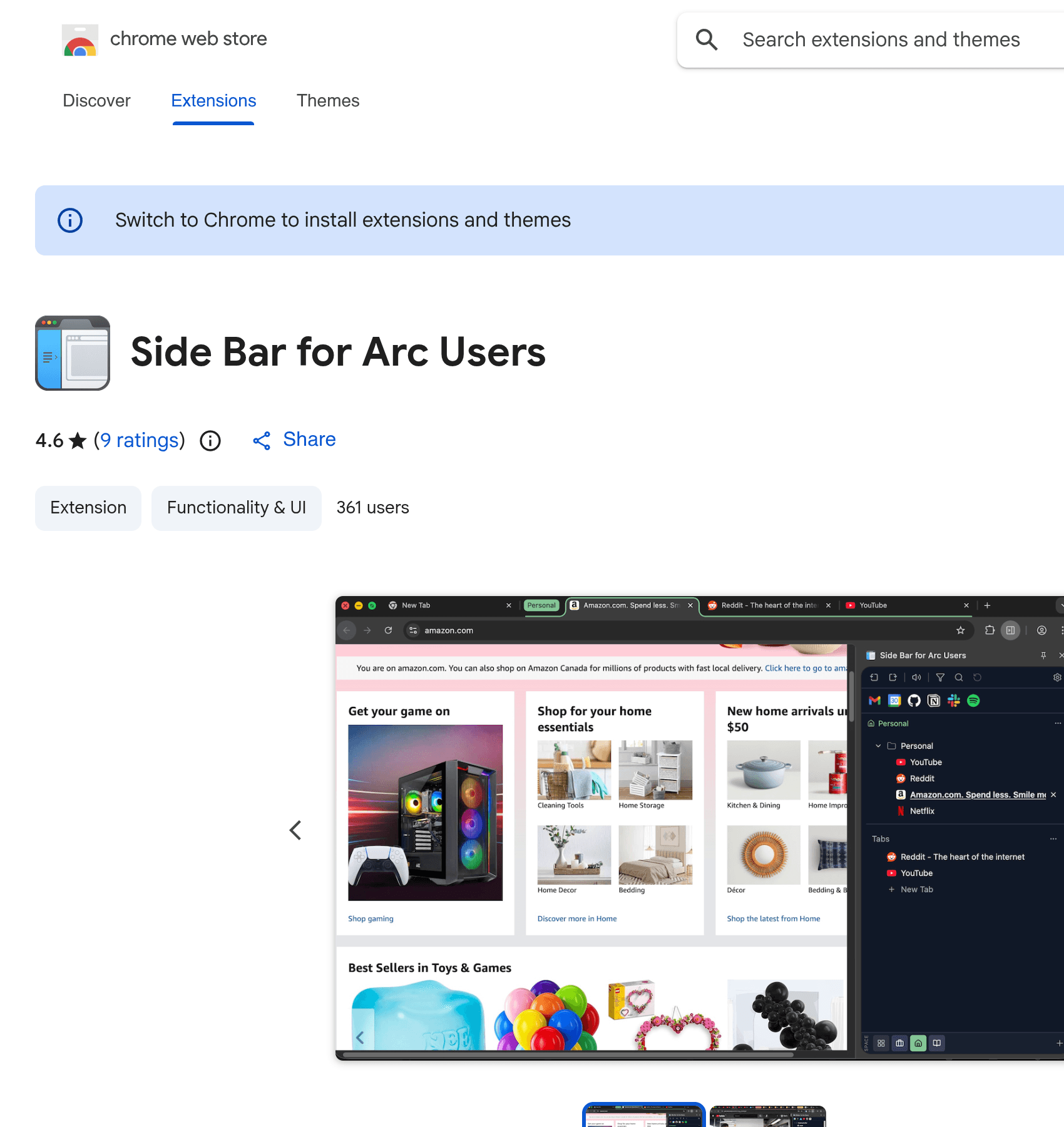
ChromeSideBar is a Chrome extension that brings the Arc browser's vertical sidebar to Chrome. Its author, monehsieh of monemone-org, is refreshingly direct about how it got made: "So I vibe-coded this extension to bring that to Chrome." The extension displays pinned sites, bookmarks and active tabs in a side panel that recreates the Arc sidebar experience — including Spaces for tab grouping, IDE-style tab history, drag-and-drop organization, and one-click import from Arc. It is open source under Apache-2.0, rated 4.6 stars on the Chrome Web Store (v1.0.326, updated July 2026), and the GitHub repo shows steady work with a commit two weeks before this write-up. Browser extensions are a good stress test for AI-written code — they live inside a host's API surface, handle real user data, and ship to a store with review. ChromeSideBar clears all of that and is genuinely useful for the Arc-curious who won't leave Chrome. A clean example of vibe coding shipping production software. curated by the VibeFix editors

Showcase
Online
Productivityclaude-code

Tempus

A neurodivergent-friendly Go CLI calendar: time-only input, typo fixing, ADHD alarm profiles — outputs standard ICS files.

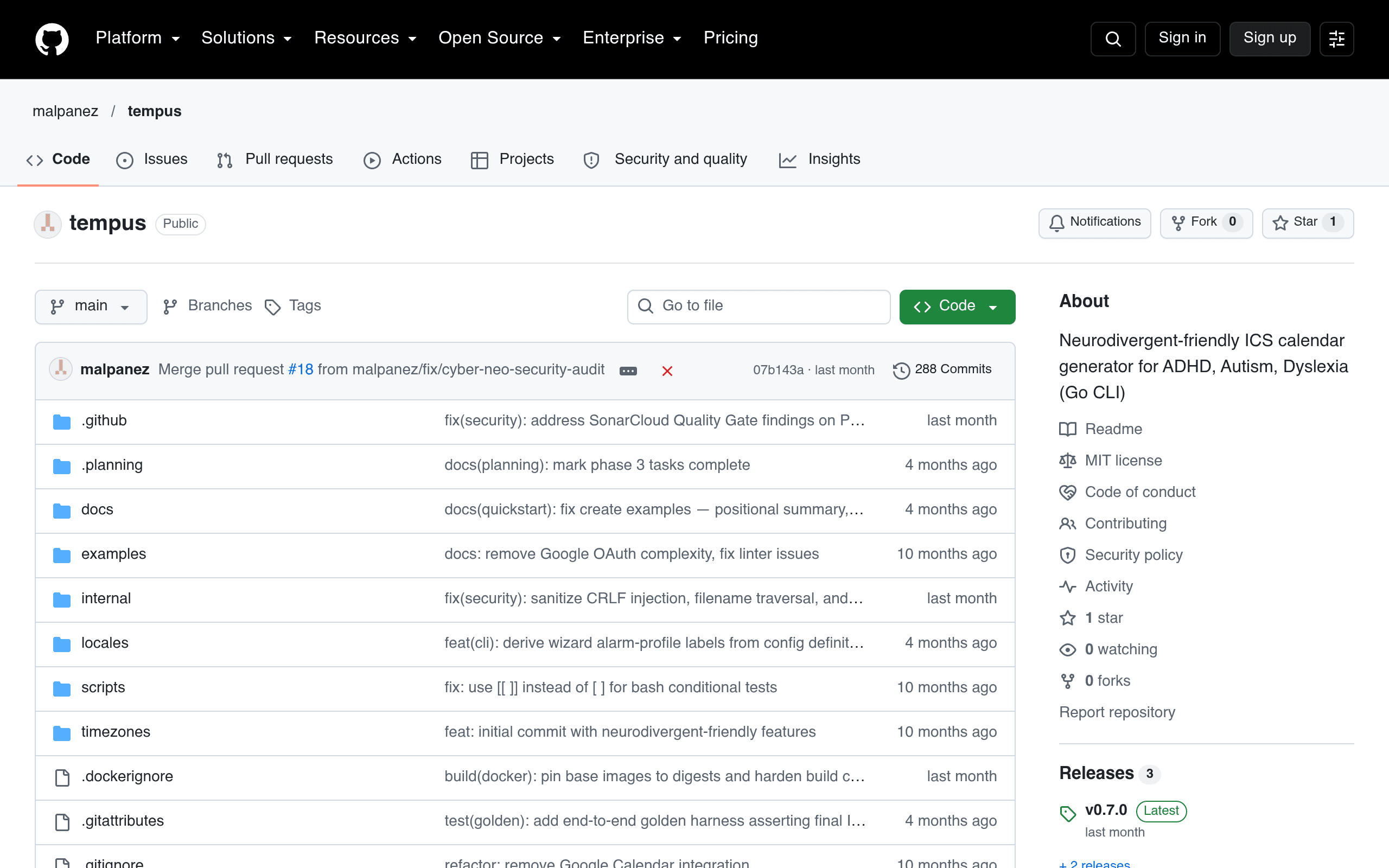
Tempus is a calendar tool built for neurodivergent brains — ADHD, autism, dyslexia — as a Go CLI. Type "10:30" instead of a full timestamp, let it auto-fix your typos (meetting to meeting), get multiple countdown reminders with ADHD-tuned alarm profiles, automatic prep-time buffers before meetings, conflict detection and overwhelm warnings when you over-schedule. Batch mode builds a whole calendar from CSV/JSON/YAML with reusable templates for medication, routines and travel. Everything compiles down to RFC 5545-compliant ICS files that import cleanly into Google, Apple and Outlook calendars. It is multilingual (English, Spanish, Portuguese, Irish), ships prebuilt binaries for all platforms plus Docker, and runs fully local — no account, no subscription. 288 commits, 3 releases, MIT licensed. The author's own disclosure: built with Claude Code. curated by the VibeFix editors

Showcase
Online
Productivityclaude-code

EchoNote

A local-first voice-to-action desktop app: press a hotkey, speak, and your words are transcribed and filed as a task, reminder, idea or note — all offline.

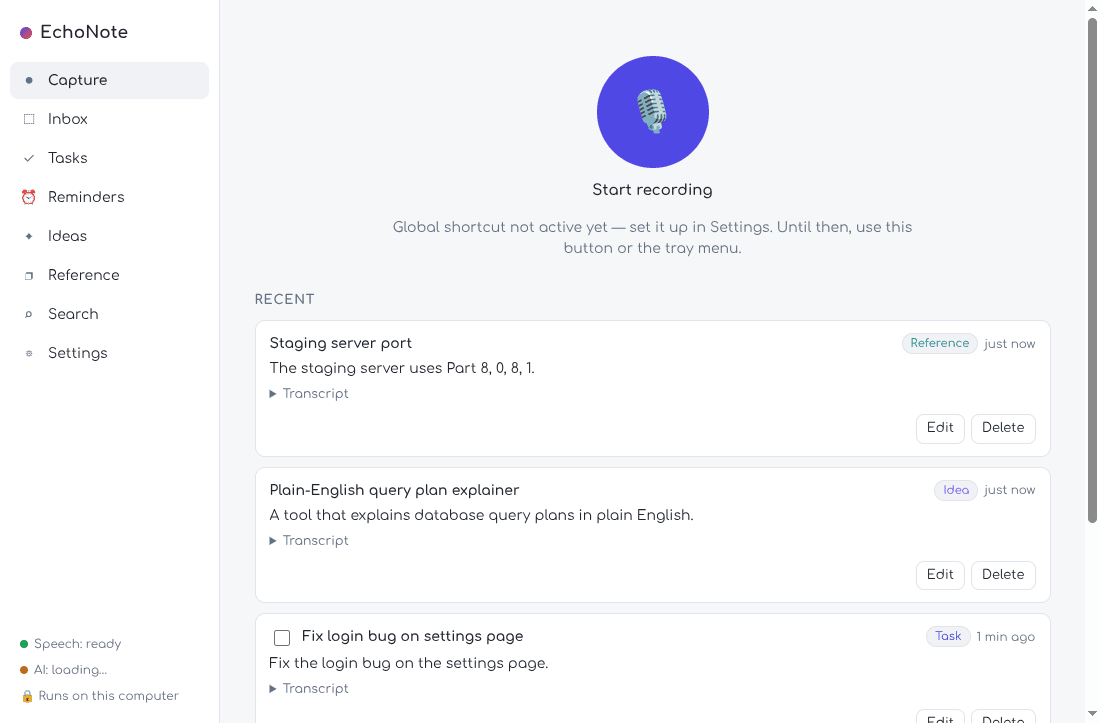
EchoNote is a voice-to-action desktop app built around a dead-simple loop: press `Alt + Shift + Space`, say whatever's on your mind, press it again and go back to work. It transcribes what you said and files it as a task, reminder, idea or note — "Remind me to call the dentist tomorrow" becomes an actual reminder with the date. And everything runs locally on the laptop: your voice, your notes and the AI processing never go to a server. The build story is peak vibe coding. The author doesn't know how Linux apps are made — his words: "claude made this app possible" — and the dev diary shows Claude Code doing serious engineering work. Speech-to-text is whisper.cpp, understanding is Google's Gemma 4 E2B running locally through llama.cpp, storage is SQLite, and the original transcript is saved before the AI processes it, so a note is never lost even if the AI is down. Then the agent kept going: a 2.7-second shortcut delay hunted down to 17–27 ms through a named pipe, Wayland's refusal to register global shortcuts solved with a GNOME custom-shortcut fallback, inference servers cleaned up when the app is killed, and 96 unit tests plus 8 real-model tests plus 7 end-to-end workflows driving the built app with WAV files as the microphone — including a full capture with the network interface down. First launch downloads about 1.1 GB of models from Hugging Face (CPU-only is fine, GPU acceleration is on the roadmap); after that, no internet needed. The demo screenshots show the real capture screen — a big mic button, the recent list filed into Reference/Idea/Task with transcripts, and "AI: loading…" honestly sitting in the sidebar. Made for the Hacktoberfest "Build for a Friend" weekend challenge, MIT licensed, installs in about five minutes. Note: This project is curated by the VibeFix editors from public sources. All rights belong to the original creator.

Showcase
Online
Productivitygoogle-antigravity

VibeNotes

Windows sticky notes for developers, vibe-coded with Google Antigravity: Markdown, code blocks, SQLite storage, and an MCP server AI agents can use.

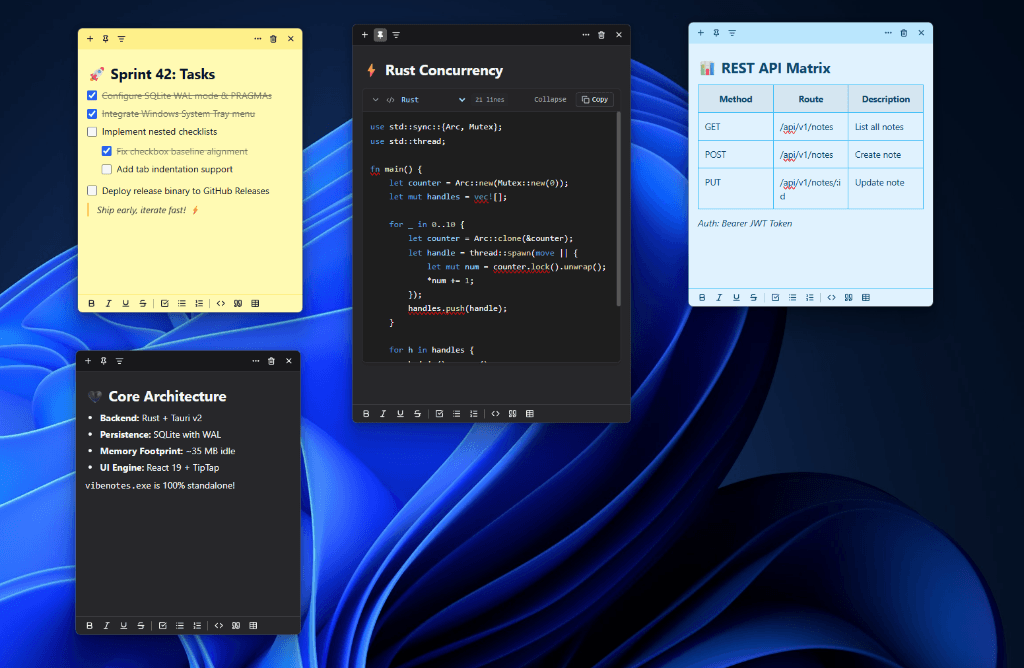
Windows Sticky Notes, but for people who live in code. VibeNotes is a lightweight desktop app — under 40 MB idle RAM, "zero Chromium bloat" thanks to Tauri v2 — that gives you floating frameless sticky notes with native Markdown editing, VS Code Dark+ styled syntax-highlighted code blocks (collapsible, with line counts and one-click copy), interactive checklists, tables, and drag-and-drop images. Seven color themes, system tray integration, Windows startup support, and a central Notes Hub for searching and organizing everything. The killer feature is the one that could only exist in 2026: a native Rust MCP server embedded directly in the .exe. Any AI agent — Claude Desktop, Cursor, Claude Code, Cline, Windsurf, Google Antigravity — can create and manage your sticky notes over stdio with zero Node.js dependency. "Create a blue sticky note titled 'Sprint 42 Deliverables' with a checklist for today's tasks" is a real example prompt from the README. Your notes become a surface your agents can read and write. It is vibe-coded with Google Antigravity, ships as a single ~18 MB executable with in-app auto-updates, and persists everything in a local SQLite database with WAL mode. The screenshot shows the whole pitch at a glance: sprint tasks, Rust concurrency snippets, and an API matrix, all floating over the desktop. Note: This project is curated by the VibeFix editors from public sources. All rights belong to the original creator.

Showcase
Online
Productivityclaude

Vela Slides

An AI-native presentation engine for Claude.ai: describe your deck in chat and get interactive slides — 21 block types, presenter mode, vector PDF export.

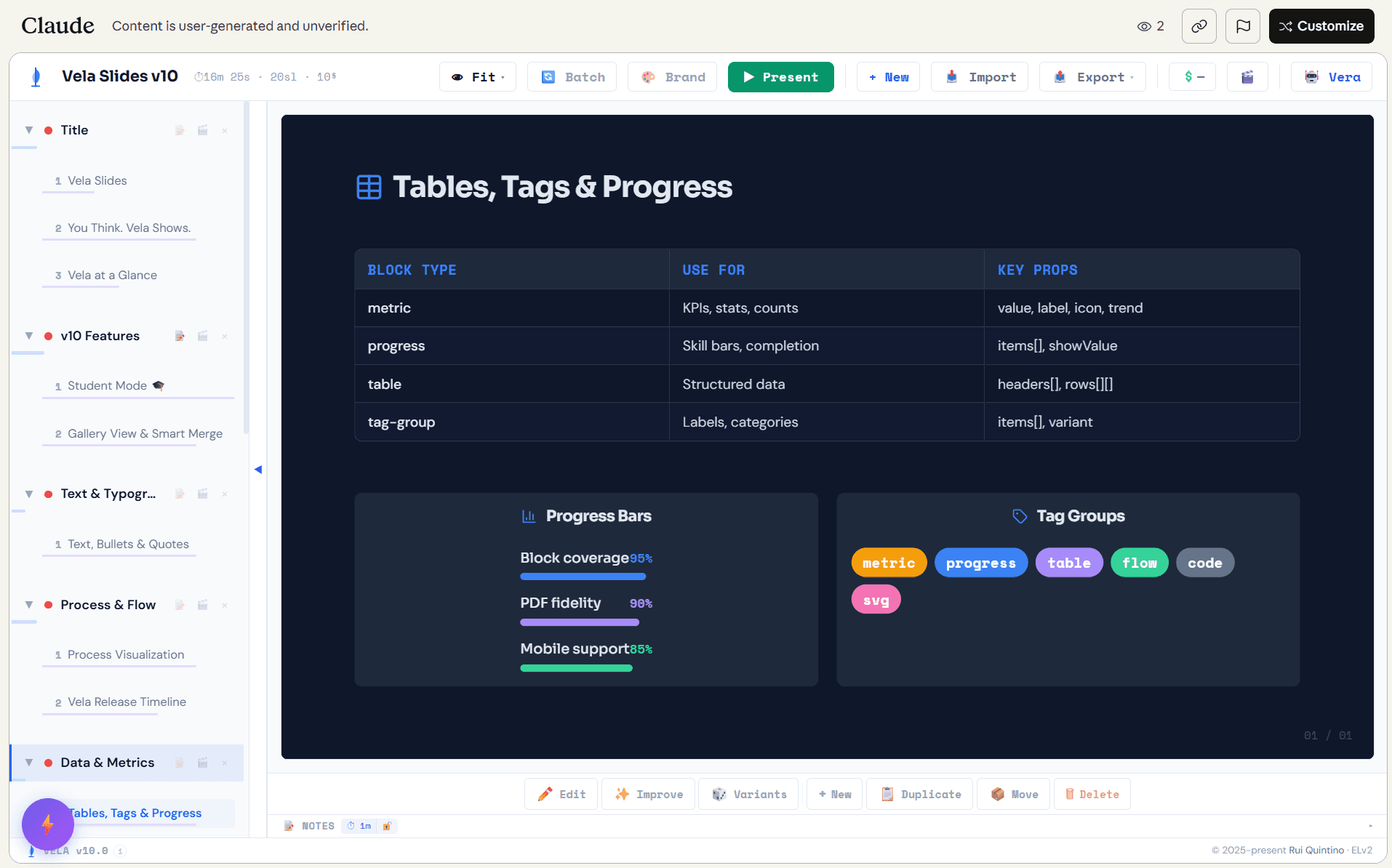
Vela Slides doesn't want you to click through menus. It's a presentation engine that lives inside Claude.ai artifacts: you describe the deck — "Create a 10-slide deck on the future of AI agents" — and Claude generates structured slide JSON, assembles it into the Vela engine, and hands you an interactive artifact you can present from. The tagline in the README is "Vela is Latin for 'sail' — because presentations should carry your ideas forward." The engine itself is substantial: 21 semantic block types (flows, grids, metrics, timelines, SVG diagrams, code blocks — not just text boxes), a built-in AI assistant called Vera that can search your deck, batch-edit across slides, and restyle sections mid-conversation, plus presenter mode, vector PDF export, dark/light themes, drag-and-drop reordering, and WYSIWYG inline editing. The screenshot shows it running inside Claude.ai with the full toolbar: Fit, Batch, Brand, Present, Import, Export, and the Vera chat panel. The build story is the headline: 12,650+ lines, 100% vibe-coded, with the README stating flatly that no human has ever reviewed the source code. It's validated instead by 250+ automated tests and AI code reviews — a genuine experiment in what "unreviewed but tested" software looks like. There's even a security bounty program, which is refreshingly honest about the tradeoff. You can try it three ways: browse the example deck gallery on GitHub Pages (no account needed), open the live artifact on Claude.ai, or install it as a Claude.ai skill so every conversation becomes a slide generator. For anyone who's ever lost an afternoon to PowerPoint alignment guides, describing slides into existence feels like the future arriving early. Note: This project is curated by the VibeFix editors from public sources. All rights belong to the original creator. --- ---