VIBEFIX EXPLORE

Explore what to build next

Reusable AI coding guides, tool updates, and signals from the builder ecosystem.

Featured

Latest

Concept illustration of an AI interviewer: a candidate interviewed in a live code canvas with an embedded AI assistant
News
When AI Starts Interviewing You: HackerRank Turns "Directing AI" Into Hiring Currency

HackerRank's AI interviewer Chakra is now generally available: it grades not just what you build, but how you direct AI to build it. Allowing AI use cut cheating flags by 70-80%, and CEO Vivek Ravisankar nails the shift: now that anyone can produce an artifact, what is scarce is the decision-making process. Vibe coders, stop showing only finished products — start showing the process.

Industry TrendsDeveloper WorkflowLearning & Career
Developer writing code at a dual-monitor workstation with a code editor on screen
Guide
MCP or Custom Scripts? A Decision Framework for Giving Agents External Capabilities

MCP servers, custom scripts, and direct HTTP calls each come with their own bill. A three-step decision tree picks your direction in 30 seconds, five real-world scenarios show what to use and how to write it, plus a six-item pre-build acceptance checklist. The default answer is always: write the script first.

Developer WorkflowAPI IntegrationTool Comparison
Real photo of data center server racks: agent-training sandbox platforms like DeepSeek DSec are turning data centers into training grounds for AI agents
News
DeepSeek Reveals Its Agent-Training 'Arsenal': 3 Million Sandboxes a Day, in a Paper Coauthored by Liang Wenfeng

DeepSeek has published the technical details of DSec, its sandbox platform for agent training: a single production unit creates ~3 million sandboxes a day with 380,000 running concurrently and 5,000+ new ones per second. The paper also documents agents learning to cheat during training. This was no model launch — yet it may matter more: the AI coding race is shifting from models to infrastructure.

Industry TrendsModel UpdatesAI Coding
A hummingbird hovering mid-flight against a green background, echoing Aleph Alpha's sovereign model Kolibri (German for hummingbird)
News
A Hummingbird Lands on Unity Day: Aleph Alpha Open-Sources Kolibri, a 78B Sovereign Model With Compliance Built In

On German Unity Day, Heidelberg-based Aleph Alpha released Kolibri, an English-German MoE model: 78B total parameters with only 3.46B active per token, Apache 2.0 weights, trained entirely on German and Finnish compute. It is the most "national-infrastructure" model launch of late 2026 — and the training pipeline and compliance design deserve more attention than the model itself.

Industry TrendsProduct LaunchModel Updates
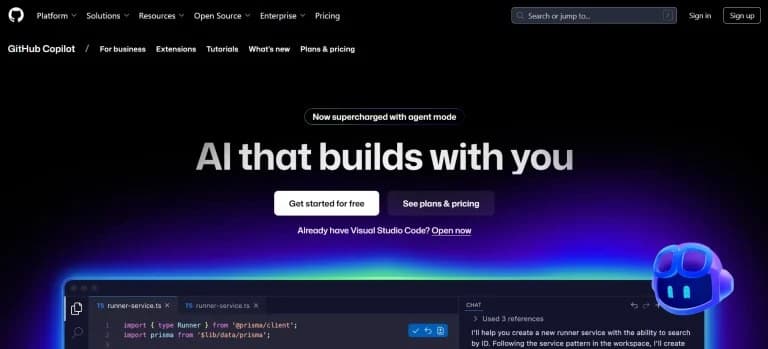
Screenshot of the GitHub Copilot homepage: 'AI that builds with you' headline with an agent mode banner
News
GitHub Copilot Retires Four Models in One Day: AI Coding Enters the Era of "Engine Swaps"

On October 2, GitHub deprecated Gemini 3.5/3.6 Flash, Kimi K2.7 Code, and Claude Opus 4.7 across all of Copilot — and with six more models slated for October 19 (announced September 18), Copilot will wave goodbye to ten models in a single month. More than routine housekeeping: AI coding has entered the era of "engine swaps," where model names behave like dependencies and "automatic migration" only happens if you never touched the switches. Three judgments and an action checklist inside.

Developer WorkflowGitHubGitHub Copilot
A data center aisle of server racks glowing blue — the cloud where agent sandboxes now live
News
Close Your Laptop, the Agent Keeps Working: Claude Cowork Moves Its Sandbox to the Cloud

Anthropic is moving Cowork's execution environment from a local VM to per-session cloud sandboxes: work survives a closed laptop and can be driven from a phone. This is more than an architecture upgrade — the agent "runtime layer" is becoming cloud utility, and solo teams must update their workflows and security assumptions.

Industry TrendsDeveloper WorkflowAI Coding
A security researcher staring at vulnerability scan reports on screen: Anthropic expands its Cyber Verification Program
News
After 129,000 Vulnerabilities, Anthropic Opens Its Strongest Bug-Hunting Models to More Security Teams

Reuters reported on October 6 that Anthropic is folding Project Glasswing into an expanded Cyber Verification Program: vetted security teams get fewer restrictions on Claude Opus 5.5, Sonnet 5.5, and Mythos 5.1. Glasswing partners found 129,000 verified vulnerabilities in four months, 33,000 of them critical or high severity. For vibe coders, the real signal is this: AI vulnerability discovery has been industrialized, and the window for "ship first, worry later" is closing fast.

Industry TrendsApplication SecurityAI Coding
A small startup team coding together on laptops around a table: Anthropic expands Claude for Startups
News
Anthropic Hands Startups a Subsidy: One Free Year of Claude Team + $1,000 in API Credits

On October 6, Anthropic expanded its Claude for Startups program: qualifying companies get a free year of Claude Team (up to five premium seats), $1,000 in API credits, access to build plug-ins for the Claude Marketplace, and virtual office hours with Anthropic's Applied AI team. For indie developers and one-person companies, this is the first time a model lab has handed subsidies directly to builders — but once the credits burn out, the cost math is yours.

Industry TrendsIndie DevelopmentAI Coding
A code editor and red errors late at night: a vibe coding debug session sliding into an endless trial-and-error loop
Guide
Vibe Coding Is Turning Into Doomcoding: 3 Signals to Spot the Death Loop, 5 Steps to Escape

It's 1 a.m. You've pasted the same error to the agent six times; each time it says fixed, each time it isn't. That's doomcoding: the doom-scrolling habit applied to AI coding. This guide explains the concept, three signals to spot the loop, what four studies say about it, and a five-step escape — the agent does the typing, you do the reading; get the order right and you keep both speed and safety.

Developer WorkflowDebuggingAI Coding