

VIBEFIX EXPLORE

Explore what to build next

Reusable AI coding guides, tool updates, and signals from the builder ecosystem.

Featured

Latest

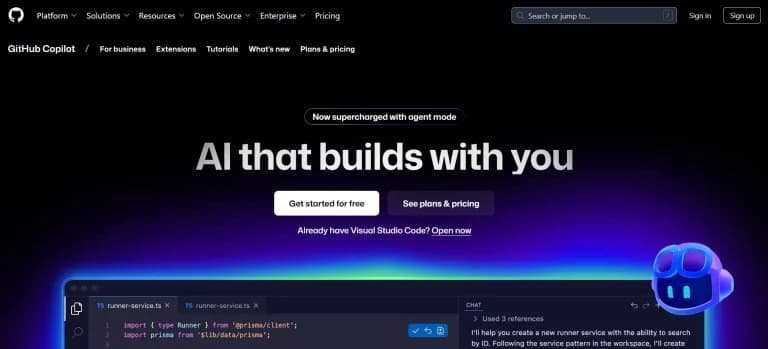
Screenshot of the GitHub Copilot homepage: 'AI that builds with you' headline with an agent mode banner
News
GitHub Copilot Retires Four Models in One Day: AI Coding Enters the Era of "Engine Swaps"

On October 2, GitHub deprecated Gemini 3.5/3.6 Flash, Kimi K2.7 Code, and Claude Opus 4.7 across all of Copilot — and with six more models slated for October 19 (announced September 18), Copilot will wave goodbye to ten models in a single month. More than routine housekeeping: AI coding has entered the era of "engine swaps," where model names behave like dependencies and "automatic migration" only happens if you never touched the switches. Three judgments and an action checklist inside.

Product NewsAI CodingDeveloper Workflow

A data center aisle of server racks glowing blue — the cloud where agent sandboxes now live
News
Close Your Laptop, the Agent Keeps Working: Claude Cowork Moves Its Sandbox to the Cloud

Anthropic is moving Cowork's execution environment from a local VM to per-session cloud sandboxes: work survives a closed laptop and can be driven from a phone. This is more than an architecture upgrade — the agent "runtime layer" is becoming cloud utility, and solo teams must update their workflows and security assumptions.

Product NewsAI CodingIndustry Trends
A security researcher staring at vulnerability scan reports on screen: Anthropic expands its Cyber Verification Program
News
After 129,000 Vulnerabilities, Anthropic Opens Its Strongest Bug-Hunting Models to More Security Teams

Reuters reported on October 6 that Anthropic is folding Project Glasswing into an expanded Cyber Verification Program: vetted security teams get fewer restrictions on Claude Opus 5.5, Sonnet 5.5, and Mythos 5.1. Glasswing partners found 129,000 verified vulnerabilities in four months, 33,000 of them critical or high severity. For vibe coders, the real signal is this: AI vulnerability discovery has been industrialized, and the window for "ship first, worry later" is closing fast.

Application SecurityAI CodingIndustry Trends
A small startup team coding together on laptops around a table: Anthropic expands Claude for Startups
News
Anthropic Hands Startups a Subsidy: One Free Year of Claude Team + $1,000 in API Credits

On October 6, Anthropic expanded its Claude for Startups program: qualifying companies get a free year of Claude Team (up to five premium seats), $1,000 in API credits, access to build plug-ins for the Claude Marketplace, and virtual office hours with Anthropic's Applied AI team. For indie developers and one-person companies, this is the first time a model lab has handed subsidies directly to builders — but once the credits burn out, the cost math is yours.

AI CodingIndustry TrendsIndie Development
A code editor and red errors late at night: a vibe coding debug session sliding into an endless trial-and-error loop
Guide
Vibe Coding Is Turning Into Doomcoding: 3 Signals to Spot the Death Loop, 5 Steps to Escape

It's 1 a.m. You've pasted the same error to the agent six times; each time it says fixed, each time it isn't. That's doomcoding: the doom-scrolling habit applied to AI coding. This guide explains the concept, three signals to spot the loop, what four studies say about it, and a five-step escape — the agent does the typing, you do the reading; get the order right and you keep both speed and safety.

AI CodingDeveloper WorkflowDebugging
A developer typing at a keyboard in front of a monitor showing a code editor
Guide
Don't Write Code Yet — Write the README First

Throw a one-line prompt at an AI coder, come back two hours later to 40 files and a login page you never asked for? The problem isn't the AI — it's that you never defined what "done" looks like. This guide teaches README-driven development: write an agent-friendly README before coding — positioning, quickstart, architecture map, env vars, non-goals — then let the AI build. With a four-step workflow, three anti-patterns, and a pre-flight checklist.

AI CodingDeveloper WorkflowProject Building
Inside a New York City Council hearing chamber: a council member speaks at the wooden dais with the NYC flag and classical decor behind, a microphone facing the speaker.
News
Sworn In by Subpoena: NYC Council Puts Big AI on the Witness Stand

On October 5, 2026, the New York City Council convened a rare Committee of the Whole hearing on AI risk, with executives from Anthropic, OpenAI, Google, and Meta testifying under oath. None of them came voluntarily — a subpoena brought them there. AI regulation just moved from federal talk to city action.

Security & PrivacyIndustry TrendsProduct News
A shopper holds a smartphone over a payment terminal at checkout for a contactless payment, with a shopping cart icon on the phone screen.
News
The “Traffic Rules” for AI Shopping Are Here — but the Giants Haven't All Shown Up

On October 6, 2026, Sierra and Meta jointly unveiled the Personal Agent Protocol: an open standard defining how AI shopping agents prove their identity to merchants and what they're allowed to do. Walmart, Shopify and Stripe are in — but Amazon, OpenAI and Anthropic all stayed out. In this game of rule-making, the biggest test is whether the rivals come to the table.

API IntegrationProduct StrategyIndustry Trends
AI coding agent interface in a terminal: code editor with an agent chat panel
News
Pi 1.0 Ships, Plus an "Undying" Framework: Earendil's Agent Base Goes Stable

On October 1, Earendil shipped Pi 1.0: its minimalist terminal coding agent earns the "stable" stamp, with Codemode bringing native MCP and turning tool calls from token-hungry conversation into orchestrated program steps. The same day's experimental Pi Durable packages checkpointing, crash recovery, and multiplayer steering as agent execution substrate — reliability engineering is sinking from prompt tricks into infrastructure.

AI AgentAI CodingProduct Launch
Close-up of code on a screen: CSS in a dark editor
News
GitHub Stacked PRs Go GA: A Standard Answer for AI-Era Giant Diffs

On October 6, GitHub made stacked pull requests generally available: break large changes into small PRs, review independently, merge together — rebases no longer wipe approvals. Repos using stacks merge 9% more code. For vibe coders, this is the standard answer to "have the agent deliver as a PR chain" — review load drops from 2,000 lines to 200 at a time.

GitHubAI CodingDeveloper Workflow