Project Directory

Browse all indie developer projects and co-creation requests

Showcase
Online
Travel & Localclaude-code

Unfenced

Land for sale that borders public land — 13,626 parcels verified against official boundary maps, not listing descriptions.

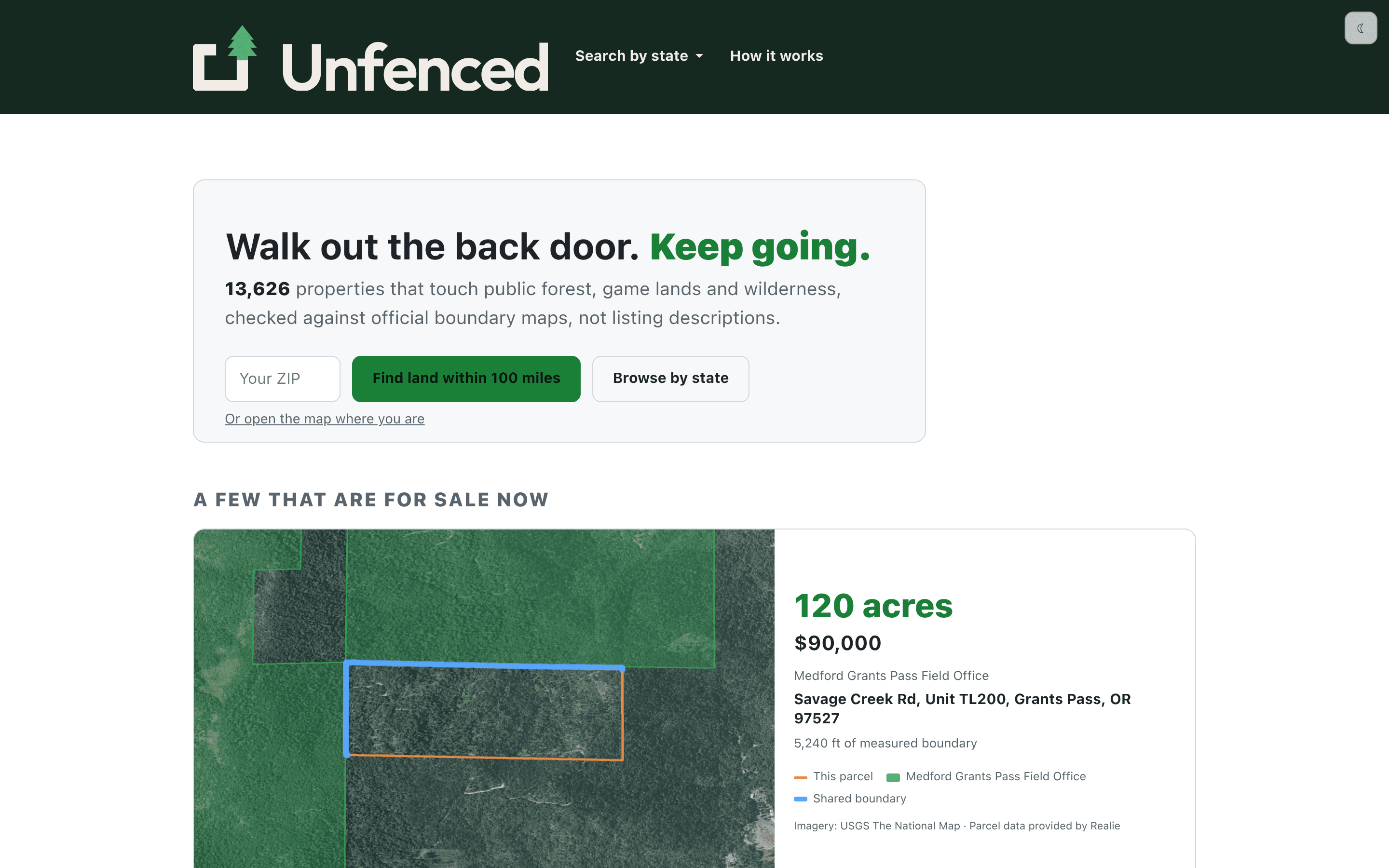
Unfenced answers a question that no real-estate search engine bothers to ask: which parcels for sale actually touch public land? The site tracks 13,626 properties bordering national forests, game lands, and wilderness areas across all 50 US states plus DC — and crucially, it verifies adjacency against official boundary maps and parcel GIS data rather than trusting whatever the listing description claims. The hard part, as the author readily admits, is lining up maps from different sources: listings come via the RentCast API, parcel boundaries from state and county GIS services plus Realie. The author — who comes from 3D design and geospatial mapping — made the judgment calls about what counts as "bordering," then let Claude Code do most of the building. His own words on Hacker News: "Mostly Claude Code." It is a textbook case of agentic coding amplifying domain expertise rather than replacing it: the taste and the data decisions were human, the implementation largely AI. The result is a genuinely useful niche tool. Search by state or ZIP, open the full map with satellite and terrain layers, and filter by relation, confidence, public-land type, access, designation, price, and acreage. Each listing shows the measured shared boundary in feet — for example a 120-acre, $90,000 parcel in Grants Pass, Oregon with 5,240 ft of measured boundary against neighboring public lands. That level of specificity is what separates it from a generic land search. Caveats are worth knowing, many of them raised in the lively Hacker News discussion: owning land next to public forest means fence-line headaches, wandering hikers, and seasonal hunters — the romance has practical costs. But as a discovery tool for a very specific dream — walking out your back door and keeping going — Unfenced is the rare vibe-coded launch that is both technically interesting and immediately usable.
Showcase
Online
Automationclaude

Push: Serverless Web Push for iPhone, Vibe-Coded with Claude

Send push notifications to your iPhone from a web page — no app, no server. Safari Web Push plus GitHub Actions and an Apple Shortcut do the work.

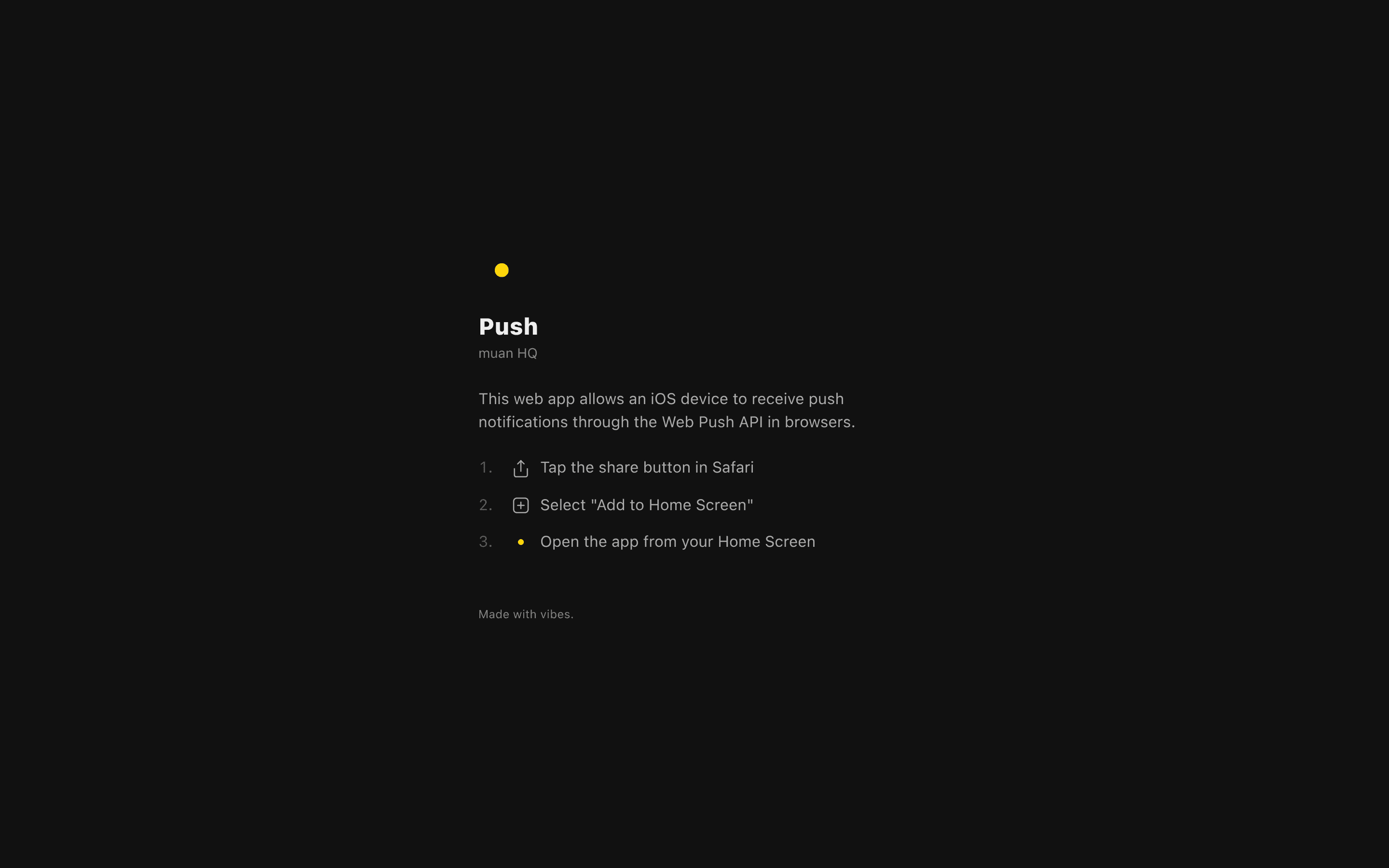
Push solves a small, real problem with an almost absurdly lean stack. The author, Mu-An Chiou (muan), wanted a notification every time the neighbor's cat Chi-chi wandered onto the balcony — the neighbor's camera already had animal detection, but there was no good way to turn that event into an iPhone notification without building an app and a server. Push closes the gap: a web page you add to your iOS home screen subscribes through Safari's Declarative Web Push, an Apple Shortcut fires a dispatch call when the camera automation triggers, and a GitHub Action signs and delivers the notification. No app, no server, no running costs. The README states the provenance plainly: "This is almost entirely vibe-coded with Claude (except this README) and reviewed humanly by me. Reading through the code should take less than 5 minutes." That last line is the whole pitch — the entire kit is index.html, one GitHub Actions workflow, and send.js. Fork it, deploy the page to any static host, add three secrets (a VAPID key pair and subject), and you own a push notification service that runs on GitHub's free tier. The demo page even signs off with "Made with vibes." Honest caveats, straight from the docs: this is Apple-only (Safari's Declarative Web Push, no service workers), the live demo can only send notifications using the author's own keys, and tapping a notification opens com.apple.home:// by default. None of that diminishes the idea — it's a clean demonstration that a personal notification pipeline no longer needs infrastructure, just a shortcut and a workflow file. The repo (muan/push) sits at 6 stars and was pushed days ago; small, maintained, and genuinely useful for anyone wiring home automations to their phone.

Showcase
Online
Automationclaude-codecodex-cli

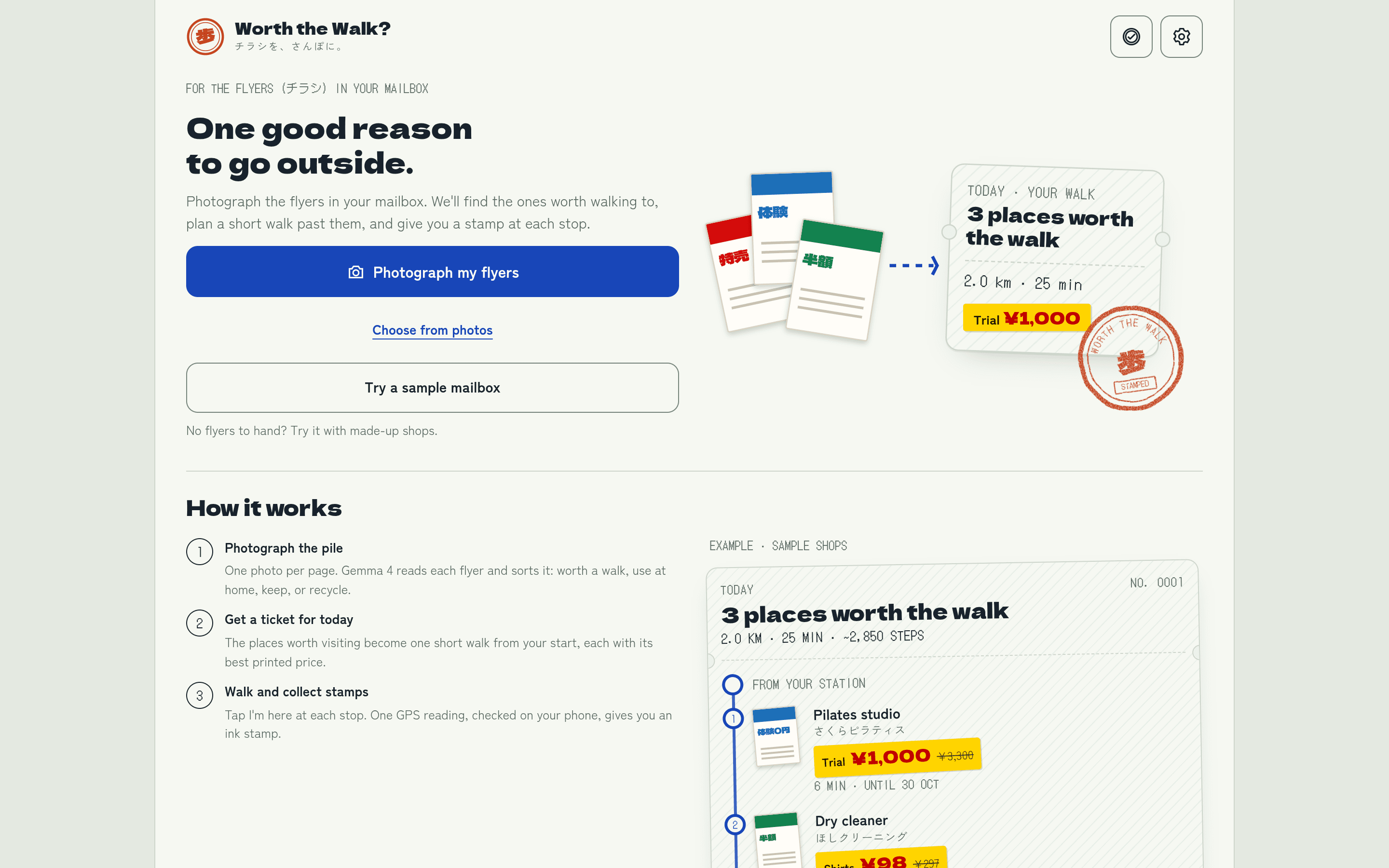
Worth the Walk?: AI Agents Turn Junk Mail Into a Walking Route

Photograph your junk mail — two AI agents sort every flyer, plan a walking route to the deals worth visiting, and stamp each stop like a train ticket.

Worth the Walk? starts from a very specific frustration: a mailbox full of Japanese flyers the author can't read well enough to triage. Instead of learning Japanese, they built an app that does the reading — photograph each flyer, and Gemma 4 sorts it into one of four piles: worth a walk, use at home, keep (bills and notices), or recycle. The walkable ones become stops on a route rendered like a Japanese train ticket, each deal printed as a yellow sticker in the flyer's own visual language. At each stop you tap "I'm here," one GPS reading mints an ink stamp, and the day's savings add up — but only from prices actually printed on the flyer. What makes this one worth paying attention to is how it was built. The author's dev.to build log is unusually honest about the process: "Claude Code was the architect. It wrote the specs and the contracts between modules, reviewed every diff, ran the tests and checked the screenshots. Codex CLI wrote most of the modules from those specs." On the final night the two agents ran in a loop for five hours — Claude writing a spec per round, Codex building it, Claude testing against screenshots and sending back what was wrong. The post also documents what broke along the way: a brush-style logo read as two different restaurants, a prompt example leaking its own phone number onto a gold buyer's flyer, a model inventing prices for a yoga studio. This is the rare AI-built project that shows its scars. The engineering choices are pragmatic rather than flashy. Reading is adaptive — whole pages first, then a second pass over a 2x3 grid of overlapping tiles only for dense price lists, which cut a five-flyer pile from four and a half minutes to 38 seconds. Flyers you dismiss and stamps you collect train a TabPFN model through Prior Labs' MCP so the ranking learns your taste; addresses resolve through Japan's free GSI geocoder with SerpApi and OpenStreetMap as fallbacks. The whole mailbox costs about five cents to read, which is why there's no sign-up and no account — photos are read and thrown away, everything else stays on your phone. It's brand new — submitted to DEV's Hacktoberfest Open-Source AI Challenge on October 12, 2026, and the GitHub repo adkbbx/worth-the-walk is sitting at a single star. The demo runs on Render with a "Try a sample mailbox" mode so you can see the ticket, walk mode and stamp flow in under a minute without any Japanese mail. Small, opinionated, and built in the open — exactly the kind of project that makes you want to check what it does with your own junk mail.

Showcase
Online
Analyticsclaude-opus-55gpt-6-astra

LogLineAlign

Merge scattered log files into one chronological timeline — offline, in your browser or CLI

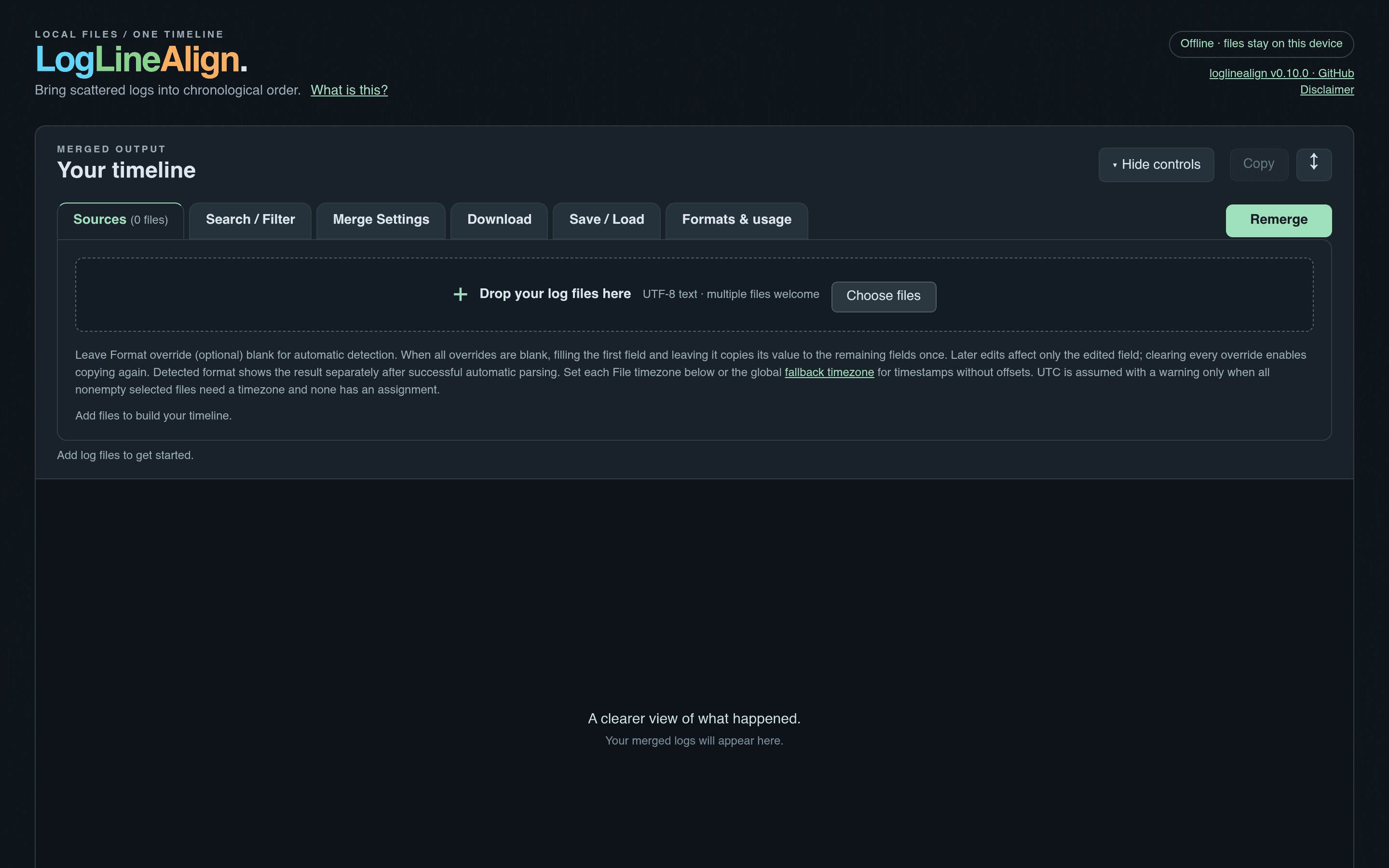
LogLineAlign does one thing and does it well: it takes multiple UTF-8 log files — unsorted, from different machines, in different timezones — and merges them into a single chronological timeline. Timestamps are auto-detected (with a manual format override when detection stumbles), per-file timezone offsets can be assigned, and multiline entries, duplicates, and nanosecond precision survive the merge intact. It ships as two interfaces on the same TypeScript engine: a standalone browser page that needs no server, and a Node.js CLI. The use case is incident response, and the author's own demo nails why it matters: a fibre-channel fault that three teams couldn't trace because their logs were written in two timezones without offsets — until everything was merged onto one clock. Timezone handling is the unglamorous part done properly here: set each file's source offset, or a global fallback, and the tool warns you when it has to assume UTC. There is also search/filter, remerge-on-settings-change, and copy/download of the full merged result, not just the visible preview. What makes this one worth noting is the README's unusual honesty. It states, verbatim: "This project was 100% vibe coded. All of its code and documentation were generated by Claude Opus 5.5 and GPT-6-Astra." But it doesn't use that as an excuse — the repo carries 60+ automated CLI tests, 12 releases in its first two weeks, and a narrated explainer video walking through a real debugging scenario. The disclaimer is equally blunt about limits: misdetected timestamps and wrong timezone assumptions are possible, so "check the entries that matter against the original log files" before acting on a timeline mid-incident. That is exactly the right posture for a tool people will reach for at 3 AM. Privacy is a genuine design choice, not a marketing line: everything runs on your device, files are never uploaded, and the browser page works with no network access at all. Fresh off its Show HN debut on October 12 and still at zero stars, LogLineAlign is an early look at a focused, genuinely useful utility for DevOps and SRE folks who have ever tried to reconstruct the order of events across app.log, database.log, and a firewall log by hand. MIT licensed.

Showcase
Online
Finance

BudgetTrack

A fully local personal budgeting app: accounts, subscriptions, debts and charts with no server, no account, and data that never leaves your device.

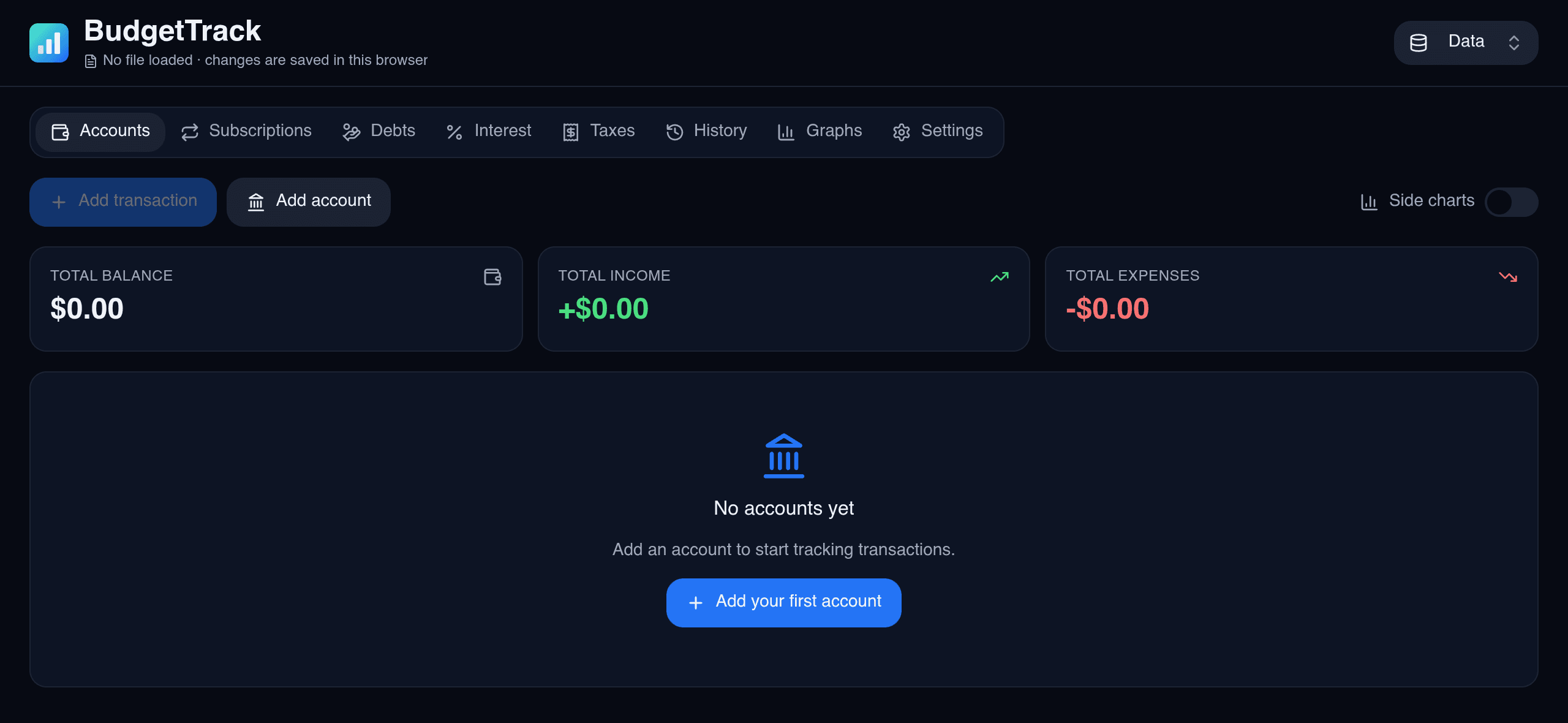
BudgetTrack is a personal finance app that runs entirely in your browser: there is no server, no account, and no analytics. Accounts with full transaction editing (income, deposits, spends, transfers between accounts), recurring subscriptions down to per-item rounding, debts both owed and owing, interest rules with a resident-withholding-tax calculator, tax settings, a history timeline that overlays payments, interest and deductions on a running balance, and more than a dozen charts — category breakdowns, income vs spending, net saved per month, weekday spending, balance projection, debt payoff — all work offline, on your own machine. Nothing you enter ever leaves the device: it lives in localStorage, with .db files (JSON) you export yourself as backup. What makes it worth a look for vibe-coding watchers is how openly it wears its origin. The author's repository description reads, verbatim: "Vibe coded, user friendly, local finance database manager." The commit history backs that up: two of the five commits carry Co-Authored-By: Claude Sonnet 5.5 trailers with Claude Code session links, and the repo root ships AI_RULES.md and CLAUDE.md — running instruction files that keep an AI coding agent aligned with the project as it evolves. For all that, this is not a skeleton. The app ships an NZ student loan preset (12% on income above $24,128 a year), a "stale debt" flag that keeps dead debts on record while dropping them from totals and graphs, and a theming engine that pulls 33 UI styles by 67 colour palettes from a separate package in the background, applying new palettes without an app update. Settings cover exchange rates, interest basis (monthly or yearly), wallpapers and appearance. The tech stack is the author's own declaration: React, TypeScript, Vite, Tailwind CSS, shadcn/ui and Recharts. The live demo is a Cloudflare Pages build; it opens on a fresh, empty dashboard because there is deliberately no server and no sample data — every account on screen is one you add yourself.

Showcase
Online
E-commercegoogle-ai-studiogemini

AutoVista Motors: Vibe-Coded Car Dealership Concept Site

Fictional car-dealership concept site vibe coded in Google AI Studio with Gemini: 24 real car models, side-by-side comparison, and a financing calculator.

AutoVista Motors is not a real car dealership. Saying that up front matters, because everything about this site is designed to convince you it is one: a fictional brand, a fabricated founding story and leadership team, invented testimonials, a made-up 2.18% p.a. financing rate, and a test-drive booking form that sends data nowhere. The author's README says it plainly: "AutoVista Motors is a fictional company. This is a student portfolio and learning project, not a real dealership, and no real sales, bookings, or inquiries happen here." This is a frontend design portfolio piece, and it deserves to be judged as one. Judged as one, it is genuinely impressive. The concept site presents 24 real, correctly named car models across six categories (Sedans, SUVs, MPVs, Electric, Hatchbacks, Coupes, four each), and the Vehicles page is anything but a static grid. It ships real search, sort, and budget filtering, a side-by-side vehicle comparison tool, and detail popups that open without navigation: image galleries with thumbnails, full spec sheets (engine, transmission, seating, fuel/range, dimensions, power, drive type), trim levels with individual pricing, and key features. A "Book a Test Drive" button even passes the chosen vehicle into the booking form. The Offers page goes further with a working financing calculator: pick a vehicle, drag the down-payment slider (20%–50%), choose a 12–60 month tenure, and watch the down payment, financed amount, and estimated monthly installment update live — clearly labeled as an illustrative estimate, consistent with the site's fictional framing. What makes it a vibe-coding story is how it was made. The project was "vibe coded in Google AI Studio using Gemini," starting from a written Product Requirements Document that defined the page structure, a fixed color palette, the exact vehicle list, and one unusual rule: vehicle photography had to be found through search, not generated. Six vehicles use Creative Commons photos from Wikimedia Commons (source and license documented in the code), the rest and the portraits come from Unsplash. It is part of a personal portfolio series by the author — whose primary focus is Data Science, NLP, and GenAI/LLM agent engineering — demonstrating applied vibe coding outside their technical home turf. The presentation details sell the craft: a layered-motion parallax hero, decorative emblems, a founding-narrative watermark, a four-milestone company timeline, and a full About Us page with a fictional four-person executive team. The stated stack is React 19, TypeScript, Vite, Tailwind CSS v4, lucide-react, and Google Fonts (Outfit and Plus Jakarta Sans), all built in Google AI Studio's Build mode. The repo is small (1 star, created 2026-09-30, last pushed 2026-10-01), but the live demo at autovista-car-dealership.vercel.app is worth opening: it is a study in how to build a fully convincing fictional-brand site — honest fictional framing included.

Showcase
Online
Finance

Nur Fashion Bill Generator: Factory Invoices, Vibe-Coded

Factory-grade garment delivery bills for Bangladesh knitwear factories: auto totals, amounts in words, and one-click 300 DPI PDF export.

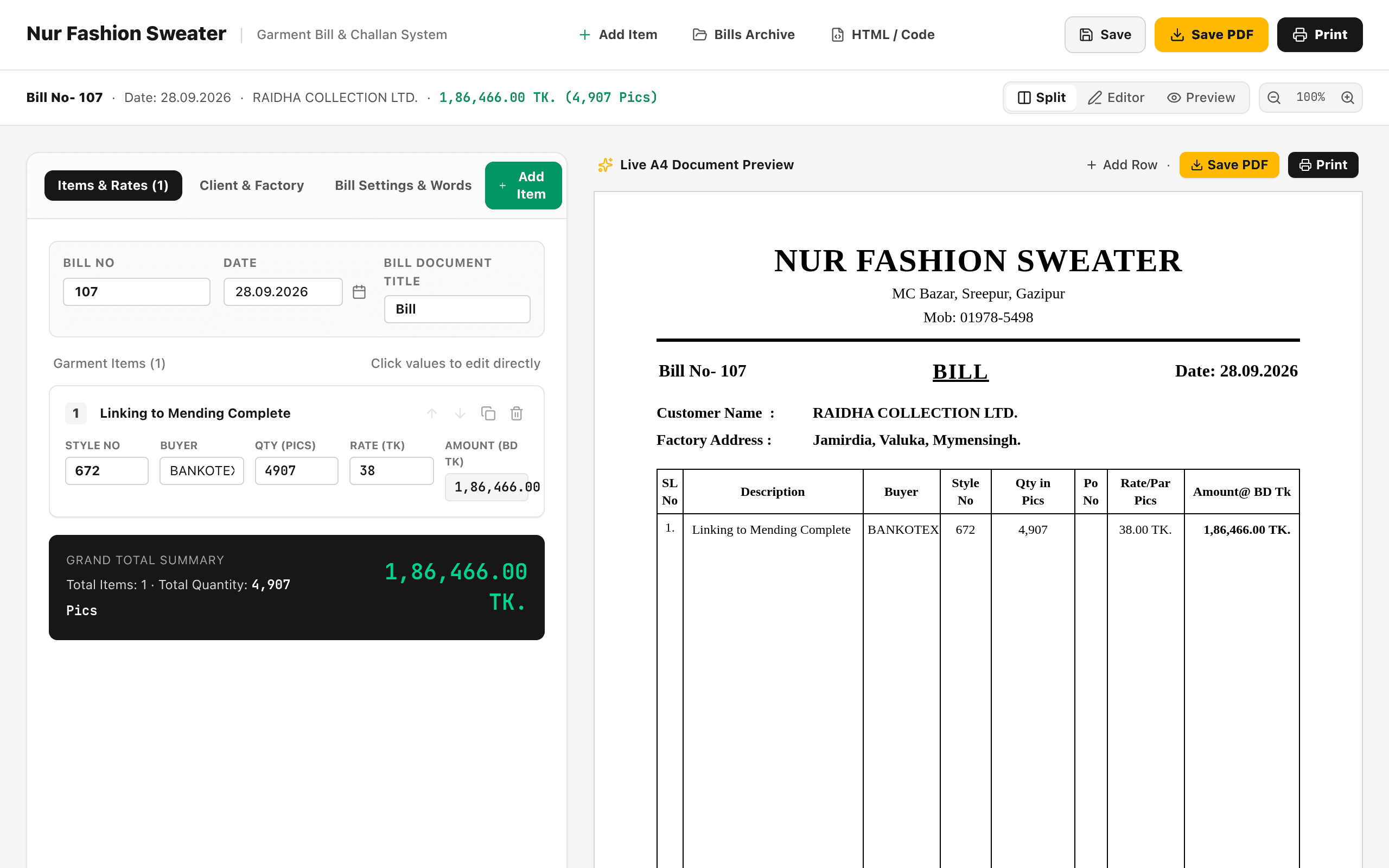
Nur Fashion Bill Generator is a single-purpose web app built for Bangladesh knitwear, sweater, and apparel factories to produce industry-standard garment delivery bills, challans, and invoices. The form replicates the authentic factory bill layout exactly: SL No, Description, Buyer, Style No, Qty in Pics, Po No, Rate/Par Pics, and Amount in BD Tk — the columns a factory clerk actually works with, not a generic invoice template. The craft is in the details that matter on the factory floor. Quantities and amounts total automatically, and the grand total is spelled out in words in Bangladeshi style ("One Lac Eighty Six Thousand Four Hundred Sixty Six Taka Only") — a legal nicety on real bills. The page is engineered to fit exactly one A4 sheet with zero page spills, and a one-click download exports a high-resolution 300 DPI PDF; it can also export a standalone single-file HTML bill to send buyers over email or WhatsApp. Company headers, addresses, bill numbers, notes, and authorized signatures are all editable, and multiple bills can be saved and switched between in the browser. The author states it plainly on the README's first screen: "Vibe coded for precision, speed, and real-world Bangladesh knitwear, sweater, and apparel factory workflows." That grounding shows — this is not a generic demo but a tool shaped by how garment factories in Gazipur and Mymensingh actually bill. Built with React 19, TypeScript, and Tailwind CSS v4, the live demo loads with a realistic sample bill (Bill No-107 for RAIDHA COLLECTION LTD.) you can inspect and edit right away.

Showcase
Online
Marketing & Salesgoogle-ai-studiogemini

LinkNest: Self-Hosted Link-in-Bio, Vibe-Coded with Gemini

A self-hosted Linktree alternative: public profile page, admin dashboard, AI-generated link copy, a Discover feed, and click analytics.

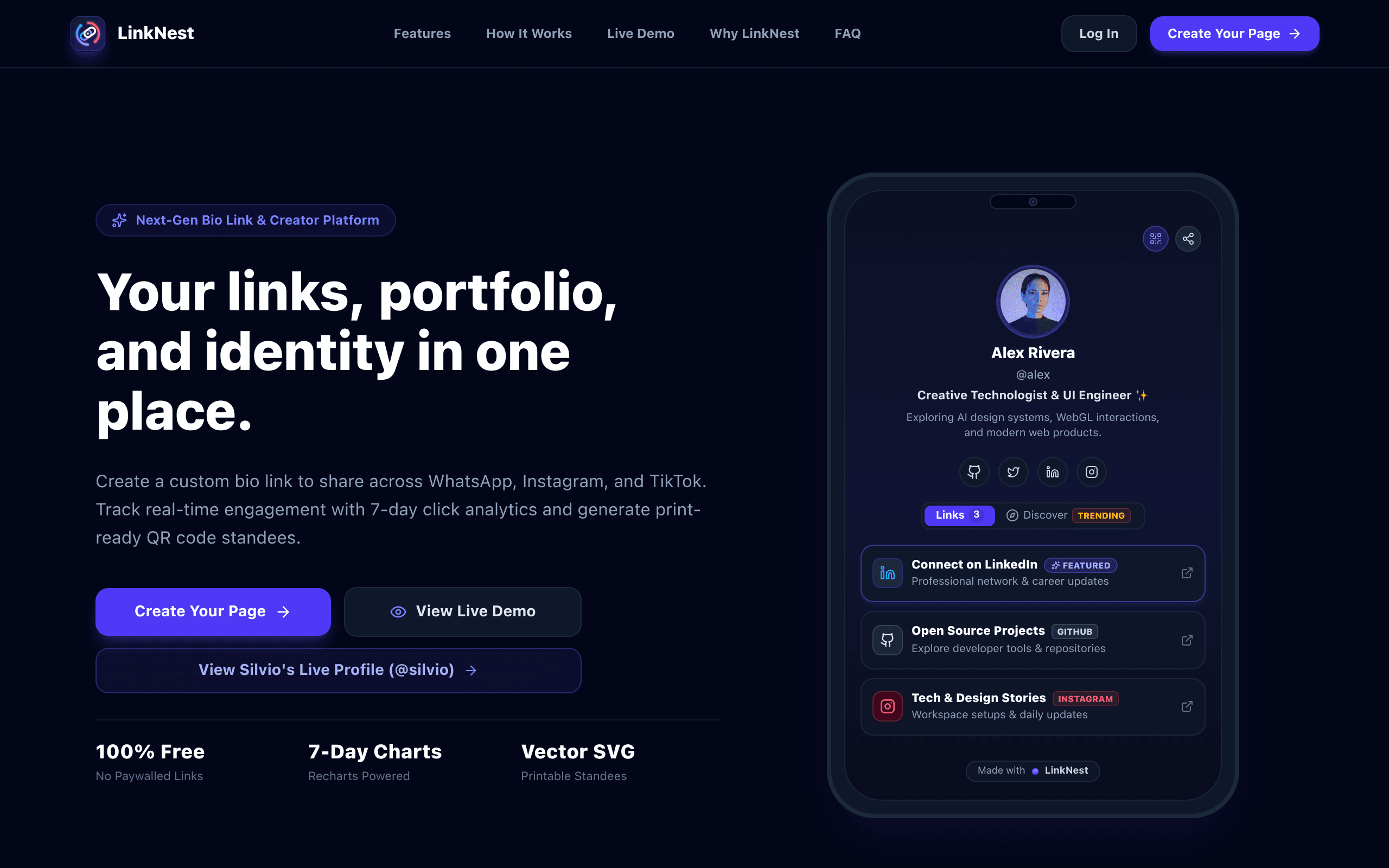
LinkNest is a self-hosted take on the link-in-bio idea: instead of renting a slot on Linktree, you own the whole thing. The project ships two surfaces that talk to a real Postgres backend through Supabase: a public profile page at /:username that any visitor can open without logging in, and an authenticated admin dashboard where the owner controls every link, the theme, the analytics, and more. Nothing is hardcoded; links, avatars, and styling all live in the database behind Row Level Security. The public page is more than a button list. Each profile gets a fully customizable theme (background, button style, colors, font), an optional featured link, scheduled links that only appear inside a date window, and even optional password protection that gates the whole page. Sharing is engineered properly: server-rendered per-profile meta tags mean WhatsApp, Telegram, and X show an accurate branded preview card, and the preview image itself is generated on the fly with Satori, showing the owner's avatar initial, name, bio, and link count. The dashboard side is where it earns its keep: 7-day click analytics with Recharts charts and CSV export, a broken-link checker, and two Gemini-powered touches — AI-generated link descriptions that write your link copy for you, and a Discover tab that uses Gemini's Google Search grounding to surface trending articles related to the owner's bio. New accounts get a first-time setup wizard, and printable QR-code standees turn the profile into something you can put on a shop counter. What makes it worth featuring here is how it was built. The README's Overview section says it plainly: the project was vibe-coded in Google AI Studio using Gemini, starting from a written Product Requirements Document that defined the public page and dashboard flow, the Supabase schema, and the Row Level Security rules. It is one of three projects in the author's portfolio series — alongside WishBox and ForeverCard — deliberately demonstrating applied vibe coding by someone whose day job is Data Science, NLP, and GenAI agent engineering. It is still just starting out — the repository holds a single star as of October 2026 — but the demo is live and the stack is real: React 19, TypeScript, Vite 6, Tailwind CSS 4, Motion, Supabase, and the Gemini API.

Showcase
Online
Entertainment

DreamWalker

AI 解梦日记:记录梦境、三选风格解读,弗洛伊德与周公解梦同台竞技

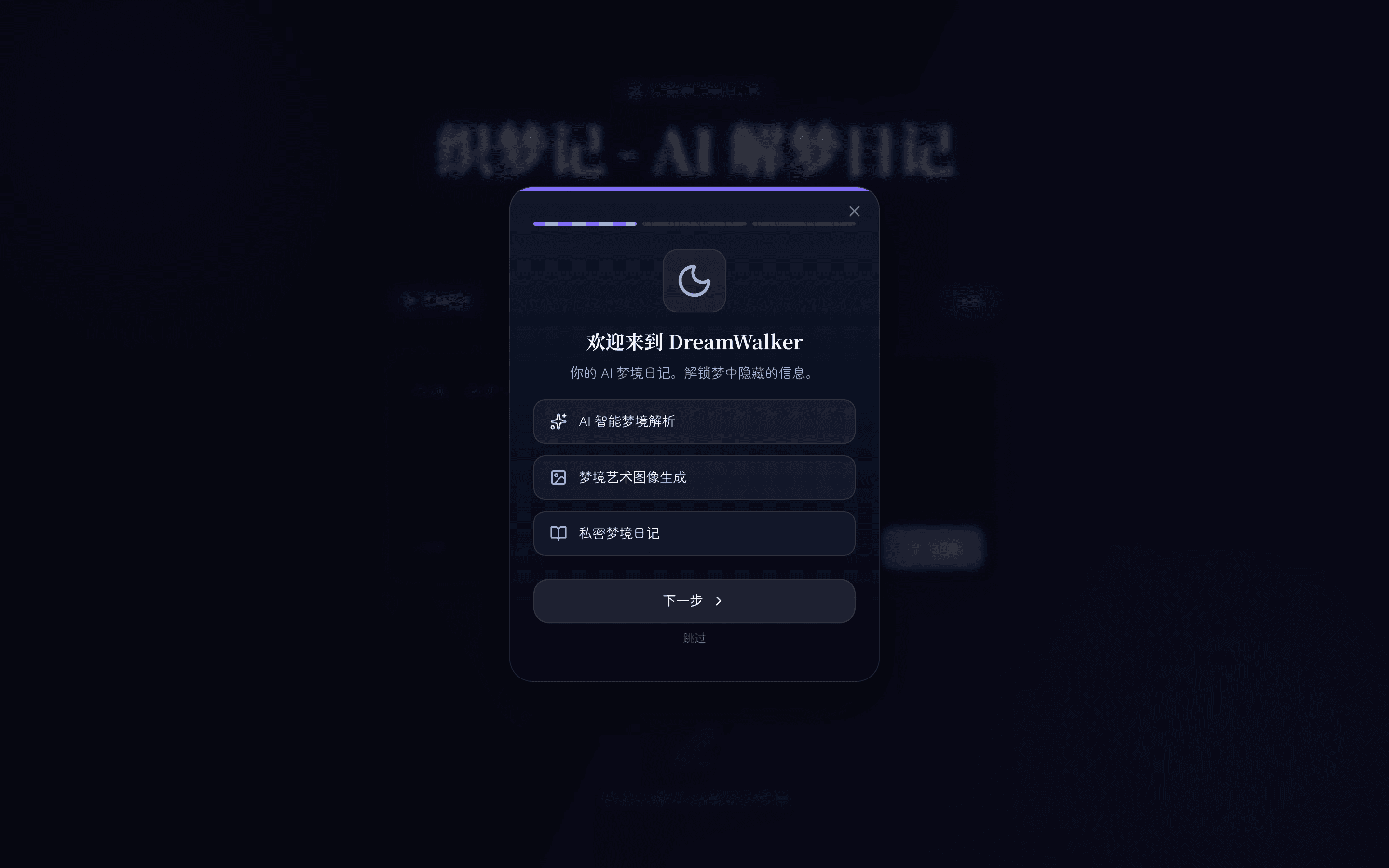
DreamWalker(织梦记)是一款用 Vibe Coding 做出来的中文 AI 解梦网站。作者在 V2EX 分享项目时的原话是:「我 Vibe Coding 了一个 AI 解梦网站」——从开发、上线到持续付费运营,整个产品由作者一人加 AI 独立完成,是典型的个人 vibe coding 作品。 产品使用流程非常清晰,一共三步:第一步「记录」,在干净的输入框里写下你的梦;第二步「选择风格」,从三种解读流派中任选其一——学术派(心理动力学/荣格)、弗洛伊德派(欲望与压抑)、周公解梦(传统玄学);第三步「获得洞察」,拿到 AI 解读后还可以继续追问,像跟一个懂心理学的朋友聊天一样深入探索。 除了文字解读,DreamWalker 还能「把你的梦画出来」——用 AI 生成梦境艺术图像,有时比文字更直观。所有梦境都可以存入私密梦境日记,登录后云端同步,换设备也不丢失。网站支持简体中文、繁体中文、英语、日语四种语言。 运营上已经跑通付费订阅:免费用户每天可记录并解读 1 个梦(学术派风格);高级版解锁更多解读风格、图像生成与无限追问,月付 29.90 元、年付 128.00 元(创始会员半价,页面显示仅剩 45 个创始名额),可随时取消。FAQ 里作者也坦诚提醒:AI 基于心理学理论提供参考,解梦本身是主观的,更适合当作自我反思的工具,而非绝对真理。 作者还在首页写下了产品愿景,灵感来自村上春树《小城与不确定性的墙》:如果每个人的梦境可以变成一座城市,做的梦越多,城市就越丰富,潜意识慢慢长成只属于自己的一座小城。这个浪漫的想法能否实现还不确定,但这条探索之路已经开始。

Showcase
Online
Developer Tools

OpenNavo

为 macOS 打造的 Homebrew 图形化应用商店:一键安装更新 5,008 款应用,全程由 AI Agent 辅助开发。

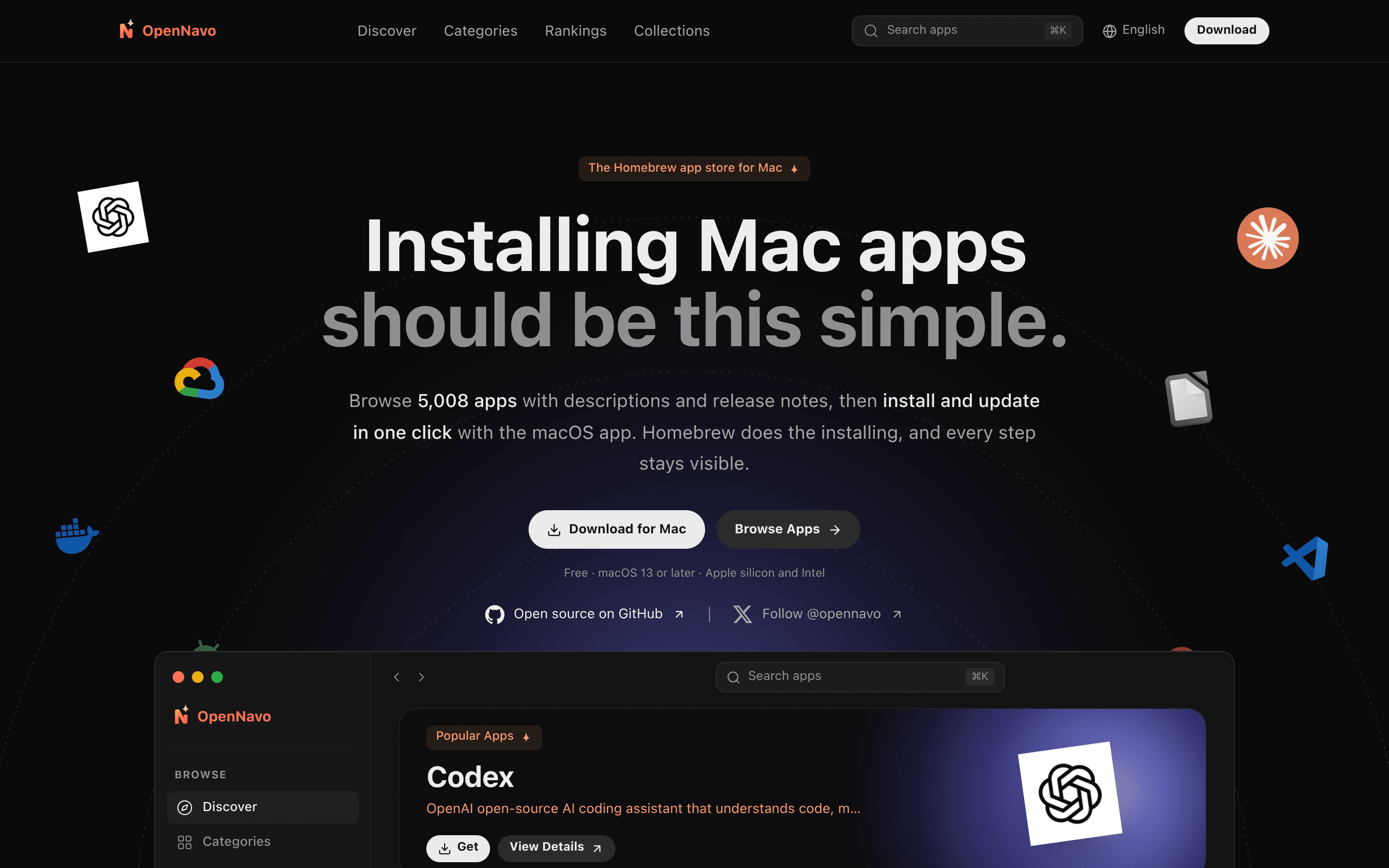
OpenNavo 是为 macOS 打造的 Homebrew 图形化应用商店:网页端展示完整的应用目录、分类与排行榜,macOS 客户端提供一键安装、更新与卸载流程。底层依然走 Homebrew 安装,但整个过程全程可见,再也不用记命令行。 vibe-coded 证据来自作者本人在 V2EX 的首发帖(t/1248977,2026-10-15)原话:"从功能开发、Bug 修复到日常维护和版本迭代,我都在尝试交给 AI Agent 完成。" 核心功能:5,008 款应用的完整目录(带描述与更新日志)、按 Homebrew 官方安装统计生成的实时排行榜(支持 30 天 / 90 天 / 365 天维度)、分类浏览、精选合集、最近更新追踪,以及应用详情页的一键 Get 安装按钮。 技术架构:网站用 Nuxt 4 + Vue 3,macOS 客户端用 Tauri 2 + Rust,后端是 Go + PostgreSQL + Redis,还预留了 FastMCP 作为 AI Agent 接口。以上均为作者在原帖中明确声明的技术栈。 现状:GitHub 仓库 opennavo/OpenNavo 开源(Apache-2.0),已有 15 个 star,2026-10-15 当天仍有代码推送,网站数据每日同步。

Showcase
Online
Educationclaude-code

Nature by Friends

The app that sends kids outside instead of asking for one more tap — a storybook nature adventure for ages 6–10.

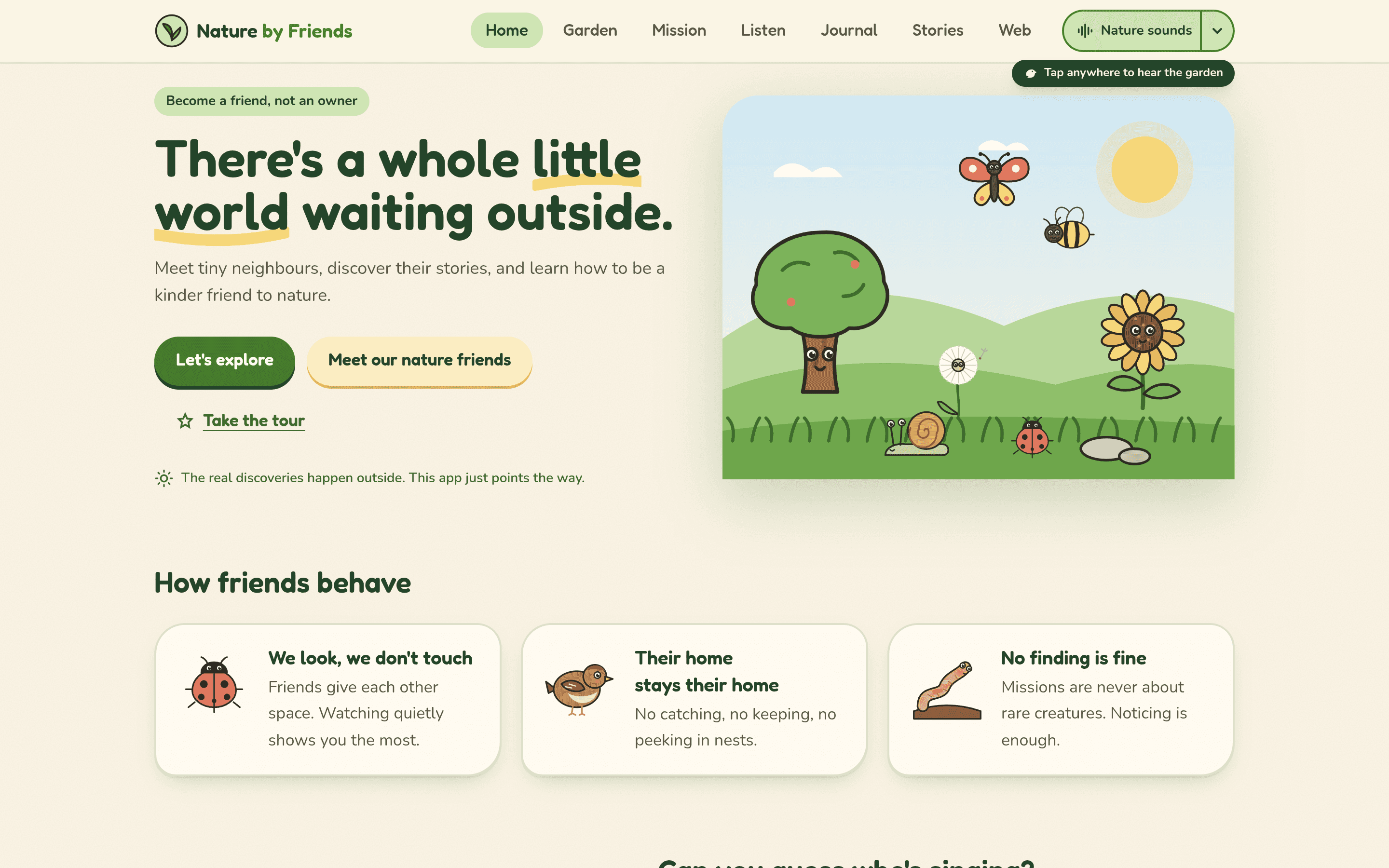
Nature by Friends is an outdoor nature adventure for children aged 6–10, built for the DEV Hacktoberfest Open-Source AI Challenge “Touch Grass” week in October 2026, and live right now on its Render deployment. Its premise flips the attention economy on its head: “Most apps want one more tap. I built one that sends kids outside.” The guiding rule is woven into every screen: “Become a friend, not an owner.” There is no catching, no collecting, no points, streaks, or timers. A child succeeds by noticing something quietly, from a respectful distance. Every mission follows the same loop: meet one of 20 hand-drawn nature friends (frog, snail, moss, mushroom, crow and more), take on a tiny mission, respect its boundaries, put the phone down with a trusted adult, reflect, and keep the memory in a nature journal. Not finding anything is a valid ending — the app really says: “That’s completely okay — friends don’t always show up.” Core modules: the Nature Garden (20 illustrated friends with real facts, habitats, safe-observation tips and things-not-to-do lists), the Listening Corner with Sound Safari (hear a creature’s call, guess who made it) and The Quiet Minute (a guided outdoor listening exercise), the Friendship Web (37 hand-written connections linking the 20 friends with the sun, a pond, fallen leaves and soil, explored through an interactive map), Tiny Nature Stories (20 short stories mixing imagination with real facts), a nature journal stored in the browser’s localStorage with “then and now” return-visit comparisons, and a plain-language grown-ups page covering outdoor safety and privacy — including a delete-all-my-data option. It is genuinely vibe-coded: author Ansh Varshney writes in his dev.to build log, “I built Nature by Friends during this challenge week with Claude Code as my pair programmer, working in the terminal and desktop app.” The stack is Next.js, React, TypeScript, Tailwind CSS and MongoDB (curated profiles live in MongoDB Atlas with a bundled fallback). The open-source repo carries 59 Vitest tests covering the safety rules and model-output sanitizer, with CI running lint, type checks, tests and a production build on every push. AI is used sparingly and safely: an optional photo helper lets a grown-up ask Gemma 4 for a cautious identification guess — always worded “might be”, with GPS/EXIF metadata stripped on-device before upload, and risky finds (wasps, spiders, mushrooms) triggering a “tell a trusted adult” message. Safety advice always comes from hand-written curated content, never from the model. ElevenLabs text-to-speech narrates all 20 profiles, missions and stories, since not every 6–10 year old is a confident reader. All 20 nature friends are original hand-built SVG characters — no stock images.

Showcase
Online
Health & Fitnessclaude-code

Pani Kaisa Hai

Community drinking-water early warning for Indian neighbourhoods: residents report tap-water signals, but only a health worker can confirm contamination.

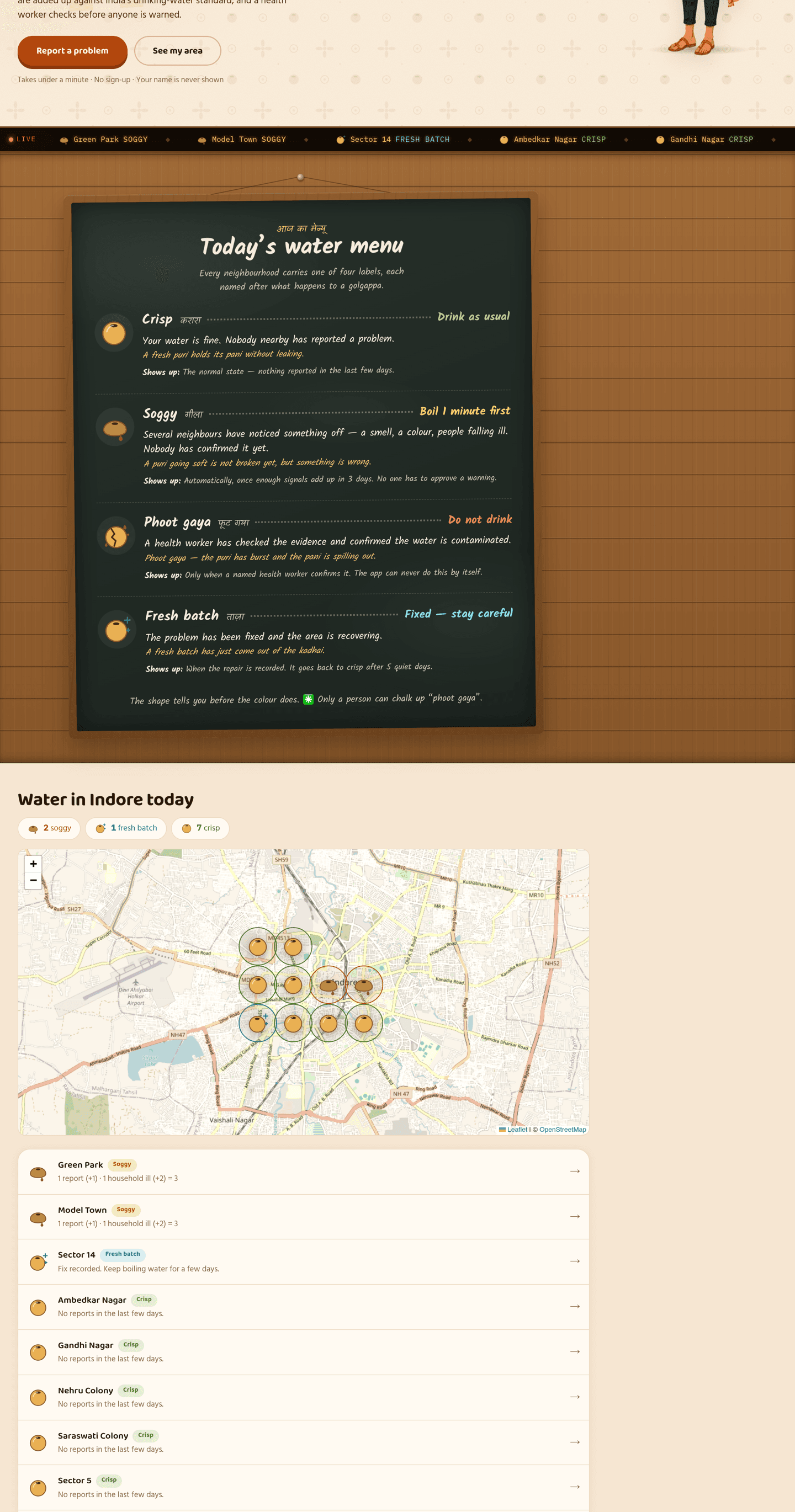
Pani Kaisa Hai — Hindi for “how is the water?” — is a community early-warning app for drinking-water safety in Indian neighbourhoods. The premise is deceptively simple: before you take the first bite of your golgappa, you ask whether the pani — the flavoured water it is filled with — is clean. The app lets residents report what they notice about their tap water (smell, colour, taste, grit, or illness at home), scores those signals against India’s drinking-water standard (IS 10500), and shows a live “golgappa map” where every neighbourhood carries a label named after what happens to a golgappa: Crisp (all fine), Soggy (something is off), Phoot gaya (burst — contaminated), or Fresh batch (fix recorded, area recovering). The sharpest design idea is who gets the final say. The app never lets a machine declare water unsafe by itself: once signals reach a threshold (six points, or a positive bacteria test), a case is raised but stays locked until a named health worker reviews the evidence and confirms or dismisses it — with a reason put on the record. As the site puts it: “A machine can raise a case. Only a person can declare the water unsafe.” A public “Shake the golgappa” simulator lets anyone pile on signals and watch the scoring logic work — including the one step the software will never take on its own. The build is unambiguously vibe-coded. The author built the whole app with Claude Code over about seven sessions between 19 September and 4 October 2026, kept a build log the entire way — including the parts that went badly — and wrote the process up for the Sanity “Vibe-Code Something Strange” challenge. BUILD_LOG.md is public in the GitHub repo (github.com/Reet24-del/pani-kaisa-hai), which also ships 33 tests. Declared stack: Next.js 16 (App Router), TypeScript, Sanity Studio v6, and Leaflet + OpenStreetMap for the map. The demo currently online runs on sample data: the author honestly labels the site “Sample data — demo build” throughout, with an Indore neighbourhood set used for illustration. It is live and fully functional — the reporting flow, the live status ticker, the map and the simulator all render and work.

Showcase
Online
Lifestyleclaude

Indigene

A native-plant PWA that tells you which wild plants feed the wildlife where you stand — built almost entirely with Claude.

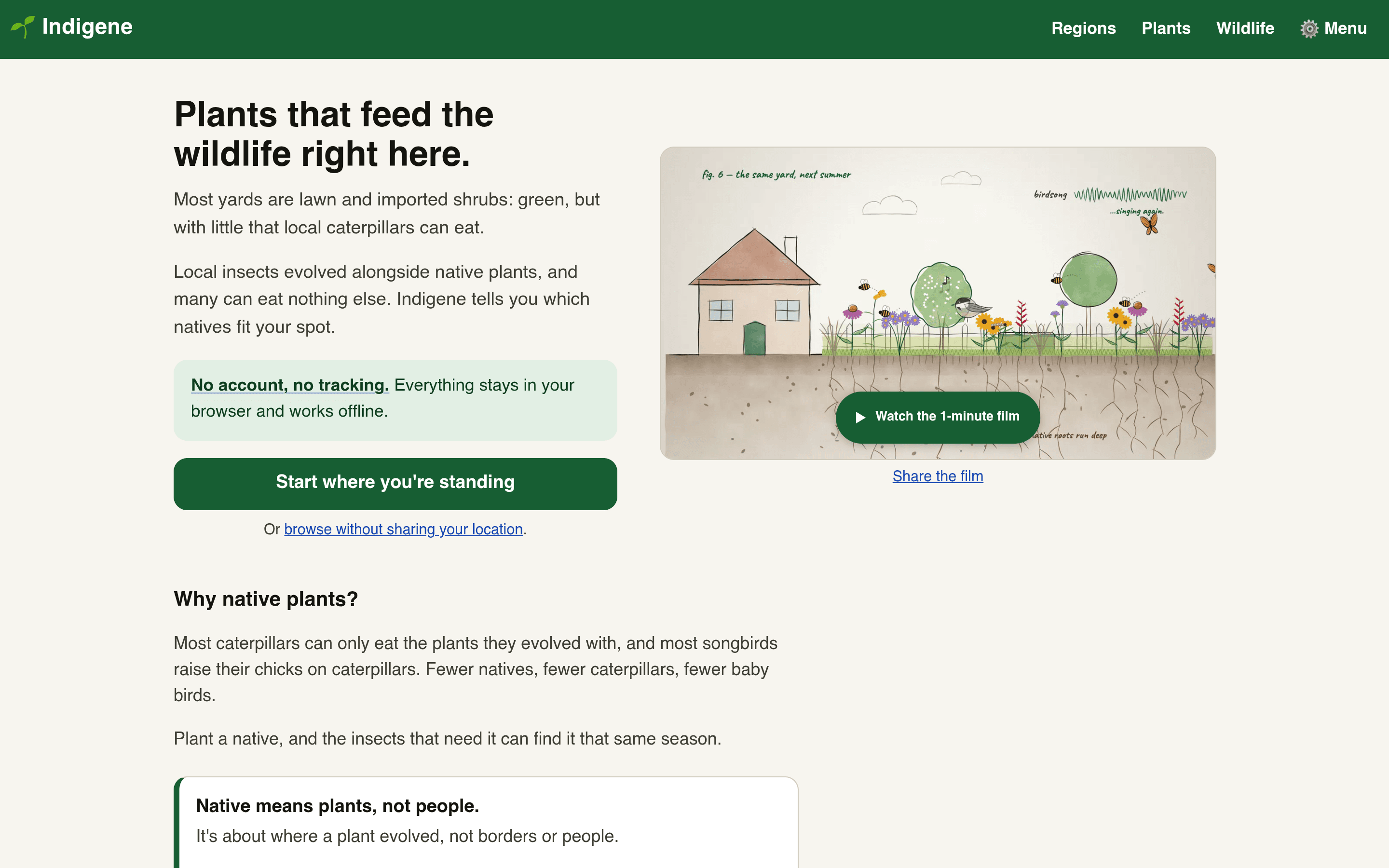
Indigene is a progressive web app that answers a deceptively simple question: which native plants belong where you are standing? Give it your location and it recommends the wildflowers, grasses, and shrubs that actually feed your local wildlife — complete with eco-scores, plant photography, and the ecological reasoning behind each pick. The project comes from olivierlacan, the developer best known as the author of Keep a Changelog. It is also one of the most transparently vibe-coded projects we have featured: in his Show HN launch post Lacan wrote, "Candidly, as many of us have, I've also leaned heavily on LLMs (mostly Claude here) to bring this to life." The app even ships a public ledger at indigene.app/llm documenting exactly what building with an LLM cost — 139 work sessions with Claude, 8.5 billion tokens read, 23 million written, roughly $5,151 at API rates (figures as of October 12, 2026) — and every pull request carries an LLM usage warning. Under the hood, Indigene keeps things deliberately simple: vanilla TypeScript on the DOM with no framework, backed by a thin Hanami 2 JSON API. As a PWA it works offline, requires no account, and tracks nothing — everything stays in the browser. Status: the open-source repository (MIT) holds 980 commits and is still being worked on, with community discussion active as of October 15, 2026. Eight stars so far — a young project with an unusually honest build story.

Showcase
Online
Games

Timur's Chess

Play Timur's 14th-century chess variant in your browser: working AI engine, online multiplayer, and the full exotic rule set.

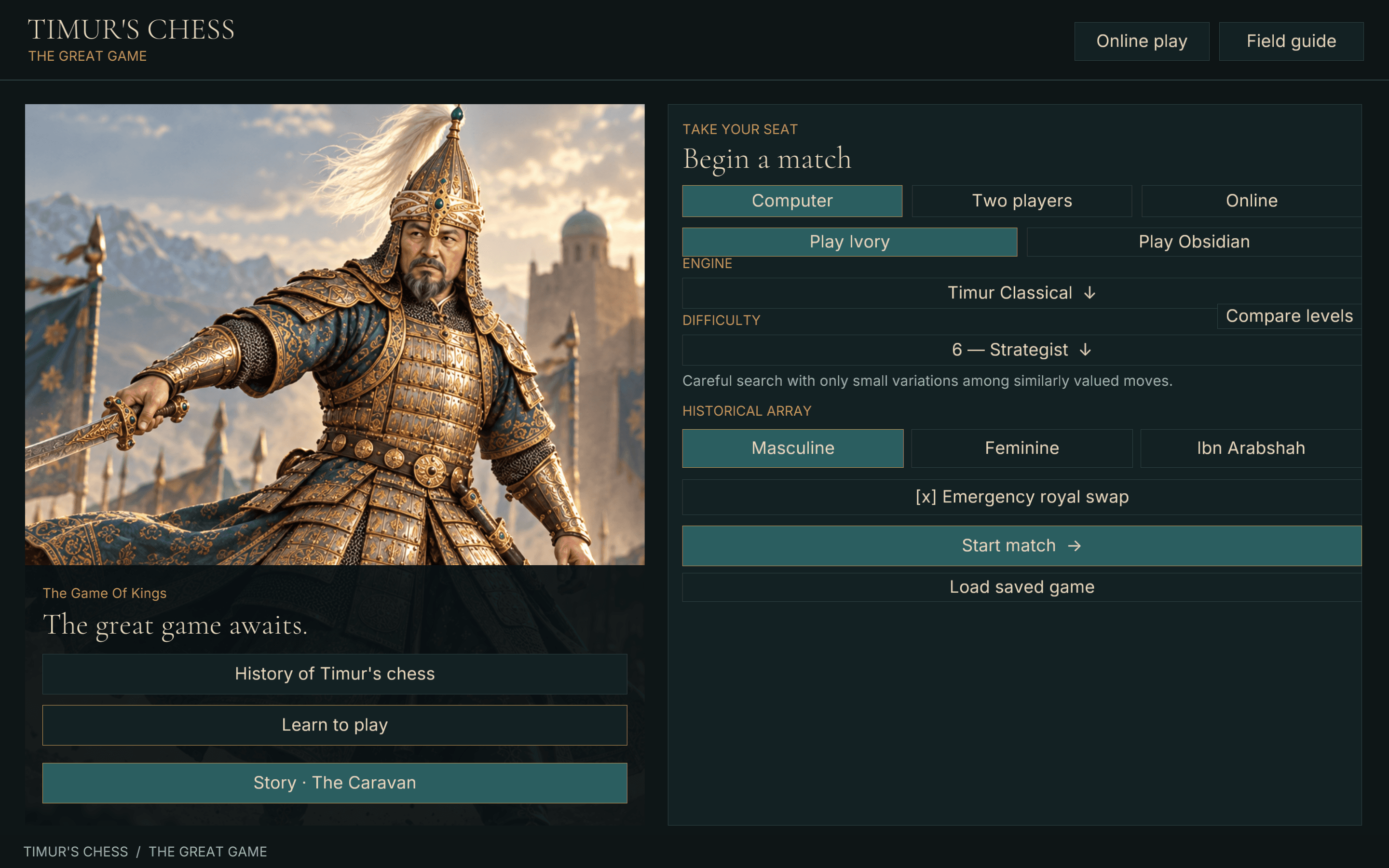
Timur's Chess is a fully playable web revival of Tamerlane chess, the grand chess variant favored by the 14th-century Central Asian warlord Timur (Tamerlane). Played on a sprawling 10-by-11 board with 28 pieces per side, it is one of the most exotic variants in chess history, featuring pieces that exist nowhere in modern chess: the giraffe, the camel, the vizier, the war engine, and the elephant. Almost nobody plays it today, partly because the rules are famously intricate — this project exists to change that. What makes it especially worth featuring is how it came to be: the entire game was built as a weekend vibecoding project. Author LarsDu88 introduced it on Hacker News Show HN on October 11, 2026 with the words: "My weekend vibecoding project was to attempt to resurrect a 14th century chess variant favored by the Central Asian warlord Timur (Tamerlane)." In a single weekend, a set of medieval rules became a real, playable digital game. This is not a toy demo. The site ships with a working AI chess engine you can challenge across multiple difficulty levels, from casual up to the "Strategist" tier and beyond, with a level-comparison tool to gauge your opponent. Multiplayer is covered three ways: online matches against friends, local two-player on one screen, or solo against the computer. A field guide teaches every piece's movement, a "History of Timur's chess" section covers the origins, and even the historical setup traditions are modeled — you can pick between historical army arrays (Masculine, Feminine, Ibn Arabshah) plus the optional "Emergency royal swap" rule. Matches can be saved and reloaded, and you can play as Ivory or Obsidian. The whole presentation leans into the period atmosphere: dark parchment styling, an armored Timur illustration on the home screen, "Begin a match" matchmaking, and a story section ("The Caravan") alongside the rules. The site is live and playable right now, free to open in a browser. For chess-variant fans, this is a rare chance to actually play Tamerlane chess against a competent engine without assembling a physical board and a rules scholar — and for vibe-coding watchers, it is proof of what a focused weekend of AI-assisted building can resurrect.

Showcase
Online
Business

OptoTracker

A local-first personal time tracker inspired by Clockify: one timer, projects and activities, everything stored in a single JSON file you own.

OptoTracker is a small personal time tracker inspired by Clockify, built for one person. Pick an activity, optionally attach a project, and press START — one timer runs at a time, and every change is saved the moment you make it. Later you can review where your time went with a yearly calendar, per-project breakdowns and statistics. It runs entirely on your own computer: no account, no server, no network access at all. All tracked time lives in a single readable data.json file on your disk — the file-over-app philosophy known from Obsidian: applications come and go, and the file should outlast them. You can read it, back it up, put it under version control or analyze it with a short script. The project is open source (MIT/Apache-2.0) and written in Rust, with builds across desktop platforms. The author's own description of the project is a single word: "Vibecoded." — and the pace shows it: dark theme, Russian localization and FreeBSD support all landed within days of the first commit.

Showcase
Online
Tools

Traffic Monitor

macOS 菜单栏流量看板:实时网速、月度用量历史,中兴 F50 Pro 的信号、接入设备与套餐余量一目了然。

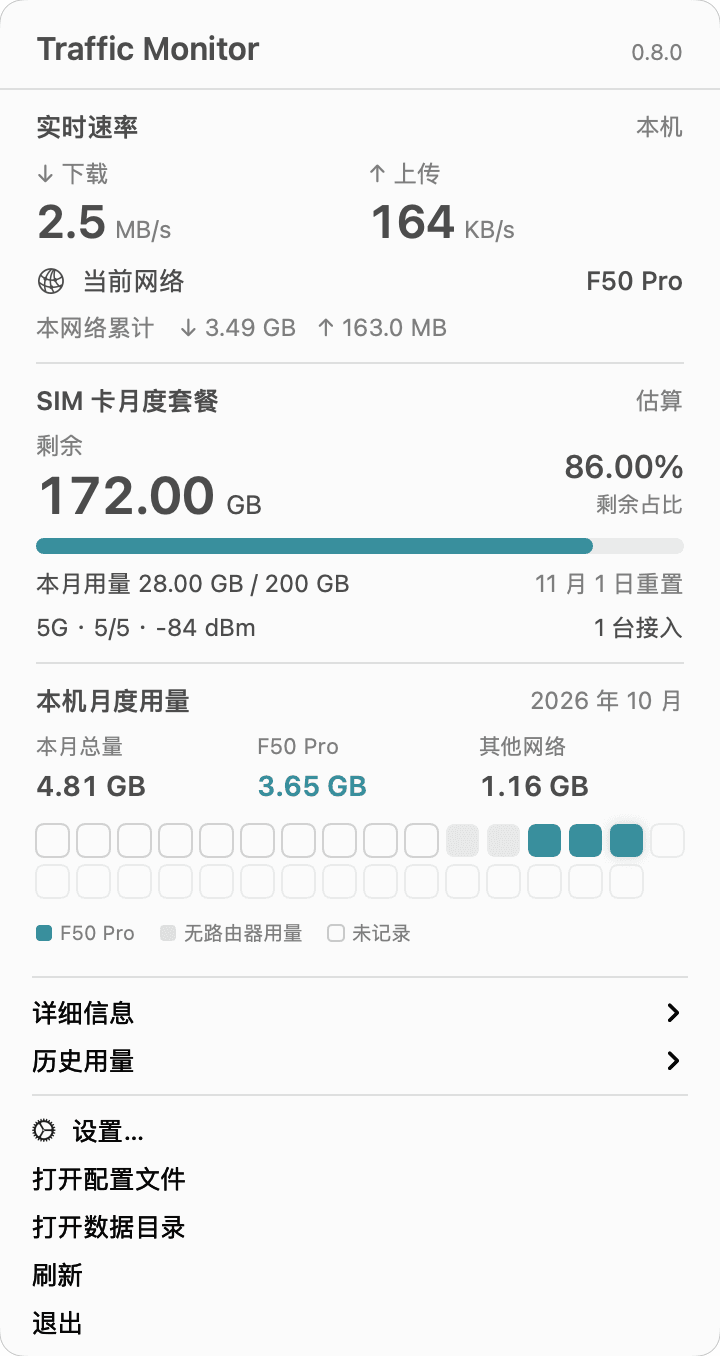
买了台中兴 F50 Pro 随身 WiFi,想随时查流量和信号,作者 Nowhere1975 干脆自己 Vibe 了个小工具——Traffic Monitor,一个常驻 macOS 菜单栏的原生流量看板。 它直接读取本机网卡计数,实时显示当前网速,并按月记录历史用量,用每日柱图直观展示流量趋势。连上 F50 Pro 时,工具还会通过设备的 HTTP 接口读取信号强度、当前接入设备数,并按运营商计费口径估算 SIM 卡套餐余量,把 F50 Pro 和其他网络的用量分开记账。 应用用 Swift / SwiftUI + AppKit 开发,纯原生菜单栏体验,所有历史数据都保存在本地,无需刷机、root 或 ADB,也无需注册账号。作者已发布 Apple Silicon(M 系列)DMG 安装包,下载后拖入「应用程序」即可运行;套餐余量需要先用运营商已用量做一次校准。

Showcase
Online
Design & Creative

RamenRouter

A 100% vibe-coded, browser-based PCB autorouter for hobbyists: cram more onto smaller, cheaper boards, all computed locally.

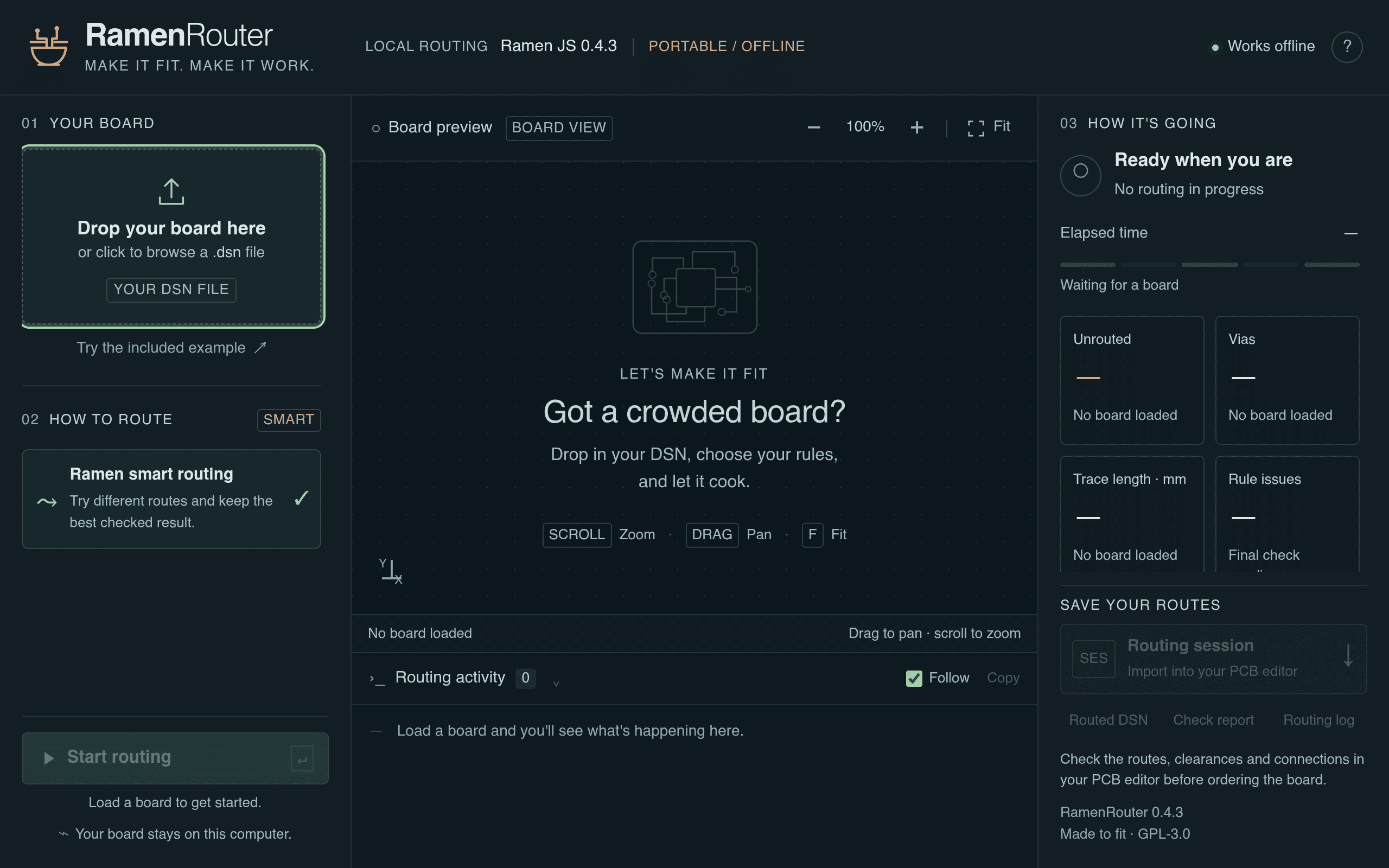
RamenRouter is a free, browser-based PCB autorouter built for hobbyists who want to squeeze components onto the smallest, cheapest board possible. Extra layers, finer traces, and smaller holes all cost money — so RamenRouter fixes those constraints and does the algorithmic gymnastics for you. The workflow is simple: place your components and set board rules in your PCB editor, export a .dsn file, load it into RamenRouter, and hit Start routing. It recognizes EasyEDA Standard exports (including older flattened layouts) and honors declared units for other CAD formats. Per-net rules let you choose main routing layers, prefer shorter routes for length-critical nets, and keep routes a configurable clearance away from the board edge. Routing is resumable: when the time budget or attempt count runs out, you can extend time, add attempts, refine the current best, or try flexible finishing for the last stubborn connections — always keeping the best checked result. Export back to a routed DSN or an SES session for your PCB editor, plus a check report and job log. Everything runs in your browser on your own computer — no install, no upload. You can even download the app folder and run it fully offline. The author describes it as 100% vibe-coded.

Showcase
Online
AI Apps

Actell

An experimental vibe-coded AI phone agent for iPhone: it sees the screen via CoreDevice and performs taps, drags and waits for you.

Actell (执言) is an experimental AI agent that runs on an iPhone and operates the phone the way a person would: it captures the screen, reasons about what to do next, and performs taps, drags, and waits. Instead of depending on app-specific integrations, it calls Apple's CoreDevice services directly for screen capture and touch input. Two connection routes are supported. The default on-device VPN loopback route works with your regular VPN app (verified with LocalDevVPN, Shadowrocket, and Clash) so no extra hardware is needed. Alternatively, an ESP32-S3 USB NCM relay provides a hardware-backed path for screen capture and touch. The agent supports OpenAI Chat Completions-compatible model providers with an explicitly selectable native Responses path, Markdown/TXT skill-package imports, conversation history, image attachments, tool approval, and manual stopping. The README is unusually honest about prototype status: production readiness and reliable long-running background execution are not guaranteed, and validation records (for example, a VPN-loopback screenshot and real tap test on an iPhone 15 Pro in October 2026) are documented alongside the claims. Tech: iOS app in Swift with the Xcode project checked in, a shared CoreDevice backend built in Rust, and ESP32-S3 firmware on ESP-IDF 5.5.5. Released under GPL-3.0. The author describes it as a vibe-coded project shared in its early prototype stage to explore ideas.

Showcase
Online
Photo & Videogpt-plusdeepseek-41

青梨相册

Vibe Coding 三个月做出的 iOS 相册清理 App:本地算法相似查重、按时间整理,已上架 App Store 持续迭代

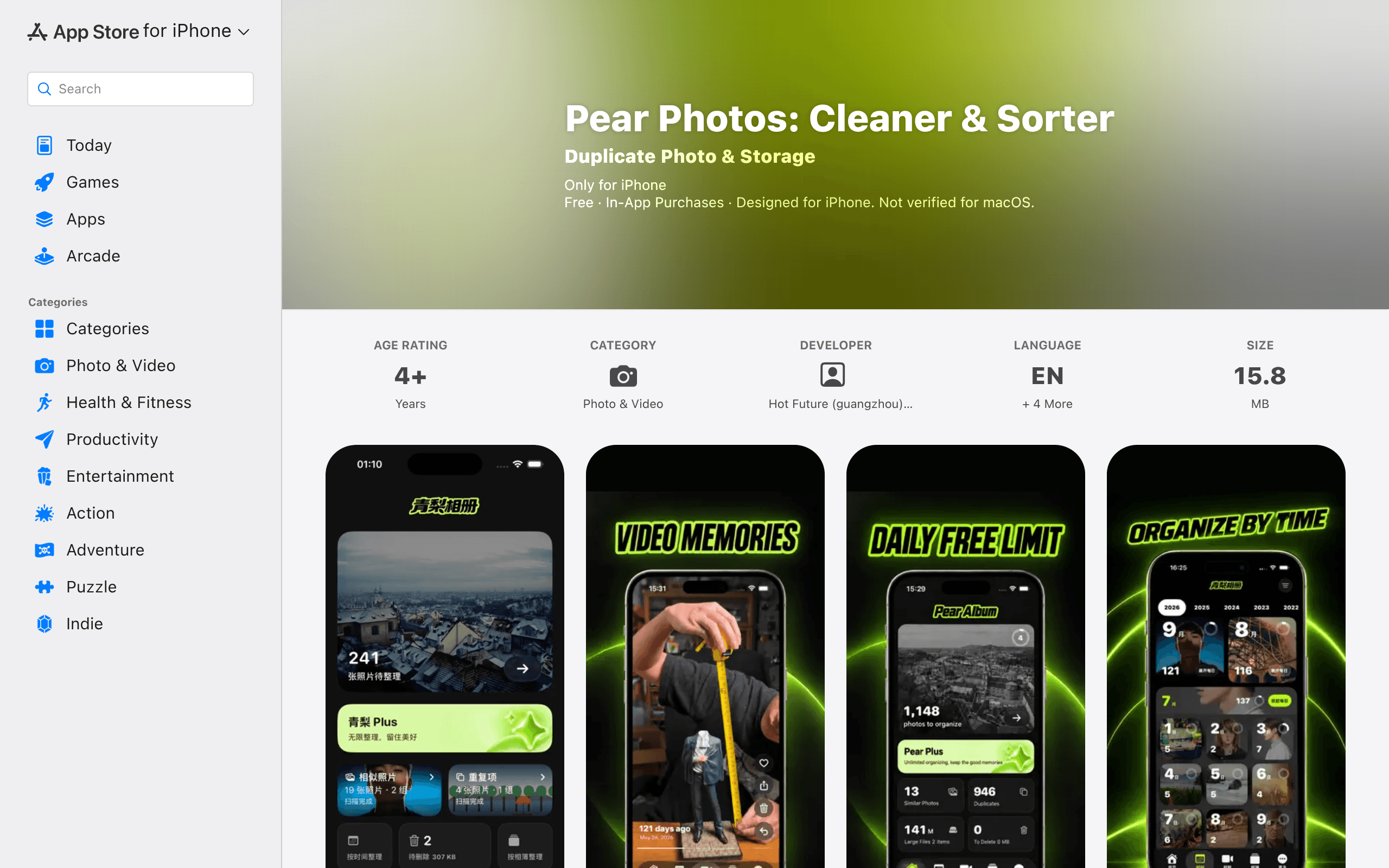
青梨相册(英文名 Pear Photos: Cleaner & Sorter)是一款 iOS 照片清理 App:相似照片查重、按时间整理、视频回忆,查重在 iOS 本地完成。作者 lowfrontend 是 8 年大厂前端,Gap 三年后决定独立开发一年。他在 V2EX(2026-09-23)写道:"Vibe Coding 三个月出来的 iOS 产品"——三天就上线,之后一直在改 bug 加功能,"已经能平均每天 1 刀的收入了"。开发工具他交代得很实在:"我是一直用 GPT Plus 开发的……简单的活交给 WorkBuddy 的 DeepSeek 4.1"。 App 已上架 App Store(Photo & Video 类,4+,免费+IAP,v2.0.2),持续迭代中。截图为 App Store 官方预览图,展示真实 App 界面。

Showcase
Online
Music & Audioclaude

Scale Designer

A playable music-theory instrument in one HTML file: design scales on a color wheel, play them from your keyboard or MIDI

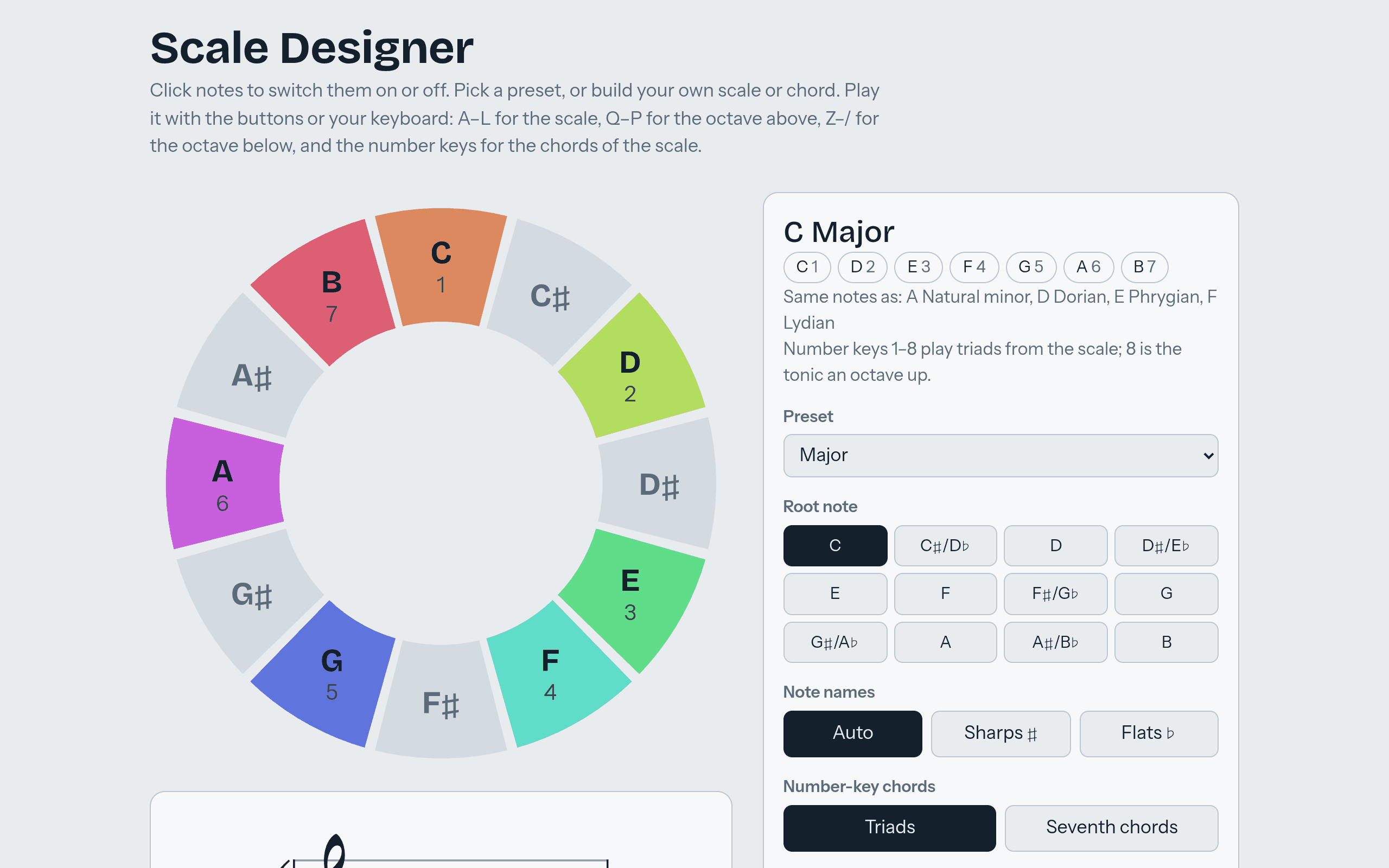
Scale Designer is a music-theory instrument that lives in a single HTML file: click notes on a color wheel to switch them on or off, pick a scale preset or build your own, then play it with your computer keyboard (A–L for the scale, Q–P for the octave above) or over Web MIDI, with a built-in synthesizer. It shows enharmonic equivalents (A Natural minor = D Dorian = E Phrygian = F Lydian), and number keys trigger triads or seventh chords from the scale. The maker is Dr. Ethan Hein, an NYU music-theory scholar who describes himself as "not much of a programmer". In his 2026-10-08 post "I vibe coded a music theory app" he wrote: "maybe this is my excuse to try vibe coding. So I told Claude to replicate the aQWERTYon. It made an HTML file that I uploaded to my web host, and there it was, a fully functioning knockoff of the app" — built, he says, in about half an hour with the free version of Claude. A music academic's half-hour instrument: the page is live and playable right now.