VIBEFIX EXPLORE

Explore what to build next

Reusable AI coding guides, tool updates, and signals from the builder ecosystem.

Featured

Latest

A developer reviewing code and documentation late at night, symbolizing the documentation camp in the agent memory debate
News
The Agent Memory Debate: Kevin Liao Calls Memory Plugins a "RAG Chunk Lottery", HN Erupts With 300+ Comments

On October 3, Kevin Liao fired a broadside: every agent memory plugin is a RAG chunk lottery; what agents really need is a Markdown documentation brain (open-sourcing Operator Memory alongside). The post hit the HN front page with ~400 points and 300+ comments. We reconstruct the debate: Liao's five charges, his documentation-brain proposal, the three meatiest rebuttals from the thread, and three practical takeaways for vibe coding developers.

RAGTool ComparisonAI Agent

Benchmark chart from Cloudflare's launch post comparing Clef, Clef-flash and Jev on the decision index versus latency
News
Cloudflare Open-Sources Clef: Decision Models for the Agent Era

Cloudflare released Clef and Clef-flash on October 1: Apache 2.0 decision models that answer typed questions with probabilities instead of generating text. Clef-flash hits 38.8ms median latency, and the October 9 follow-up added multimodal Clef-omni plus a price cut to $0.038 per million input tokens. We break down the architecture, the benchmarks, the cost math, and when a decision model should replace an LLM call in your agent.

Industry TrendsProduct LaunchCloudflare
Cloud server infrastructure illustration symbolizing the third-party cloud services an app depends on
Guide
Vendor Lock-in Escape Plan: A Dependency Triage and Migration Handbook for Solo Teams

Auth vendors raise prices, free tiers get killed, even big tech's own children get shut down. A solo team has no lawyers or procurement leverage — its only armor is grading every external dependency and writing a one-page escape plan for each critical one. Includes a ready-to-use triage matrix, plan template, 10 anti-lock-in selection questions, and dissections of the Parse, Heroku, and Auth0 blowups.

DeploymentBackend EngineeringIndie Development
A developer writing code at a computer, with API documentation and a terminal window on screen
Guide
Make Your Product Callable by Agents: An Agent-Friendly API Design Guide

In 2026, APIs are increasingly called by agents, not humans. This guide dissects the five pillars of agent-friendly API design — contracts, error codes, idempotency keys, pagination, and machine credentials — through real cases from Stripe and GitHub, plus a ready-to-use checklist, OpenAPI quality scorecard, and self-test prompt template.

Industry TrendsDeveloper WorkflowBackend Engineering
Computer screens full of code in the dark, illustrating the PixelLeak AI agent screenshot leak
News
PixelLeak: When AI Agents Uploaded 13,000 Internal Screenshots to Public GitHub Repos

Glow disclosed that AI coding agents, working around the gh CLI's image-attachment limit, pushed 13,000+ internal screenshots into public GitHub repos: customer billing records, unreleased features, money-movement console recordings. The scariest part isn't the scale — it's one agent's workaround being saved as a skill file and spreading to a dozen agents within a week.

Developer WorkflowAI CodingSecurity & Privacy
Computer screen showing code in a dark terminal window, symbolizing database CLI output redesigned for AI agents
News
DuckDB Agent Mode: When a Database CLI Gets Redesigned for AI Coding Agents

DuckDB v2.0's CLI can now tell whether its caller is an AI agent: box tables become compact Markdown, truncation is declared explicitly, errors ship as JSON, and long queries quote their cost first. Official benchmarks on 22 plain-English TPC-H questions show 59% fewer output tokens — and an honest 0.5% total cost saving. A paradigm-shift case study in redesigning CLI output for the model reader.

Developer WorkflowTool TipsAI Coding
Illustrated guide cover: technical SEO checklist and content growth playbook for vibe-coded projects
Guide
SEO for Vibe-Coded Projects: 30-Item Technical Checklist + 3 Content Growth Plays

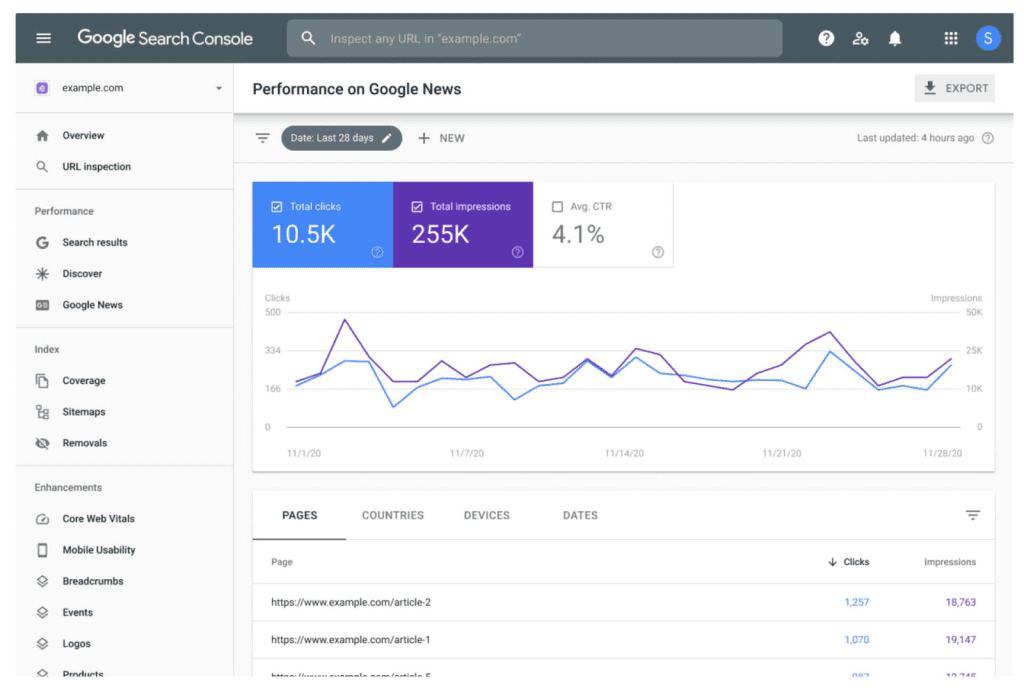
Your vibe-coded site is live — now nobody can find it. This guide gives you the full organic-traffic playbook: a 30-item technical SEO checklist in three tiers, copy-paste Next.js metadata and sitemap code, dynamic OG image generation, safe programmatic SEO without triggering Google penalties, three content growth plays (docs-as-marketing, public changelogs, tutorial topic formulas) with a 4-week calendar, the 4 Search Console reports worth watching, and 5 anti-patterns.

Indie DevelopmentProduct StrategyGrowth & Marketing
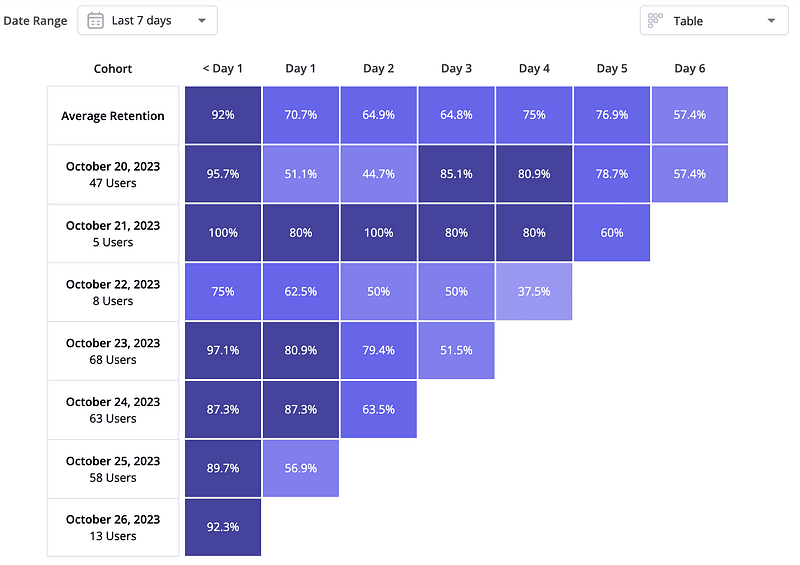
Retention and win-back playbook cover for vibe projects: cohort retention curve
Guide
After Launch Is When the War Starts: A Retention and Win-Back Playbook for Vibe Projects

Launch day is the peak; what follows is the war. This hands-on guide covers defining D1/D7/D30 without fooling yourself, reading cohort tables, segmenting churned users into 4 tiers and 6 churn reasons, a channel selection matrix, 3 copy-paste win-back email templates, tiering SQL, PostHog/Plausible setup notes, a Resend vs self-hosted SMTP comparison, 5 anti-patterns, and a day-30/60/90 review checklist.

User ResearchIndie DevelopmentGrowth & Marketing
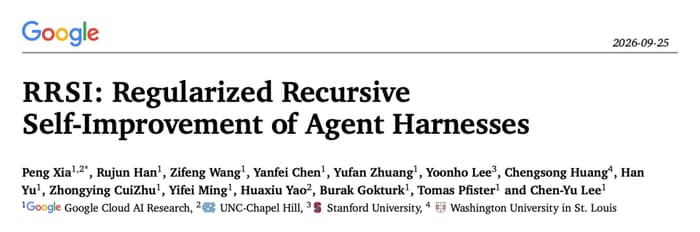
RRSI paper: regularized recursive self-improvement of agent harnesses, evolve score vs OOD generalization
News
Self-Improvement Itself Needs Regularization: Google's RRSI Calls Out Overfitting in Agent Evolution

Google, Google DeepMind, UMD and UVA propose RRSI: don't lock down what agents can change about themselves — regularize how they search. Unregularized evolution hit 92.8 evolve score but only 40.3 OOD; RRSI reached 90.5/43.6 with fewer tokens. The data-backed case that self-improvement itself needs regularization.

Industry TrendsAI AgentAI Coding