At DevDay 2026 on September 29, OpenAI unveiled Dots — always-on agents with their own cloud computers, powered by GPT-6 Astra, connecting to 4,000+ apps. Three weeks after Meta's Muse dethroned ChatGPT in downloads, the agent war has entered the 'form factor' phase.
VIBEFIX EXPLORE
Explore what to build next
Reusable AI coding guides, tool updates, and signals from the builder ecosystem.
Featured
Latest
Why do AI-generated interfaces always have that "flavor"? Purple-blue gradients, rounded cards, emoji everywhere. Taste isn't talent — it's rules that can be written down: lead with references, design tokens first, typography decides 80% of the look. AI has no taste, but it can execute yours.
On October 1, Anthropic announced an expanded partnership with Barclays: half of the bank's developers will use Claude Code by year-end, most by end of 2027. When even heavily regulated banks bet core productivity on AI coding tools, "AI writes code" has officially entered the scaled-deployment phase.
AI now writes in a day what a team wrote in a week — but "written" doesn't mean "owned." This guide covers code reading for the AI era: get the map first, start from entry points and tests, keep a "distrust checklist." Reading code isn't nitpicking; it's being able to catch AI when it's wrong.
On October 1, Microsoft Azure Research released 301,026 real Copilot coding-agent session traces — 9.3M model calls, 8.7M tool calls, fully anonymized. AI coding finally has production-grade workload data, and the bills for caching, retries, and idle scheduling can finally be calculated.
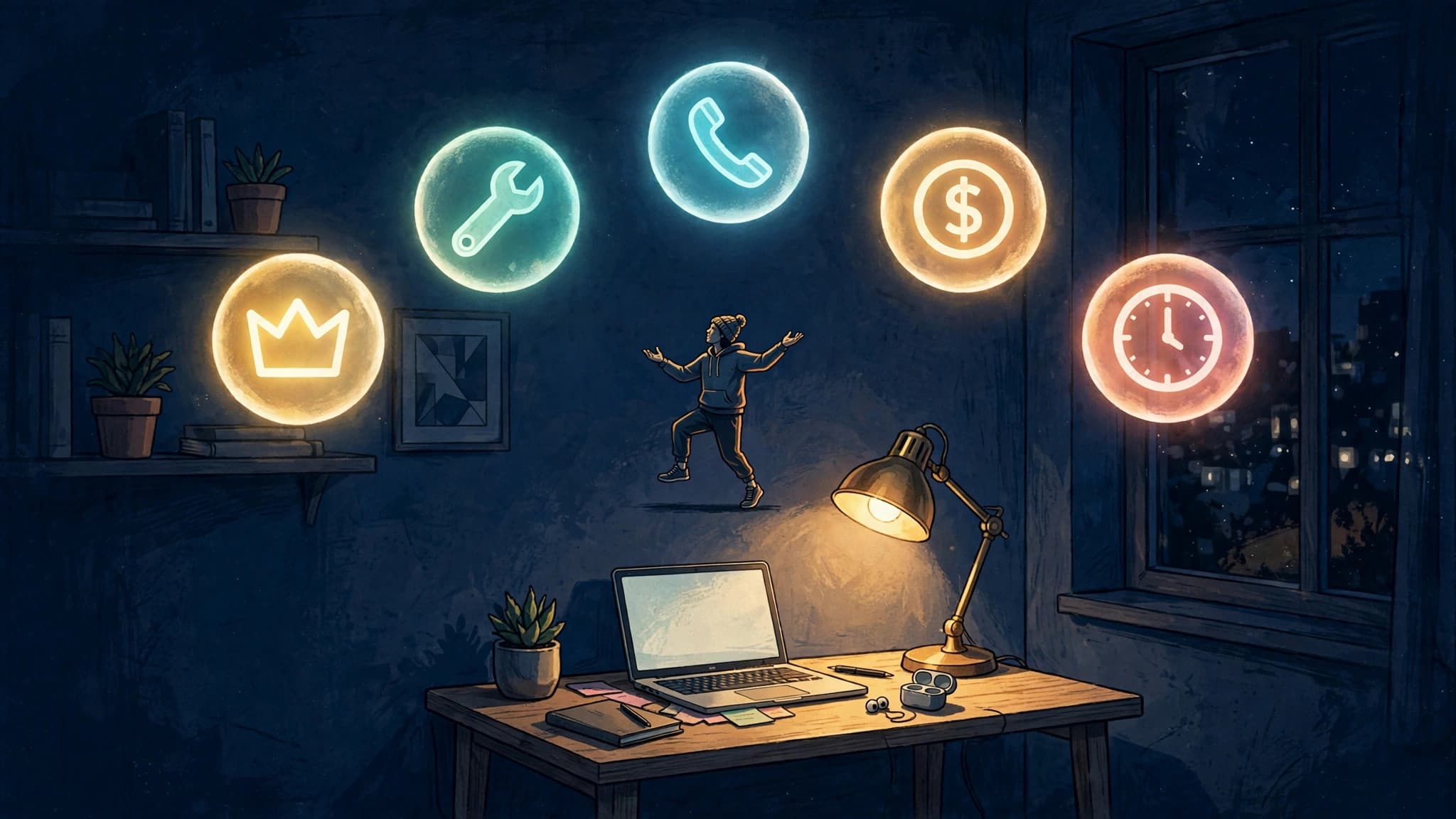
"Solo company" is 2026's sexiest phrase, but few do the other math: true costs. Subscriptions at $200–$800/month are the small part; the real cost is "time tax" — support tax 1–2h daily, ops tax 3–5h weekly, finance & tax 1–2 days monthly, compliance & legal per incident, emotional tax 24/7. Total: 15–20 hours a week not building product. Plus three tax-reduction strategies: make it visible, accept "solo ≠ alone," budget for emotions.
On September 30, Copilot CLI, Claude Code, Antigravity CLI, and Kiro CLI all shipped — plus Gemini CLI and Codex CLI's v0.159 series the day before. Five terminal agents updating within 48 hours isn't coincidence; it's proof "terminal-first" became industry consensus. This piece rounds up the key releases (Codex 0.159's keyword: "control") and asks why every major lab is pouring resources into the terminal in H2 2026.
Context windows keep growing in 2026, but "stuff everything in" buys sky-high bills and diluted attention. This hands-on guide treats context engineering as managing three ledgers: token money (cache everything cacheable, retrieve instead of stuffing, compress history), model attention (important at both ends, structured expression, context decay, reference over copy), and your time (10-minute cap for one-offs, build assets for recurring tasks). Includes a 5-minute context checklist template.
DevDay's most underestimated launch wasn't a model — it was a login button: "Sign in with ChatGPT," letting Plus/Pro subscribers spend their allowance inside 16 partner tools. On September 29 Windsurf followed, wiring it into Devin Desktop. This piece analyzes OpenAI's "cash-register strategy": trading one subscription's convenience for settlement rights over the whole AI tool ecosystem. History rhymes — the App Store played this game.
Vibe coding's sweetest moment is the demo — but sign a toB contract and start delivering, and a chasm opens between demo and delivery. This piece draws four boundaries: security compliance is a hard gate (quote at 5x demo cost), maintenance liability is bottomless (never promise a free year), requirement changes must be billed (block the "quick change"), data ownership and IP go in the contract. The thesis: between "demo" and "delivery" lies a SOC 2 — and SOC 2 can't be vibed.