Buried in the Claude Code v2.1.277 changelog from September 18: AGENTS.md support — projects without CLAUDE.md now get AGENTS.md read instead. It looks like "one more filename recognized"; it's actually an industry signal: the standards war over agent instruction files is converging, likely on OpenAI's AGENTS.md. This piece explains why it matters and what a good AGENTS.md looks like.
VIBEFIX EXPLORE
Explore what to build next
Reusable AI coding guides, tool updates, and signals from the builder ecosystem.
Featured
Latest
The coding workflow changed: the agent writes, you review. But reviewing AI code line-by-line no longer works — AI rarely writes syntax errors; its specialty is "looks done, actually isn't." This checklist gives 12 checkpoints: 3 for requirement alignment, 4 correctness traps, 3 engineering quality, 2 security red lines. The thesis: reviewing AI code isn't about finding bugs — it's about finding "things you thought it did, but it didn't."
In the second week of September 2026, eleven disclosed US venture rounds totaled roughly $10.8B, with AI coding taking the highlights: Cognition $2B ($48B valuation), Factory $200M ($5B, 3x in five months), Temporal $550M ($12.55B). This piece skips the "how much" noise to ask what the money is actually betting on: capital is flowing from "personal coding assistants" into "enterprise software factories" — with direct consequences for everyone who codes.
Indie developers share an affliction: product built, hands shaking at pricing time. This piece makes an uncomfortable argument: low pricing isn't humility — it's fear of pricing your value. The math ($5/month needs 16,667 users for $1M ARR; $99/month needs 842), three inner demons ("even I think it's expensive," "Big Tech is free," "free now, charge later"), and a four-step pricing practice: replacement cost, price interviews, three tiers, one price raise six months in.
The Anthropic IPO prospectus disclosed via Reuters in late September is essential reading for understanding AI in 2026: a $2 trillion target valuation, $42B net loss in 2025, $4.59B revenue (12x growth), $518B in compute purchase commitments, 47% of revenue via cloud providers. This piece skips gossip for three structural judgments: the nature of losses changed, compute became a balance-sheet item, and the "independent AI company" species is going extinct.
"Prompt engineering is dead" got repeated endlessly in 2026. I'll push back: it's a false proposition. What died isn't prompt engineering — it's "the craftsman's superiority complex." It became "context engineering." This piece dismantles the three "it's dead" arguments, clarifies what actually died (incantation prompts, craftsman mystique, one-shot prompts), and covers the four surviving fundamentals: filtering, structure, constraints, feedback loops.
On September 28 Anthropic launched Claude Sonnet 5.5 at $2/$10 — exactly matching GPT-6.1 Sol, released a day later. The sharper move is performance: 70.6% on Terminal-Bench, beating its own flagship Opus 5.5. No coincidence: H2 2026's AI-coding model price war has begun. This piece maps the three-way battle: $2/$10 is becoming the industry standard price, and the fight is no longer about price — it's about ecosystems.
2026 is the year of multi-agent, but anyone who shipped multi-agent systems to production will tell you: 90% of failures are collaboration-protocol problems, not model-capability problems. This piece covers 7 common traps — no single source of truth, wrong split granularity, conflicting sub-agent understandings, layered error amplification, runaway token bills, missing circuit breakers, humans excluded from the loop. Each from a real wreck; each with a fix.
On September 30 Google released Gemini 4 Argon, billed as its most powerful model ever: 77.9% on DeepSWE, 68% on CWE-bench, 1M tokens per output. But the first users are just one group — cyber defenders. Intro pricing $2/$10, rising to $4/$20 after. This piece unpacks Google's "defense-first" rollout: why give the strongest model to the gatekeepers first?
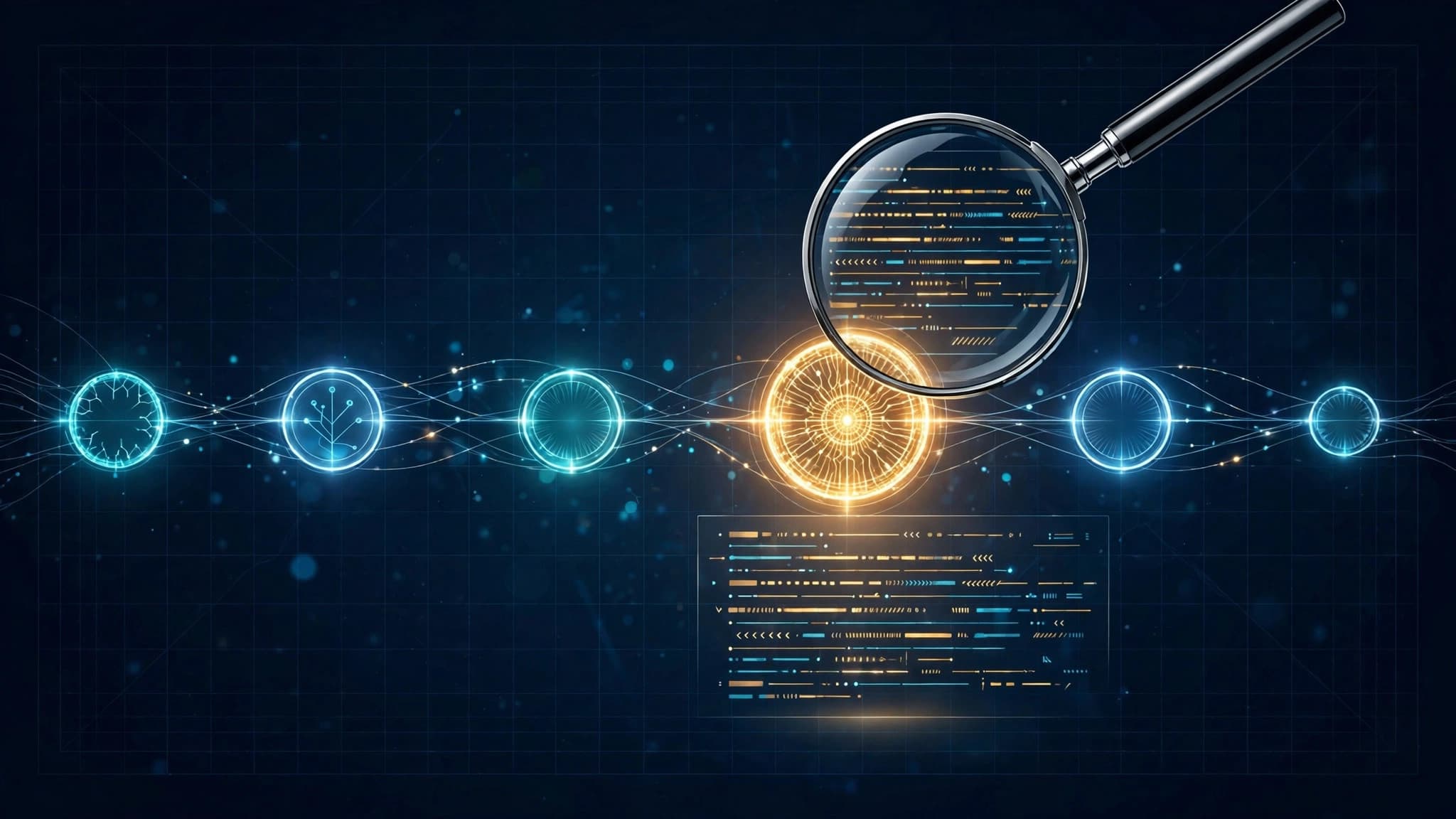
The more autonomous agents get, the more they need to be seen. But the traditional "logs + metrics + traces" trio barely suffices for agents — the question is no longer "where is the system slow" but "why did it do that." This hands-on guide gives a four-layer architecture (decision logs, trajectory replay, guardrail events, cost attribution), the three most common traps, and a four-week minimal rollout plan. The thesis: agent observability isn't logging — it's an auditable decision chain.